


Australia is racing towards a clean energy future, with energy storage at the heart of the transition. Two technologies dominate the debate: pumped hydro and battery storage. Both can store excess renewable energy and release it when the grid needs it most, but they work in very different ways. Understanding pumped hydro versus battery storage Australia-wide is essential for homeowners, businesses, and policymakers shaping the grid of tomorrow.
What is pumped hydro storage?
Pumped hydro is one of the oldest and most reliable forms of large-scale energy storage. It works by pumping water uphill to a reservoir when electricity is cheap or plentiful, then releasing it downhill through turbines to generate power on demand.
Australia’s most ambitious example is Snowy 2.0, a massive underground expansion of the Snowy Hydro scheme in New South Wales. When complete, it will add up to 2,000 MW of dispatchable capacity and 350,000 MWh of storage — enough to power roughly three million homes for a week.
How it works:
- Water is pumped to an upper reservoir using surplus energy
- Stored water flows back down through turbines
- Electricity is generated during peak demand
Key benefits:
- Long lifespan (50–100 years)
- Large-scale storage capacity
- Proven and reliable technology
What is battery storage?
Battery energy storage systems (BESS) store electricity in chemical form and release it on demand. Lithium-ion batteries are the most common type used today, both in home solar battery systems and large grid-scale installations.
In Australia, battery storage has grown rapidly. The Hornsdale Power Reserve in South Australia was one of the world’s first large-scale BESS projects and demonstrated that batteries can respond to grid fluctuations within milliseconds.
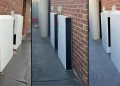
Home battery storage also lets Australian households store excess solar energy for use at night or during blackouts.
Check our page for our recommended solar products.
Common types:
- Lithium-ion batteries
- Flow batteries (emerging)
Key benefits:
- Fast response time
- Modular and scalable
- Easy to install near demand centres
Use Energy Matters’ easy-to-use solar power and battery storage calculator to determine the size of your solar system with storage! Our solar calculator will generate performance information and potential savings.
We can send this information to 3 of our pre-vetted, trusted local installers in your area so they can provide obligation-free solar quotes and take the first step toward true energy independence!

The role of home energy storage in Australia
While the grid-scale debate continues, individual Australians can make their own energy storage decisions right now. Rooftop solar combined with a home battery storage system is one of the most effective ways to cut electricity bills, reduce reliance on the grid, and support Australia’s renewable energy transition.
The federal government and various state-based battery rebate schemes are making home battery storage more affordable than ever.
Some states, including Victoria and South Australia, offer significant rebates for home battery installations. This makes the combination of solar panels and battery storage an increasingly smart financial choice for Australian households.
Pumped hydro vs battery storage in Australia: Key differences
When comparing pumped hydro vs battery storage Australia-wide, several key factors stand out. Each technology has clear strengths depending on the use case.
Storage duration
Pumped hydro can store energy for days or even weeks. This makes it perfect for seasonal balancing — storing summer solar surplus to cover winter demand. Battery storage, by contrast, typically offers two to four hours of capacity per cycle, though longer-duration batteries are emerging.
Response speed
Battery storage responds in milliseconds, making it excellent for grid frequency control and stabilising sudden drops in supply. Pumped hydro takes minutes to spin up, so it is better suited to planned dispatch rather than instant response.
Scale and capacity
Pumped hydro operates at a gigawatt-hour scale — far beyond what any current battery installation can match. For grid-scale energy storage serving millions of customers, pumped hydro wins on raw capacity. Batteries excel at the megawatt-hour scale for local or regional firming.
Location and site requirements
Pumped hydro needs two reservoirs at different altitudes, access to water, and suitable geology. These requirements limit where it can be built. Battery storage, however, can be installed almost anywhere — on rooftops, in shipping containers, or in industrial parks — giving it far greater flexibility.
Cost and lifespan
Pumped hydro has high upfront costs and long construction timelines, but its 80–100+ year lifespan spreads that cost over decades. Battery systems cost less to install but need to be replaced every 10–15 years. Over a century, pumped hydro has often been more cost-effective at scale.
Quick comparison: Pumped hydro vs battery storage
| Feature | Pumped hydro | Battery storage |
| Storage duration | Long (hours to days) | Short (1–4 hours) |
| Response time | Moderate | Instant |
| Lifespan | 50–100 years | 10–15 years |
| Scalability | Site-dependent | Highly flexible |
| Upfront cost | High | Moderate |
| Maintenance | Low | Moderate |
| Best use | Bulk storage | Grid stability |
The verdict on Australia’s grid: Why we need both
Australia’s electricity grid faces unique challenges. We have one of the world’s longest interconnected grids, stretching from Queensland to South Australia. We also have very high solar and wind penetration, which creates surplus power at certain times and gaps at others.
The honest answer to the pumped hydro vs. battery storage debate in Australia is that neither technology alone can do the job. The grid needs both:
- Pumped hydro for long-duration, large-scale seasonal storage
- Battery storage for fast-response frequency control and local firming
- Both technologies are working together to support a 100% renewable grid
The Australian Energy Market Operator (AEMO) has made this clear in its Integrated System Plan (ISP), which calls for a mix of dispatchable storage types to keep the grid reliable as coal exits.
Take control of your electricity usage today with Energy Matters
The comparison of pumped hydro and battery storage in Australia shows that both technologies are essential. Pumped hydro offers long-term storage, while batteries provide speed and flexibility.
If you want to future-proof your energy system, now is the time to act. Contact the solar experts at Energy Matters for a free comparison of solar quotes and to explore tailored solar and battery solutions for your needs!