


by Riko Seibo
Tokyo, Japan (SPX) Apr 16, 2026
Researchers have developed a fast prediction and suppression method for transient piston displacement overshoot in free piston Stirling generators, addressing a fault condition that can quickly escalate into mechanical damage in solar thermal power systems. The new approach detects dangerous overshoot without relying on displacement sensors and suppresses the fault response early enough to maintain safe operation and continuous power delivery.
Free piston Stirling generators, or FPSGs, are considered promising for solar thermal power because they offer a route to efficient thermal-to-electric energy conversion. But like many high-performance electromechanical systems, they are vulnerable to fault conditions that can propagate rapidly if not handled in time. One particularly serious scenario arises when physical damage to transmission lines causes an open-circuit fault. Under those conditions, the system can experience severe piston displacement overshoot, leading to cylinder collision risk and accelerated wear of the moving components. Once this transient process begins, the window for intervention may be extremely short.
The challenge is made harder by the structure of the machine itself. The dual-piston vibration systems in the FPSG are mechanically decoupled, which complicates analysis of the transient response. That means the fault cannot simply be treated as a straightforward electrical disturbance. Instead, the electrical and mechanical dynamics interact in ways that affect the displacement of both the displacer and the power piston. For a practical protection strategy, engineers therefore need a method that can infer dangerous mechanical behavior from signals that are easier to measure in real time.
The new study addresses that need by first analyzing the transient current and voltage characteristics of the FPSG after open-circuit faults occur. From that analysis, the researchers derived an analytic relationship between the generator’s internal potential and the displacement of the power piston during the transient process. Based on this relationship, they proposed a fast prediction method capable of estimating the maximum displacement overshoot of both the displacer and the power piston within only a few cycle periods.
Importantly, the method does not require displacement sensors, which helps reduce system complexity and cost. Displacement sensors can add cost, packaging complexity, and additional reliability concerns, especially in systems intended for large-scale deployment. By instead relying on analytically linked electrical variables, the method makes it possible to predict mechanical overshoot through signals that are often more accessible in operating power equipment.
Prediction alone is only part of the solution. The researchers also proposed an emergency suppression strategy based on a parallel crowbar circuit. When the predicted piston displacement overshoot exceeds the safe threshold, the crowbar is deployed in advance to increase the electromagnetic damping of the power piston. This control action counters the dangerous transient before the overshoot grows large enough to threaten mechanical integrity. The approach can suppress piston displacement overshoot while still ensuring continuous power supply to the load during the fault event – an important feature for power-generation applications.
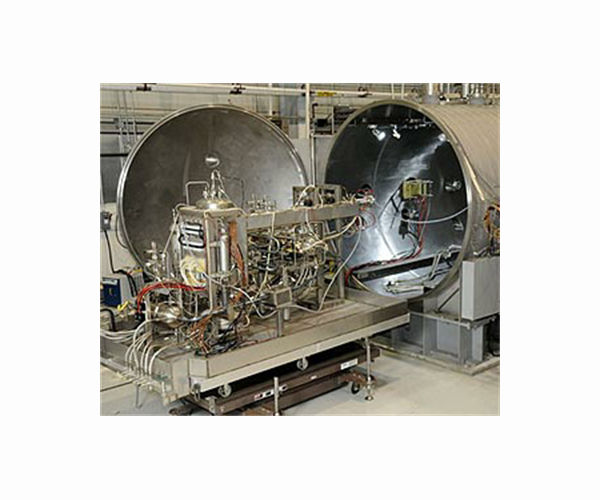
The practical value of the study is reinforced by hardware validation. The researchers designed and developed an FPSG prototype and used it to verify the effectiveness of the proposed prediction and suppression method, moving beyond simulation-only demonstration to show that the method can function in a realistic experimental platform.
For solar thermal power applications, a protection strategy that is fast, sensor-light, and compatible with continuous power supply could be easier to integrate into real generator systems than methods depending on more complex instrumentation or slower fault identification pathways. In systems where a few transient cycles can determine whether a fault remains manageable or becomes destructive, the ability to predict and suppress overshoot early could be especially valuable.
Related Links
Beijing Institute of Technology
All About Solar Energy at SolarDaily.com