

How Can You Ensure High-Performance Industrial Solar Installation?
- Conduct a Complete Site Assessment Before Equipment Procurement
- Confirm Roof Readiness, Structural Capacity, and Maintenance Access
- Review Electricity Consumption and Daytime Operating Demand
- Choose Durable Panels, Inverters, Mounting Systems, and Monitoring Tools
- Plan Net Metering and Grid Interconnection Requirements Early
- Ensure Proper Installation Quality, Wiring, Grounding, and Commissioning
- Set Up Monitoring, Maintenance, and After-Sales Support
Overview
- High-performance industrial solar installation requires proper planning before equipment is purchased or installed.
Industrial facilities should assess roof condition, structural capacity, shading, electrical infrastructure, and grid connection requirements early.- Equipment selection matters because panels, inverters, mounting systems, wiring, and monitoring tools all affect long-term energy output.
- For factories, warehouses, logistics hubs, schools, and other industrial properties, solar performance depends on matching the system design with actual operating demand.
Industrial solar power systems are long-term investments. For factories, warehouses, logistics hubs, cold storage facilities, and manufacturing plants, the goal is not only to install panels but to produce useful electricity consistently over the system’s life.
A high-performing installation can help reduce daytime grid dependence, control operating costs, and support sustainability goals. However, poor planning can lead to lower output, utility approval delays, roof issues, unsafe wiring, or maintenance problems.
This is why understanding how to ensure high performance industrial solar installation matters before approving a proposal. Industrial solar projects should begin with proper assessment, engineering review, equipment planning, and long-term support.
Conduct a Complete Site Assessment Before Equipment Procurement

A site assessment is the foundation of any industrial solar project. It confirms whether the building is ready for solar installation and whether the proposed system can operate safely and efficiently.
For industrial properties, the assessment should check roof condition, available space, shading, roof access, structural capacity, electrical rooms, cable routes, and utility connection points. These details affect both installation cost and long-term system performance.
Without a proper assessment, a facility may approve a system that looks good on paper but performs poorly in actual conditions. For example, roof obstructions, nearby structures, exhaust systems, skylights, water tanks, or shaded sections can reduce usable panel space. Electrical limitations may also require upgrades before the solar power system can be connected properly.
Solaric’s industrial solar installation service supports facilities that need solar planning based on operating requirements, roof conditions, and long-term energy goals.
Confirm Roof Readiness, Structural Capacity, and Maintenance Access
Industrial rooftops are often ideal for solar because they provide wide, unused spaces. However, roof size alone is not enough. The roof must be suitable for installation, maintenance, and long-term panel performance.
A roof readiness review should consider:
- Roof age and material
- Structural support and load capacity
- Shading from nearby buildings or equipment
- Roof slope and orientation
- Waterproofing condition
- Access paths for installers and maintenance teams
- Existing rooftop equipment such as vents, pipes, tanks, or walkways
If the roof needs repair, reinforcement, or waterproofing work, these should be addressed before installation begins. This helps prevent delays, leaks, safety risks, or costly rework after the panels are mounted.
Good roof planning also protects solar output. Panels should be placed where they can receive consistent sunlight and where maintenance teams can safely inspect and clean them when needed.
Review Electricity Consumption and Daytime Operating Demand
Industrial solar design should be based on actual electricity demand. This is why facility managers should review at least 12 months of electric bills before finalizing system size.
This review helps identify monthly consumption, peak demand, seasonal changes, and operating patterns. A facility that runs most equipment during the day may benefit strongly from grid-tied solar because solar generation is available when operations are active.
Industrial facilities should also consider future changes. If the business plans to add machinery, expand warehouse operations, extend production hours, or install more cooling equipment, those changes may affect the correct solar capacity.
A solar power system that is too small may not offset enough daytime consumption. A system that is too large may generate excess power that the facility cannot fully use or export efficiently. The right size should match current operations, future plans, and net metering opportunities.
Choose Durable Panels, Inverters, Mounting Systems, and Monitoring Tools
Equipment quality plays a major role in industrial solar performance. Solar panels, inverters, mounting systems, wiring, and protection devices should be selected for durability, compatibility, and long-term output.
Solar Panels
Panels should be chosen based on rated output, warranty, durability, and suitability for Philippine heat, rain, humidity, and typhoon exposure. The goal is steady production over many years, not just high initial capacity.
Inverters
Inverters convert direct current electricity from the panels into alternating current electricity used by facility equipment and building systems. For industrial installations, inverter capacity, location, ventilation, and compatibility with the facility’s electrical setup should be reviewed carefully.
Mounting Systems
The mounting system secures the panels to the roof. It should match the roof material, support proper panel placement, and withstand local weather conditions. Poor mounting can lead to safety concerns, roof damage, and performance issues.
Monitoring Tools
Monitoring tools allow facility managers to track solar production and detect performance issues early. This is especially important for industrial facilities because lower output can affect projected savings.
For businesses comparing system options, Solaric’s commercial solar panel systems page shows how solar can support operational savings and cleaner energy use.
Plan Net Metering and Grid Interconnection Requirements Early
Grid-tied industrial solar projects should plan net metering and utility interconnection requirements early. Net metering allows qualified end-users in the Philippines to generate renewable energy for their own use and export unused electricity to the grid for credits.
For industrial facilities, this can help improve solar value when generation exceeds consumption during certain periods. This may happen during weekends, holidays, shutdowns, or lower-production days.
However, net metering requires proper documentation and technical review. Requirements may include application forms, system details, inverter specifications, protection devices, single-line diagrams, and utility coordination.
Preparing these requirements early helps reduce approval delays. Solaric’s net metering guide provides useful information on how the process works for solar users in the Philippines.
Ensure Proper Installation Quality, Wiring, Grounding, and Commissioning

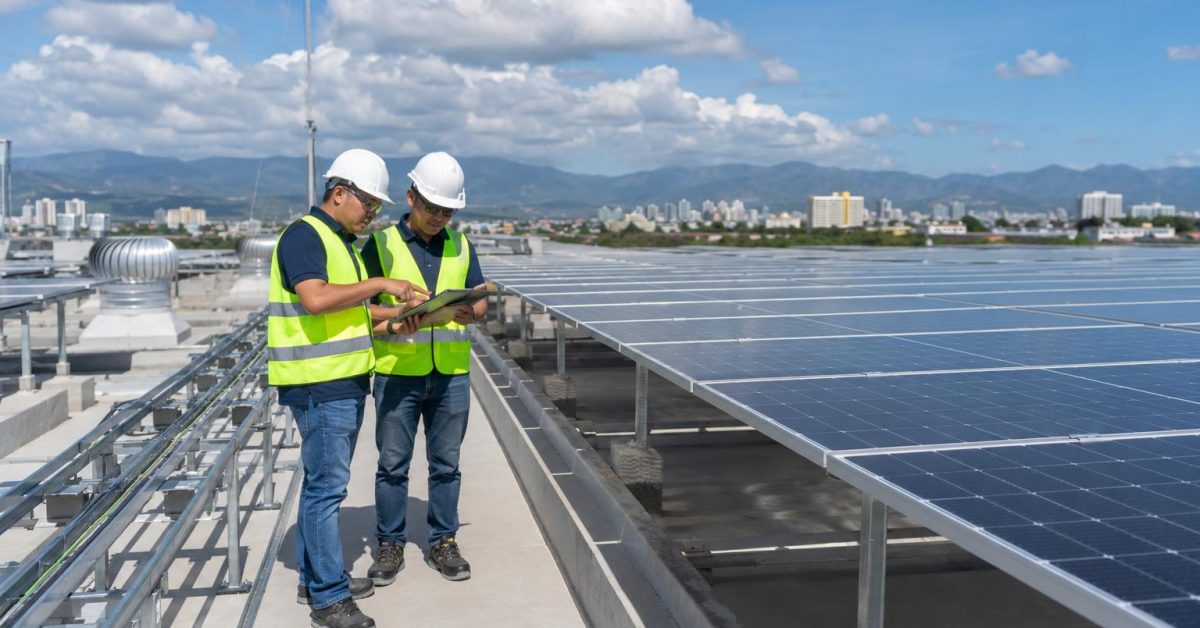
Even strong equipment can underperform if installation quality is poor. Industrial solar installation involves electrical safety, roof protection, proper mounting, secure wiring, grounding, inverter placement, and commissioning checks.
Qualified installers should ensure that cables are properly routed, components are securely mounted, protection devices are correctly installed, and the system is tested before turnover. This helps reduce safety risks and supports long-term reliability.
Commissioning is also important. Before the system is fully turned over, installers should verify that the panels, inverters, monitoring tools, and protection devices are working as intended. This step helps confirm that the system is ready for actual facility operations.
Solaric’s solar installation services include solar solutions for residential, commercial, and industrial properties in the Philippines.
Set Up Monitoring, Maintenance, and After-Sales Support
High-performance solar does not end after installation. Industrial solar power systems need monitoring, cleaning, inspection, and maintenance to keep output stable.
Dust, dirt, debris, shading changes, loose wiring, inverter issues, or roof access problems can affect performance over time. Monitoring helps identify these issues early so the facility can respond before savings are reduced.
A maintenance plan should define:
- Cleaning schedule
- Inspection frequency
- Monitoring access
- Warranty coverage
- Service response process
- Inverter and wiring checks
- Reporting expectations
Solaric’s rooftop solar content discusses how rooftop solar can help homes and businesses use available roof space to reduce electricity costs.
Key Takeaway
How to ensure high performance industrial solar installation comes down to proper site assessment, roof readiness, energy load review, equipment quality, net metering preparation, installation standards, and long-term maintenance.
For industrial facilities, solar should be planned around real operating conditions. A well-designed solar power system can help reduce daytime grid dependence, control energy costs, and support sustainability goals without disrupting daily operations.
Ready to plan the right solar power system for your facility? Request your free solar quote today and turn on the sun with Solaric now.