

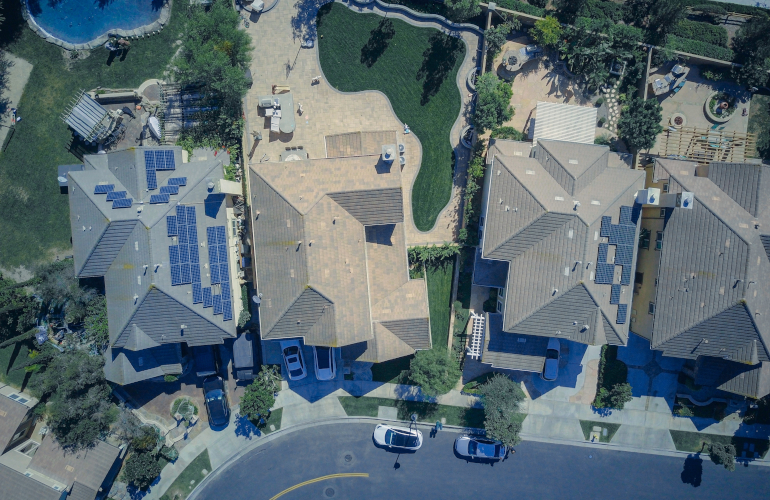

Homebuyers pay 1-2% more for homes with rooftop solar or high-efficiency heat pumps, but current homeowners appear largely unaware of these assets’ resale value, according to new research conducted by home energy intelligence company 257.

Credit: 257
After cuts to the federal energy efficiency rebate program and solar tax credit, these findings offer residential HVAC and solar businesses a new basis for proving ROI to their prospects, including those who may not stay in their homes through the full payback period.
256’s examination of over 500,000 U.S. homes sold between 2024-2025, 257 found that although most real estate listings didn’t advertise the energy-efficient assets present, those that did were rewarded with higher purchase prices:
- Homes with solar panels sold for 2% more, or the equivalent of $10,000 on a median sales price of $557,000, when the listing mentioned solar.
- Homes with heat pumps sold for up to 1% more, or $3,900 on a median sales price of $399,000, when the listing mentioned the heat pump.
- One-third of homes with solar present didn’t mention it in the listing, while heat pumps were referenced just 8% of the time.
Per EnergySage, the average upfront installation cost in 2026 is $30,500 for rooftop solar and $14,529 for a ducted heat pump. Given 257’s new findings, homeowners who market these additions when listing their properties for sale can expect to earn back 27-33% of their initial investment on top of the ongoing operational savings, making the expense ROI-positive for millions more homes.
“Changing incentives and rising energy costs have made it harder for homeowners to rationalize large home energy improvements,” said Scott Rosenberg, co-founder and CEO of 257. “This data shows that homeowners who invest in upgrades can both save on their bills over time and make nearly a third of their money back upon selling their home. Solar and HVAC companies stand to benefit from educating their customers about the often-overlooked resale opportunity.”
257 profiles hundreds of property, demographic and energy characteristics for all 130 million homes in the United States. It conducted this research as part of a broader industry study released today by the Smart Energy Consumer Collaborative (SECC) exploring the role of energy efficiency in home values and buyer preferences.
While only 8% of listings last year advertised energy efficiency features, this number has nearly tripled since 2015, suggesting that homeowners are beginning to realize the resale potential as energy affordability and grid reliability quickly become two of the greatest concerns facing Americans.
“We use 257’s data and AI to identify homes most likely to purchase energy upgrades like solar, storage, generators and HVAC systems,” explained Lauren Martin, CMO of Freedom Power, one of the largest home energy providers serving Texas and Florida. “This analysis shows that not only do these investments help with day-to-day energy costs, but they can also increase home value. It’s a win-win: good for consumers, good for suppliers like us and another compelling reason to keep investing in America’s clean energy transition.”