

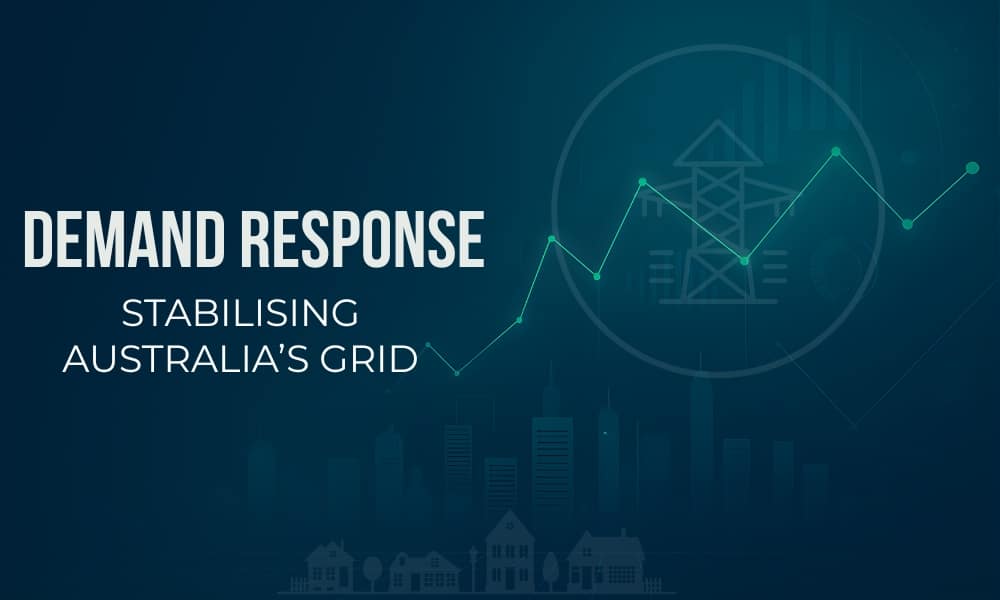
Australia’s energy grid is undergoing a massive transformation, shifting from centralised coal power to a system dominated by intermittent renewable sources such as solar and wind turbines. This transition creates new challenges, particularly in maintaining grid stability during periods of high demand or low generation.
Demand response in Australia is emerging as a critical, cost-effective solution, empowering electricity consumers to become active participants in balancing the energy market. By temporarily reducing or shifting electricity use, participants help the Australian Energy Market Operator (AEMO) manage system stress, contributing to a more resilient, reliable, and sustainable electricity future for all Australians.
What is demand response, and why does it matter?
Demand response (DR) is a coordinated strategy where energy users temporarily adjust their electricity consumption during peak periods. This may involve reducing usage, shifting loads, or even supplying stored energy back to the grid. It’s a smart, flexible alternative to costly infrastructure upgrades typically used to meet peak demand.
In Australia, where extreme weather and rising electrification are straining the grid, demand response offers a way to stabilise the system without resorting to expensive new generation assets. It also supports integrating variable renewables by balancing supply and demand when generation dips.
How demand response supports grid stability in Australia
Demand response initiatives in Australia directly help prevent blackouts and reduce price spikes. The Australian Energy Market Operator (AEMO) often calls on demand response services when supply becomes tight due to heatwaves, generator outages, or low renewable output.
Key stability benefits include:
- Reduces peak load stress by lowering consumption during high-demand periods.
- Supports renewable integration by compensating for rapid fluctuations in wind or solar output.
- Improves grid reliability without building additional peaking plants fueled by fossil fuels.
- Lowers wholesale energy prices by easing pressure on the market during critical times.
Some programs even reward consumers financially for participating, creating win-win outcomes.
Demand response Australia: Key drivers behind its growth
Australia is uniquely positioned to benefit from expanded demand response programs. Several trends are propelling nationwide adoption:
1. Rising solar and renewable penetration
High rooftop solar uptake means midday demand dips while evenings produce sharp consumption spikes. Demand response smooths these imbalances and reduces strain on the evening supply.
2. Electrification of homes and businesses
Heat pumps, EVs, and electric appliances place a significant load on the grid. Demand response helps coordinate these devices to operate more efficiently.
Powering up your EV with solar
If you’re thinking of buying an electric vehicle (EV), adding an EV charger to your solar system is a smart way to “fuel” your car with clean, renewable energy.
3. Extreme weather events
Heatwaves can push demand to dangerous levels, increasing the risk of blackouts. Demand response offers immediate, scalable relief.
4. Advances in technology
Smart meters, automated demand management, and real-time pricing platforms make participation easier than ever for households and businesses.
How demand response works for households and businesses
Demand response is not just for large industrial users; modern programs are increasingly accessible to homes and small businesses.
Common ways consumers participate:
- Load shifting: Running appliances like dishwashers or EV chargers during off-peak hours.
- Load reduction: Temporarily turning off or cycling items like air conditioners, pool pumps, or refrigeration units.
- Automated control: Smart home systems adjust usage based on price signals or grid conditions.
- Battery discharge support: Sending stored solar energy to the grid during high-demand periods. When combined with rooftop solar and energy storage, demand response becomes exceptionally powerful—for both individual households and the national grid.
Use Energy Matters’ easy-to-use solar power and battery storage calculator to determine the size of your solar system with storage! Our solar calculator will generate performance information and potential savings.
We can send this information to 3 of our pre-vetted and trusted local installers in your area to receive obligation-free solar quotes and take the first step towards true energy independence!

Types of demand response programs in Australia
Understanding the major program types helps consumers choose the right option.
1. Price-based demand response
Customers adjust usage based on real-time electricity prices or time-of-use tariffs.
2. Incentive-based demand response
Participants receive fixed payments or bill credits for being available during grid events, which are further categorised by specific market mechanisms. AEMO, Australian Energy Market Commission (AEMC), and energy retailers have introduced several targeted demand response mechanisms to manage various types of grid stress. These market mechanisms offer custom incentives and commitment levels for different energy users.
| Program Name | Purpose | Target Participants |
| Wholesale Demand Response Mechanism (WDRM) | Allows large consumers to bid their demand reduction directly into the wholesale market. | Large Commercial & Industrial (C&I) users, Aggregators |
| Reliability and Emergency Reserve Trader (RERT) | A ‘last resort’ mechanism activated by AEMO during extreme supply risks to prevent blackouts. | Large C&I users with secure, significant load reduction capability |
| Frequency Control Ancillary Services (FCAS) | Rapid, automatic response to correct small fluctuations in grid frequency (50 Hz). | Distributed Energy Resources (DERs) like batteries, fast-acting C&I loads |
3. Emergency demand response
Activated during critical supply shortages to prevent blackouts.
4. Aggregated demand response
Third-party aggregators combine many small users to form large, dispatchable demand resources.
The role of aggregators and technology
Aggregators are critical players who combine the smaller, flexible loads of many customers—from businesses to households—into a significant, marketable capacity. This allows smaller energy users to participate effectively in the wholesale market.
Technologies like smart meters and Virtual Power Plants (VPPs) enable this aggregation. A VPP links distributed energy resources (such as rooftop solar and batteries) across multiple sites, allowing them to be centrally controlled as a single, cohesive resource for demand response events.
Visit our Virtual Power Plant (VPP) offers in Australia page for more information.
What makes it effective, and what are the benefits for Australians?
Residential demand response in Australia
Households contribute significantly to peak demand, especially during scorching summer afternoons. Residential demand response programs offer:
- Reduced energy bills through lower peak-time consumption
- Access to rebates and rewards via participating retailers
- Optimised solar and battery usage
- Improved grid stability during emergency events
Commercial demand response in Australia
Businesses are major energy consumers, making them ideal participants in demand response initiatives in Australia. Retailers and aggregators typically provide:
- Direct financial payments for reducing the load when called upon
- Improved operational efficiency via smart energy management
- Compliance opportunities with sustainability and ESG goals
- Reduced exposure to peak electricity prices
Industries like manufacturing, agriculture, retail, and cold storage can shift or stagger operations with minimal disruption.
The need for grid stability in the Australian context
Challenges in the National Electricity Market (NEM)
The NEM faces specific hurdles that demand response is perfectly positioned to address. The combination of geographic expanse, ageing infrastructure, and the influx of variable generation requires innovative flexibility.
- Intermittency of renewables: Solar generation peaks mid-day, but demand peaks in the early evening when the sun sets, creating the ‘duck curve’ phenomenon—a steep ramp-up in demand that the grid must quickly compensate for.
- Extreme weather events: Australia’s grid is susceptible to heatwaves and severe storms, which drive massive, simultaneous demand for cooling while sometimes impacting generation or transmission capacity. This places immense strain on the system’s ability to cope.
- Phase-out of coal generation: The planned retirement of large, synchronous coal-fired power stations removes traditional sources of Frequency Control Ancillary Services (FCAS), making rapid-response capacity essential.
Challenges in scaling demand response across Australia
Although demand response Australia programs are growing, several challenges remain:
- Consumer awareness: Many households still don’t know such programs exist.
- Regulatory complexity: Market rules can be slow to adapt to new technologies.
- Technological integration: Older appliances and systems require upgrades.
- Data privacy concerns: Smart-grid data must be managed securely.
However, ongoing federal and state reforms aim to expand participation across all sectors. These ARENA videos provide an overview and help you better understand demand response (DR).
Sources/References: ARENA – Demand response, Demand Response Video Playlist | AEMO – Demand Response Overview | Sage Automation | Clean Energy Regulator (CER) – Details on the role of energy storage and DERs in the grid | AEMC – AEMC releases final report on wholesale demand response mechanism
Ready to act? Partner with Energy Matters
Demand response is not just a technical solution; it’s an economic opportunity for energy users to be rewarded for their flexibility and contribute to the nation’s energy security. By participating, you help build a cleaner, more stable grid while unlocking new value from your existing solar energy assets.
Don’t wait for the next energy crisis to act
Secure your business and household’s future and start earning revenue by exploring your demand response potential through solar power today. Contact Energy Matters to discuss tailored solutions for your commercial, industrial, or residential solar energy needs. Invest in a flexible solar energy strategy now and contribute to Australia’s reliable energy transition.