


The gap between a 1-to-3-day solar install and the 60-to-120-day timeline most homeowners actually experience is where installation scheduling lives. Installation scheduling coordinates site assessments, system design, permitting, equipment procurement, crew dispatch, and utility interconnection so projects move from signed contract to activation without stalling between phases.
This guide breaks down how installation scheduling shapes each phase of a solar build, pinpoints where scheduling delays cost solar service companies the most time, and covers practical strategies to tighten installation scheduling in 2026.
How Does Installation Scheduling Work in Solar?
Installation scheduling is the end-to-end coordination of tasks, resources, and approvals that move a project from signed contract to grid connection.
For homeowners, the timeline feels like a single waiting period between signing and system activation.
For installers, it’s a sequence of dependent phases: site assessment, system design, permitting, equipment procurement, physical install, inspection, and utility interconnection. Each phase depends on the one before it, so a delay early in the sequence pushes everything downstream.
What separates a well-run solar project management operation from a slow one is how these handoffs are managed. The work isn’t just technical. It involves coordinating with local permitting offices, utility providers, equipment distributors, and field crews, often at the same time.

What Are the Key Phases of the Installation Process?
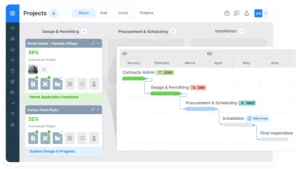
Every solar installation moves through 6 core phases, each with its own timeline and dependencies:
- Site assessment (1-2 weeks): A technician evaluates the property’s roof condition, orientation, shading, and electrical panel capacity. This determines whether the design can proceed or if structural or electrical upgrades are needed first.
- System design (2-3 weeks): Engineers create the panel layout, select inverter and module specifications, and produce the permit-ready plan set. Design revisions from the homeowner or utility add time before permitting can start.
- Permitting (4-8 weeks): The installer submits the plan set to the local authority having jurisdiction (AHJ) for review and approval. This is typically the longest phase and varies the most by location.
- Equipment procurement (1-3 weeks): Panels, inverters, racking, and balance-of-system components are ordered and staged. Lead times depend on distributor stock levels and the specific products specified in the design.
- Physical installation (1-3 days): Crews mount the racking, install panels, wire the inverter, and connect the system to the electrical panel. For most residential projects, this takes 1 to 2 days on-site.
- Inspection and interconnection (2-4 weeks): The local AHJ inspects the completed installation, and the utility processes the interconnection application. Once approved, the utility installs or reconfigures the meter and grants permission to operate (PTO).
Permitting and interconnection account for the majority of the total project timeline, which is why scheduling strategies focus on reducing administrative bottlenecks rather than speeding up the physical install.
Typical Timelines for Residential and Commercial Solar Projects
Residential solar projects typically take 60 to 120 days from contract to activation. The range depends on your local permitting office’s processing speed, equipment availability, and whether the roof or electrical panel needs upgrades before the install can begin. These variables affect both cost and overall schedule.
Commercial projects run longer, usually 3 to 6+ months. Larger system sizes mean more complex engineering, multi-day installation work, and extended permitting review cycles. Utility-scale projects may stretch to 2 years or more due to interconnection studies, environmental reviews, and grid capacity constraints.
Seasonal demand also shifts the timeline. Installers in most markets report heavier backlogs from May through September, which can push residential timelines closer to the 120-day end. For business owners considering commercial installations, starting the process during off-peak months typically offers better scheduling flexibility because crew availability and permitting queues are lighter.
Even with optimal timing, several common bottlenecks can extend these timelines beyond what most project owners expect.
Common Delays in the Installation Process for Solar Businesses
The physical installation takes 1 to 3 days, but the full solar installation process spans 2 to 4+ months. That gap frustrates homeowners and creates operational drag for companies that depend on fast project turnover.
Delays fall into 3 categories:
- Administrative (permits and utility approval queues)
- Logistical (equipment availability, crew scheduling conflicts)
- External (weather disruptions, seasonal demand spikes)
Most of the time lost happens before installing begins on-site, and the specific bottlenecks vary by local jurisdiction and market conditions.
What Causes Permitting Delays in Solar Projects?
Permitting is the single largest scheduling bottleneck in most solar markets. The process requires submitting a complete plan set to the local authority having jurisdiction (AHJ), waiting for plan review, addressing any revision requests, and scheduling inspections. In fast jurisdictions, this takes a few days. In slower ones, the review queue alone can run 8+ weeks.
The delay compounds because most installers can’t proceed with equipment staging or crew scheduling until the permit is approved. A 1-week project delay increases client cancellation rates by 5 to 10% (SEIA), so permitting bottlenecks don’t just cost time, they cost revenue. AHJ offices with limited staff and high application volume create the longest queues, and installers have few options to accelerate the process beyond submitting clean, complete applications on the first pass.
Automated permitting platforms like SolarAPP+ are beginning to change this dynamic by processing standard residential permits in hours instead of weeks. Projects routed through SolarAPP+ receive permits 14.5 business days faster than those going through traditional review (NREL). For companies operating in jurisdictions that haven’t adopted automated review, calling the AHJ before submission to confirm current processing times and requirements can save weeks of back-and-forth, and pairing that approach with field service management software that helps teams monitor permit progress and coordinate scheduling once approvals are received.
Equipment Procurement and Supply Chain Factors
Module availability is the second most common scheduling constraint after permitting. Solar panel manufacturers and major distributors have reported sold-out inventory through year-end 2026, and inverter lead times fluctuate based on model demand and tariff-related import disruptions. When the specified equipment isn’t available, installers either wait or redesign the system around what’s in stock, and both paths add cost and time to the project.
Larger national companies with established distributor relationships and bulk purchasing agreements tend to have more supply security than smaller local installers. Battery storage components face similar constraints, especially for residential systems that pair panels with home battery units. The size of the system also matters: commercial projects with higher panel counts and specialized inverter configurations are more exposed to procurement delays because fewer distributors carry that inventory at volume.
Procurement timing directly shapes the rest of the installation schedule. Pre-ordering equipment at the contract stage, rather than waiting for permit approval, lets installers overlap phases and compress the overall project timeline.
When Is the Best Time to Schedule a Solar Installation?
Peak installation season runs from May through September, and it creates the tightest scheduling windows of the year. Crew backlogs build during summer months because residential demand spikes while installer capacity stays relatively flat. Solar installation scheduling during spring or fall typically produces shorter wait times because crew availability and AHJ processing queues open up during off-peak months.
The demand pressure isn’t seasonal only. The Bureau of Labor Statistics projects solar PV installer employment to grow by 42% between 2024 and 2034 (BLS), which signals that the industry expects sustained volume growth for years to come. That growth means more projects competing for the same crews, and the best scheduling windows will only get more competitive.
For business owners planning commercial installations, Q4 and Q1 offer the most flexibility. Residential homeowners who can time their contract signing for late fall or early winter often move through permitting and design during the slower months, so the physical install lands in early spring before work backlogs rebuild.
Timing helps, but the companies that consistently hit shorter project cycles do more than pick the right season. They build repeatable processes around every phase.
How Do Solar Companies Schedule Installations Efficiently?
High-performing solar companies treat scheduling as an operational system, not a series of one-off decisions. The difference between a company that completes projects in 60 days and one that takes 120 isn’t the speed of the install itself. It’s how tightly each phase connects to the next. When handoffs between sales, design, permitting, and field teams are structured and predictable, the schedule holds. When they’re ad hoc, delays compound.
Three operational strategies help solar service companies reduce cycle times and provide more predictable project timelines.
Standardizing the Pre-Installation Workflow
Scheduling variability drops when every project follows the same operational sequence from day one. That means standardized site assessment checklists, design templates with pre-approved configurations, and documentation packages that match what the local AHJ requires for permit submission. When these inputs are consistent, the team doesn’t need to reinvent the process for each new project.
Structured handoffs between sales, design, permitting, and installation teams make the biggest difference. A sales rep who collects roof photos, electrical panel specs, and utility bill data at the contract stage gives the design team what they need to start immediately. A design team that delivers a permit-ready plan set with no missing documents keeps the permitting phase from stalling. Each handoff either accelerates or delays the next phase, and standardizing them removes the guesswork that slows work down.
The goal isn’t rigidity. It’s providing a repeatable baseline that the team can execute without rework, so exceptions get flagged early instead of discovered mid-project.
Optimizing Crew Dispatching and Route Planning
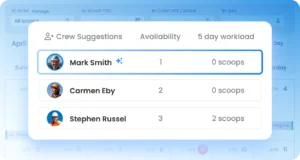
Crew dispatching is where scheduling theory meets field reality. The most efficient solar companies match crew skill sets to job complexity, cluster installations by geographic area to reduce drive time, and adjust schedules in real time when cancellations or weather disruptions free up capacity.
Centralized dispatching helps prevent double-bookings and idle crews, two problems that grow as a company scales beyond a handful of active projects. When the dispatch team can see crew schedules and field progress from a single view, they can redistribute work on the fly instead of waiting for field updates. Local market density also plays a role: companies with a high concentration of jobs in one service area can stack installations back-to-back, which saves hours per crew per week.
Even small gains compound. Cutting drive time per job across a full install schedule adds up to meaningful capacity recovery each month, capacity that translates directly into more completed projects.

Using Software to Coordinate Multi-Phase Solar Projects
Software becomes a scheduling advantage when it connects every phase of the project into a single operational layer. The right platform handles automated task assignments, calendar integrations across teams, mobile access for field crews, and real-time progress tracking that updates the schedule as each phase completes. When these systems work together, project managers don’t need to chase updates manually or reconcile data from disconnected tools.
Solar project management software built for multi-phase workflows gives companies visibility into where every active job stands at any given time. That visibility turns scheduling from a reactive process into a proactive one: project managers can spot a permitting delay on Monday and reschedule the crew before the install date arrives, rather than discovering the conflict the day of.
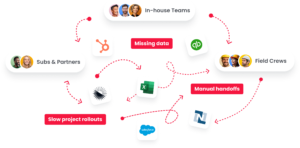
The business case is straightforward. Coordinating solar installation scheduling through a single platform reduces the administrative overhead per project and frees up operations staff to manage more jobs simultaneously. The options aren’t limited to one tool or approach, but the companies that run scheduling through disconnected spreadsheets and manual check-ins consistently lose time at every handoff.
Internal operations are one side of the equation. The other is reducing the external bottlenecks, from permitting to interconnection, that sit outside the installer’s direct control.
How to Reduce Scheduling Delays in Solar Projects
The biggest scheduling gains come from targeting the specific phases where delays are most predictable. Property owners and solar companies each have levers they can pull: homeowners who prepare before the first site visit help keep the early phases on track, and companies that invest in permitting relationships, equipment pre-ordering, and interconnection planning save weeks across the project lifecycle. The cost of inaction compounds at every phase, so the strategies below focus on where time is most commonly lost and where small changes deliver the most value in keeping projects on schedule.
How Should Property Owners Prepare Before the Site Assessment?
Homeowners who complete a few steps before the first site visit can prevent the most common early-phase delays. The site assessment determines the system design, so any missing information at this stage pushes the design timeline back.
Before the assessor arrives, confirm these items:
- Roof condition: If the roof needs replacement within the next 5 years, handle it before the solar project begins. Discovering a roof issue after design is complete forces a redesign and delays permitting.
- Electrical panel access: Clear the area around the main electrical panel so the assessor can inspect it and determine if an upgrade is needed. Older residential panels may not support the additional load without a swap.
- Utility bills: Gather 12 months of electricity bills. These help the design team size the system to match actual consumption patterns and inform the installer’s financing and incentive calculations.
- HOA or historic district requirements: Check whether your property falls under any design restrictions that could affect panel placement. Flagging these early keeps the permitting process from stalling on compliance reviews.
For solar companies, sending a pre-assessment questionnaire at the contract stage collects most of this information before the site visit. That free exchange of data up front eliminates the back-and-forth that typically adds a week to the install timeline.
Choosing the Right Solar Installer for Faster Timelines
The installer you choose determines the baseline speed of your project more than any other single decision. Vertically integrated companies that handle design, permitting, installation, and service in-house eliminate the subcontractor handoffs that add days or weeks between phases. When one company owns the full process, accountability stays in one place and scheduling gaps shrink.
Before signing a contract, ask the installer these questions:
- What is your current project backlog, and what’s the average time from contract to activation?
- Do you handle permitting in-house, or do you use a third-party service?
- Do you pre-order equipment at the contract stage, or after permit approval?
- How many crews do you run, and how far out is your next available install date?
The best installers will give specific answers with numbers. Vague responses signal capacity issues or a lack of operational experience.
Your options narrow once the contract is signed, so this due diligence matters. A company with strong permitting relationships in your local jurisdiction, secured equipment inventory, dedicated crew capacity, and a clear plan for post-installation inspection and ongoing maintenance can quote a realistic timeline and hold to it. For homeowners, a partner that handles residential solar project management end-to-end, from signed contract through grid connection and ongoing service, is where the real value sits.
Streamline Solar Project Scheduling With the Right Platform
Solar installation scheduling runs across the systems, teams, and approvals in your business, from site assessment through grid connection. We built Scoop as a Central Operations Hub that connects your scheduling, field execution, permitting, and service workflows into one operational layer, so projects move forward without manual reconciliation between disconnected tools. See how software for solar companies can help your business start shortening project cycles today.
Frequently Asked Questions About Solar Installation Scheduling
How Far in Advance Should a Solar Installation Be Scheduled?
Schedule your solar installation at least 2 to 4 months before your desired activation date, or 4 to 6 months during peak season (May through September). The biggest variables are your local permitting jurisdiction’s processing time, installer backlog, equipment availability, and any incentive deadlines tied to your residential install.
Can Solar Panels Be Installed During Winter?
Yes, solar installations happen year-round in most climates, and winter months often have shorter wait times because fewer residential customers sign contracts during the colder season. Solar panels produce electricity more efficiently in cold temperatures, so winter installations don’t sacrifice system performance even if weather events like snow or ice may temporarily pause on-site work.
How Does Net Metering Affect Solar Installation Timelines?
Net metering policies vary by utility and state, and some utilities maintain interconnection application queues that can add weeks to your project timeline even after the system passes inspection. Check with your local utility early in the process to understand which net metering options are available in your area, how they affect your electricity bill, and whether any financing programs are tied to enrollment deadlines.
What Permits Are Required for Solar Installation?
Most residential solar projects require a building permit from the local authority having jurisdiction (AHJ), which covers electrical work and structural mounting on the property. Some jurisdictions also require a separate electrical permit, and utility interconnection approval is needed before the system can connect to the grid.
How Long Does It Take to Get a Solar Permit?
Solar permit timelines range from a few days in jurisdictions using automated platforms like SolarAPP+ to 8+ weeks in areas with manual review processes. The biggest variables are local AHJ staffing levels, application volume, and whether the initial submission is complete and free of errors.
Can the Solar Installation Timeline Be Shortened?
Choosing an installer with established permitting relationships, pre-ordering equipment at the contract stage, and preparing your property before the site assessment are the most effective ways to compress the schedule. Starting the process during off-peak months (October through February) also reduces wait times for both crews and permit processing queues.