


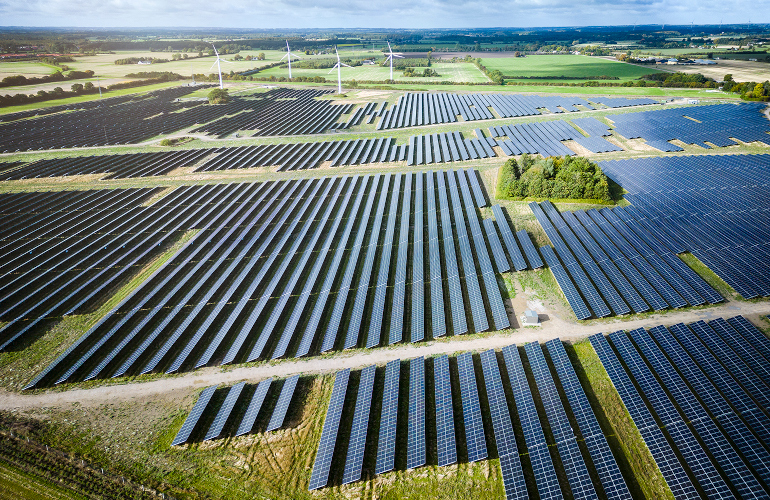

Electrical output from renewable energy sources has increased by more than 10% in the first five months of 2026 and is producing 30% of total U.S. electricity, according to a review of U.S. Energy Information Administration data by the SUN DAY Campaign. At this pace, renewable energy sources are expected to add 83 GW of new capacity to the grid by the end of May 2027, while nuclear and fossil fuel sources are projected to decrease by 4.7 GW.
Utility-scale solar had increased by about 21% compared to last year’s numbers, according to EIA’s “Electric Power Monthly” report. Nuclear power and natural gas product fell by 3.8% collectively, and coal fell by 10.9%. Wind and solar are outpacing coal, producing 57% more electricity than the fossil fuel.
Within this yearlong period, utility-scale solar increased by nearly 28 GW, and small-scale solar added 6.6 GW to the grid. Utility-scale energy storage added 16.5 GW to the grid within this period. Total renewable energy capacity from May 2025 to May 2026 increased by 41% compared to the same yearly period before that. The SUN DAY Campaign projects that solar could overtake natural gas capacity by spring 2027.
“Notwithstanding all the roadblocks erected by the Trump administration, the growth of solar, wind and battery storage is actually accelerating, proving once again that one cannot stop an idea whose time has come,” said Ken Bossong, executive director of the SUN DAY Campaign.
News item from the SUN DAY Campaign