

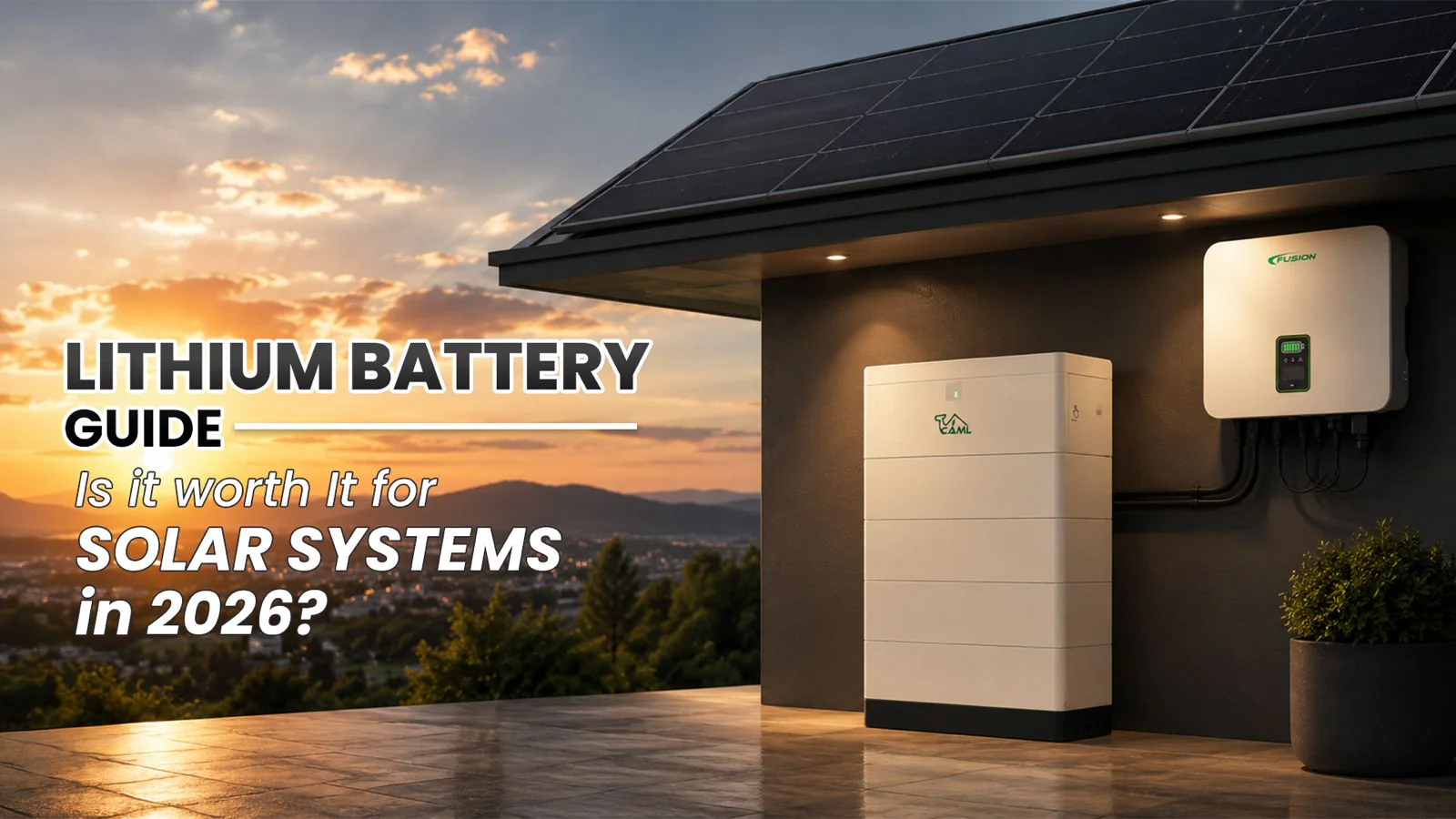
Lithium batteries are considered one of the most important innovations of the modern energy storage era. From powering smartphones and laptops to supporting solar systems and electric vehicles. Lithium batteries are now widely used across residential, commercial, and industrial applications.
As the demand for renewable energy rises, the lithium battery plays a crucial role in shaping the future of clean and reliable energy storage.
A lithium battery is a rechargeable energy storage device that stores and releases electrical energy through lithium ions. Unlike conventional batteries that are based on older chemical technologies, lithium batteries are designed to have a higher energy density, efficiency, and performance.
These batteries work by moving lithium ions between two electrodes:
Lithium ions move from the cathode to the anode. This stores energy as the battery charges. During discharge, the ions move back to the cathode, releasing energy to power electrical devices.
This electrochemical process is so efficient that lithium batteries can supply a steady output of power with very little loss of energy.
Types of lithium batteries
Different lithium battery chemistries are designed for different applications:
-
Lithium Iron Phosphate
Lithium iron phosphate batteries, also known as LiFePO₄ batteries, are one of the safest and most stable types of lithium batteries available on the market today.
It is:
-
Lithium Iron
Lithium-ion batteries usually refer to batteries that employ chemistries such as Nickel Manganese Cobalt (NMC) or Nickel Cobalt Aluminum (NCA).
It is:
-
Lithium Polymer
Lithium polymer batteries are a type of lithium battery that uses a polymer electrolyte instead of a liquid electrolyte.
It is:
-
Lightweight flexible form
-
Used in drones, gadgets, and portable electronics
Lithium battery V/S lead-acid battery
Lithium batteries and lead-acid batteries differ significantly in terms of performance, lifespan, efficiency, and maintenance. Lithium batteries are lighter, charge faster, provide higher efficiency, and are typically much longer-lasting than lead-acid batteries.
Below is a table with all the differences between a lithium battery and a lead-acid battery:
|
Features |
Lithium battery |
Lead-acid battery |
|
Lifespan |
8-15 years |
3-5 years |
|
Charging time |
Fast |
Slow |
|
Efficiency |
High |
Moderate |
|
Maintenance |
Minimal |
Regular |
|
Weight |
Lightweight |
Heavy |
|
Backup performance |
Better |
Average |
|
Usable capacity |
High |
Limited |
|
Installation space |
Compact |
Larger |
How does a lithium battery work?
Lithium batteries store chemical energy and convert it into electrical energy.
Charging Process
When plugged into a charger:
-
Lithium ions travel to the anode.
-
The battery stores energy within it
-
The Battery Management System (BMS) regulates voltage and temperature
Discharge Process
When powering a device:
-
Lithium ions travel back to the cathode
-
Electricity from stored energy.
-
The battery supplies a constant amount of power
This constant movement of ions allows lithium batteries to work efficiently for thousands of charge cycles.
Why are lithium batteries popular in the solar system?
Lithium batteries have become popular in solar systems because they have advantages over traditional lead-acid batteries, such as higher efficiency, faster charging, longer life, and better energy storage.
They can hold more solar energy and deliver steady backup power with minimal energy lost. Lithium batteries can also be discharged more deeply, so users can safely use more of the stored energy without damaging the battery. Their lightweight and compact design makes for easier installation and saves space, particularly in residential solar installations.
Lithium batteries are also very low maintenance; they charge quickly from solar panels and work efficiently with modern hybrid and smart inverters. Lithium iron phosphate batteries are one of the most popular lithium technologies in solar applications due to their safety, thermal stability, and long cycle life.
Is a lithium battery worth it in 2026?
Yes, lithium batteries are definitely worth looking at in 2026, especially for solar systems, home inverters, and backup power applications. With the increased demand for energy, electricity consumption has become smarter and more efficient, and lithium batteries are now a modern and reliable energy storage solution. They cost more up front than traditional lead-acid batteries but often end up being a better investment over the long term.
One of the biggest advantages of lithium batteries is that they last longer. A good lithium battery can last 8 to 15 years and thousands of charge-discharge cycles, which is much longer than normal batteries. They also charge much faster, deliver higher energy efficiency, and allow for more usable energy storage, providing deeper backup
By 2026, lithium batteries are getting more popular with the rapid growth of rooftop solar systems, hybrid inverters, and electric vehicles in India. Small, lightweight, and requiring little maintenance, they are perfect for the modern home and business. Moreover, advanced Battery Management Systems (BMS) now offer improved safety, smart monitoring, and better battery performance.
Conclusion
Lithium batteries have revolutionized the energy storage market by providing better efficiency, faster charging, longer life, and overall better performance than traditional lead-acid batteries. From home solar systems to EVs and smart backup, lithium batteries are increasingly the go-to battery for today’s energy needs.
With India rapidly expanding its renewable energy and solar infrastructure, the need for reliable and efficient battery storage solutions is also rapidly increasing. Lithium batteries are small and compact, require little maintenance, can be deeply discharged, and work well with modern hybrid inverters, which makes them ideal for homes and businesses.
Companies like Loom Solar are also offering advanced lithium battery and solar energy solutions that are designed for efficient backup, smart energy management, and sustainable long-term performance for Indian homes and businesses.
With the continuous advancements of battery technology and the growing adoption of solar energy systems, lithium batteries are set to play a major part in shaping the future of sustainable and smart energy storage in 2026.