


On September 27, 2024, the remnants of Hurricane Helene hit Asheville, North Carolina. The devastating storm caused historic flooding, triggered landslides, downed trees and power lines, closed bridges and roads, destroyed homes and businesses and left entire communities without drinking water and power.

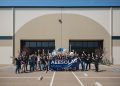
Firestorm was an essential site for mutual aid after Hurricane Helene.
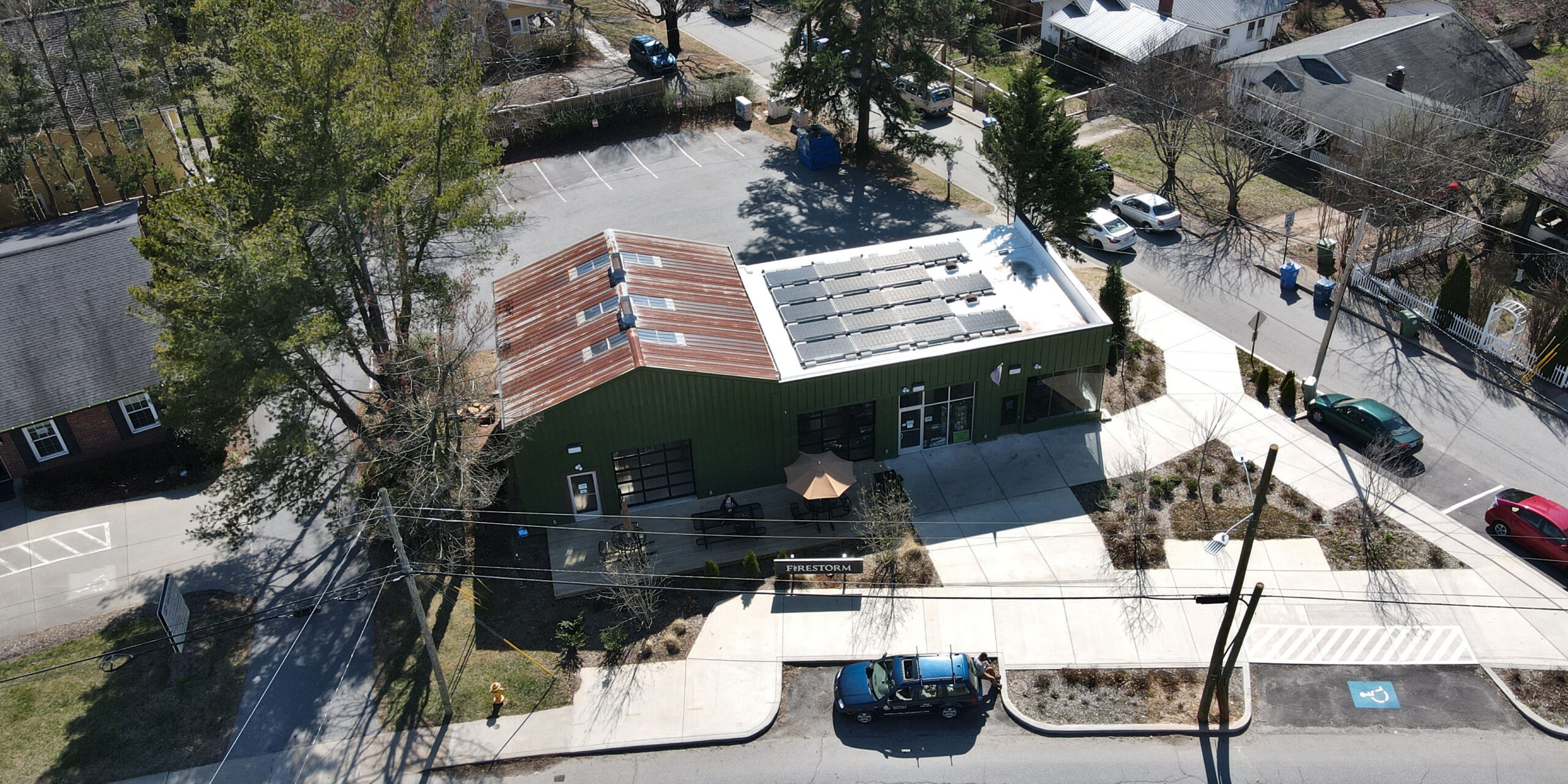
In the immediate aftermath, Firestorm Books in Asheville became an essential site for daily mutual aid meetings and a place to get potable and flushing water and hot meals. Since cell service was non-existent or unreliable, for the next two weeks, residents continued to gather at the bookstore to find one another, leave notes for friends and loved ones, receive verified information about local infrastructure and organize community efforts to undertake immediate recovery tasks like chain sawing trees that were blocking roads and conducting welfare checks.
“Within a few hours of the storm, members of our staff were working with neighbors to set up a grassroots disaster relief hub,” said Libertie Valance of Firestorm Books, a member/owner of the co-operative for the past 18 years. “Already being in the community, we were able to get organized and begin distribution of supplies a full week before FEMA was operating at scale.”

Firestorm Books
Working 10 hours a day seven days a week, Valance estimates that bookstore staff were able to serve approximately 5,000 neighbors.
Although Firestorm had a newly installed 7.5-kW solar array, it was grid-tied and nonfunctional during that critical time.
“Sadly, we were not able to use the solar panels on our roof because we didn’t have batteries and the grid was down,” said Valance. “Because of that, we missed opportunities to store perishable foods and medications, recharge power tools and communication devices for community responders and operate after dark as a place for people to safely gather.”
 Based on the limitations of grid-tied solar that they had just experienced, Firestorm decided to become completely energy resilient. The bookstore connected with Footprint Project, a disaster management non-profit that develops and deploys sustainable infrastructure.
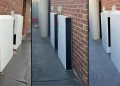
Working with Footprint Project, Firestorm now has a microgrid and no longer needs to rely on utility power. Its system includes four batteries and an inverter that’s AC-coupled to its solar system. It was a team effort that included product donations from Briggs & Stratton and Sol-Ark and installation from Asheville Solar Company. Footprint Project also provided a small cash grant and facilitated a 0% interest repayable grant through Invest Appalachia.
“We’ve donated batteries for years to help people and organizations recover from disasters and operate off grid,” said Sequoya Cross, vice president of energy storage for Briggs & Stratton Energy Solutions. “In fact, our batteries have been used around the world for more than a decade in some of the harshest and most remote environments so they’ve proven themselves to be a reliable, dependable choice.”
 The 2,200-ft2 bookstore now operates solely on solar power and batteries. The batteries are configured for active use, so Duke Energy’s Lake Julian plant is Firestorm’s energy backup.
For now, stored power is not a cost savings strategy for Firestorm since they were able to file an interconnection application prior to the elimination of Duke Energy’s Net Energy Metering (NEM) program in 2023. Any excess energy produced can be exchanged on the grid for equivalent energy during a higher use period. Unfortunately, this arrangement will come to an end in January 2027. At that point, the batteries will be an essential cost savings measure for Firestorm.
“Energy resilience is just part of the puzzle and there are additional projects like rainwater capture and storage that we hope to undertake in the future,” said Valance. “The failure to address climate change by political and economic leaders means that disasters like the one we experienced will continue with increased frequency. Still, we’re going to sleep better knowing that Firestorm can keep the lights on and the comms up during whatever comes next.”
Contribution from Briggs & Stratton