

Solar recycling in Australia is becoming a critical issue as the nation’s first significant wave of solar panel systems reaches the end of their lifespans. With millions of solar panels installed nationwide, understanding what happens to old solar panels is essential for a truly sustainable energy future.
Australia leads the world in rooftop solar uptake. Attention is shifting from installing solar panels to responsible recycling and long-term waste management.
What happens to old solar panels?
When a solar panel is decommissioned, it doesn’t just disappear. The journey of solar recycling in Australia starts with the collection and safe transport of old units. Many installers now partner with specialised recyclers to ensure panels are handled with care. This prevents the release of small amounts of hazardous materials, such as lead or cadmium, into the environment.
Modern solar recycling follows a structured process designed to recover valuable materials.
Step-by-step recycling process
- Collection and transport
Panels are collected from installers, recyclers, or decommissioned systems. - Frame and junction box removal
Aluminium frames and wiring are removed and recycled separately. - Glass separation
Glass is crushed and cleaned for reuse in manufacturing. - Cell and metal recovery
Silicon, copper, and silver are extracted using thermal or chemical processes.
The collection and sorting phase
The first step in solar recycling in Australia is to remove the easily accessible parts. Workers or machines remove the aluminium frames and junction boxes from the back of the panels. These components are made of high-quality metals that are easy to melt down and reuse. Once these are removed, the “sandwich” of glass, silicon, and plastic remains for further processing.
Advanced material recovery
Modern solar recycling facilities in Australia use advanced technology to recover up to 95% of a panel’s weight. Specialised machines called “deglassers” and “deframers” separate the glass from the silicon cells. This allows for the recovery of silver, copper, and high-purity silicon. These materials are then returned to the manufacturing supply chain to produce new products.
What are solar panels made of?
Understanding panel composition explains why recycling matters. Solar panels contain several recoverable materials.
Most panels include:
- Glass (around 70–75%)
- Aluminium frames
- Silicon solar cells
- Copper wiring
- Small amounts of silver and other metals
Major players and facilities in the Australian market
The solar recycling industry in Australia is expanding rapidly, with new commercial-scale facilities being built. Companies like PV Industries have recently opened large-scale plants in New South Wales to address waste management. Their Bankstown facility uses “deframer” technology to process thousands of panels every year. This investment is helping create a circular economy in which old panels become new resources.
Other leaders, such as Elecsome and Sircel, are also making significant strides in Victoria and New South Wales. Sircel’s Parkes facility can process 160,000 panels annually, recovering green metals for the local economy. These companies are proving that solar recycling in Australia is a viable and profitable business model. Their success shows that we have the technical skills to manage our own solar waste.
Future innovations and Second-Life Solar
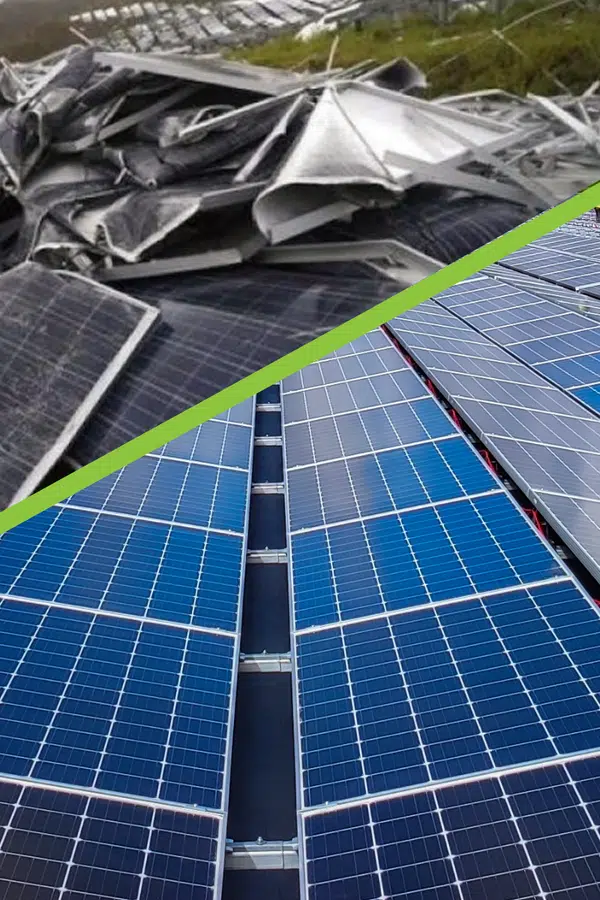
If you upgrade your solar system, Second Life Solar will pay to remove your old panels. We are pleased to offer current solar consumers an alternative through our partnerships with CSIRO, the NSW Environment Protection Authority, and Energy Matters.
Government regulations, stewardship programs and landfill bans
Proposed and existing measures include:
- Extended Producer Responsibility (EPR) schemes
- Mandatory product stewardship programs
- Installer-led take-back initiatives
The Australian government is finally stepping up to regulate how we handle old panels. Victoria was the first state to ban solar panels from landfill in 2019, setting a precedent for others. Western Australia followed suit in July 2024, making solar recycling in Australia mandatory for residents. These bans require the industry to develop better methods for recovering materials rather than burying them.
New South Wales is also moving toward a mandatory product stewardship scheme by late 2025. This will place more responsibility on manufacturers and importers to manage the end-of-life of their products.
The economic and environmental value of solar waste
There is a “gold mine” hidden within our old solar infrastructure. Investing in solar recycling in Australia turns a waste problem into a significant economic and environmental opportunity.
Economic opportunities in solar recycling
Recycling old solar panels is not only environmentally responsible; it also helps extend their useful life. As volumes grow, recycling will become more cost-effective and scalable. Benefits include:
- New green jobs
- Local recycling industries
- Reduced reliance on imported materials
Environmental benefits of solar panel recycling
Solar recycling in Australia protects the environment in multiple ways. This ensures solar power remains one of the cleanest energy solutions available. Recycling panels helps:
- Reduce landfill waste
- Recover scarce resources
- Lower carbon emissions from mining
- Support sustainable manufacturing
What homeowners can do with old solar panels
If your solar system is ageing, you have options. Homeowners should:
- Ask installers about recycling services
- Avoid sending panels to the landfill
- Choose accredited solar professionals
Working with trusted providers ensures panels are handled responsibly.
Why you should care about solar disposal
As a homeowner, your role in solar recycling in Australia is to choose responsible installers. When you upgrade your system, ask your provider where the old panels will go. Many reputable companies, like those vetted by Energy Matters, have clear policies for sustainable disposal. Your choices today will determine the health of Australia’s environment in the coming decades.
The future of solar recycling in Australia is bright, but it requires our collective effort. We are moving from a “take-make-waste” model to a truly circular energy economy. By supporting local recycling facilities and advocating for stronger regulations, we can protect our country. Let’s ensure our clean energy journey is sustainable from the first ray of sunlight to the final stage of recycling.
Join the movement for a cleaner, greener Australia! If you are ready to upgrade your system or need advice on sustainable disposal, Energy Matters is here to help. Get up to 3 FREE solar quotes from our pre-vetted installers today and power your home with confidence!