


Western Australia (WA) sits outside Australia’s national electricity market, and that single fact shapes everything about its energy system. With no interconnections linking it to the eastern states, WA operates as an islanded grid—responsible for generating, storing, and balancing all of its own electricity. That isolation brings pressure, but it has also pushed the state to innovate faster than many of its counterparts.
The South West Interconnected System (SWIS), which powers Perth and the southwest, is undergoing one of the most rapid transitions in the country as coal plants approach retirement later this decade.
At the same time, the state’s vast north is home to privately operated mining grids and remote communities that rely on a growing mix of solar, batteries, and microgrids to keep the lights on. This combination of scale, distance, and decentralisation has made WA a testing ground for technologies that other states are only beginning to explore—from standalone power systems to town-scale microgrids and community batteries embedded in suburban streets.
In this instalment of our Electricity Grids: State by State series, we explore how WA is reshaping its electricity network in the absence of a safety new, and why its solutions are becoming a model for remote and regional grids worldwide.
The current grid
WA’s electricity system is unlike any other in the country. Instead of one large, interconnected network, the state runs multiple independent grids—each with its own challenges, technologies, and planning priorities. This fragmented structure reflects WA’s geography: vast distances, concentrated population centres, and remote industrial regions that operate entirely on their own.
The SWIS – The state’s main grid
The SWIS supplies Perth, the southwest coast, and major regional towns. It is the largest of WA’s grids, and the closest equivalent to an eastern-state system, but it behaves differently due to its isolation.
Key characteristics of the SWIS:
- Heavy rooftop solar penetration: Perth suburbs have some of the highest rooftop solar adoption rates in the world, frequently driving daytime demand to record lows.
- Coal in rapid retreat: All remaining coal units — Collie and Muja C — rescheduled to close by 2027-2029. This makes WA one of the first states to fully exit coal generation.
- Growing storage footprint: Large batteries such as Kwinana Stage 1 and 2, plus multiple community batteries across Perth, are now central to managing minimum demand and evening peaks.
- Limited utility-scale renewables: Compared with the eastern states, the SWIS has fewer large wind and solar farms, not due to lack of resources, but because of grid bottlenecks that restrict new connections.
The NWIS – Powering the mining north
The North West Interconnected Systems (NWIS) is the backbone of the Pilbara’s mining and export operations. It is not government-run; instead, it consists of private grids operated by Rio Tinto, BHP, FMG, and Horizon Power.
What makes the NWIS unique:
- Privately managed networks with different standards: There is no single operator, making planning and coordination more complex.
- Major industrial loads: Mines, processing plants, and ports require a constant, high-capacity supply.
- Rapid renewable uptake: Companies are investing billions in solar, wind, and batteries to cut costs and emissions — often building systems larger than some towns’ entire demand.
- Limited connection to the SWIS: The NWIS operates independently, with no link to WA’s main grid or the NEM.
Remote and regional microgrids
Dozens of regional and remote towns run on standalone microgrids powered y a mix of diesel, solar, and batteries. These systems are some of the most advanced in Australia.
- Notable features: SPS technology replacing long power lines: Standalone Power Systems (SPS) use solar + battery + backup units to supply remote customers more reliably than traditional poles-and-wires.
- Town-scale hybrid systems: Places like Kalbarri, Onslow, and Carnarvon operate high-renewable microgrids with sophisticated control systems.
- Resilience in harsh conditions: These microgrids are engineered to withstand cyclones, fires, and extreme heat — challenges that large networks struggle with.
WA’s current grid is not a single system, but a patchwork of interconnected and independent networks shaped by geography and industry. This diversity is both a challenge and an advantage, allowing WA to trial solutions at different scales and push innovation in places where traditional grids fall short.
The challenge – reliability without a safety net
WA doesn’t have the luxury of importing electricity during shortfalls or exporting excess power whenever renewables surge. Everything must be managed inside the state’s borders. This creates challenges that are more acute than in any other Australian grid.
One of the biggest pressures is maintaining firm capacity as coal retires. With Collie and Muja C set to close before the decade ends, the SWIS must replace not just energy, but also the steady, predictable output that coal has historically provided. Batteries, gas peakers, and demand management will increasingly form the backbone of reliability, but coordinating these resources without the support of interstate links requires careful planning and conservative margins.
At the same time, minimum demand is falling fast in the SWIS. Rooftop solar routinely pushes midday demand to extremely low levels, forcing the system operator to ramp down other generators or curtail solar to keep frequency stable. Managing these daytime lows, followed by steep evening peaks, is becoming a daily balancing act — and with more still being installed, the challenge is growing.
Heatwaves add another layer of complexity. WA experiences some of the country’s most extreme temperatures, which drive air-conditioning loads to their limits. During these events, the grid must cope with high demand while solar output can dip due to panel derating. Without a neighbouring state to lean on, the SWIS must carry enough capacity to handle these peaks independently.
The northwest is no simpler. The fragmented ownership of the NWIS makes coordinated planning difficult. As mining companies build their own renewable systems, integrating these assets into a cohesive, reliable regional energy network becomes more challenging, especially when each operator follows its own investment timeline and technical standards.
Put simply, reliability in WA isn’t about adding more generation. It’s about managing extremes, balancing rapid solar growth, replacing coal with firm renewable capacity, and doing all of it without an external fallback. The absence of a safety net forces WA to be both cautious and innovative, often at the same time.
The renewable expansion – from coast to outback
WA’s renewable build-out looks very different from the east coast. Instead of large clusters of generation feeding into a common network, WA’s renewable capacity is spread across multiple grids, long distances, and distinct economic regions. The result is a transition shaped as much by geography and industry as by policy.
In the SWIS, renewable growth has been steady rather than explosive. Strong winds in the Mid West and Wheatbelt support several major wind farms, while solar farms operate around Northampton, Merredin, and the eastern edge of the network. But rooftop solar remains the dominant force. Perth suburbs continue installing panels at world-leading rates, supplying huge volumes of daytime power that are already reshaping how the system operates. More utility-scale projects are planned, but they depend on transmission upgrades that are still several years away.
In the north, the story shifts dramatically. The Pilbara and broader NWIS are undergoing one of the most significant private-sector renewable expansions in the world. Mining giants are building vast solar plants, large battery systems, and early-stage wind projects to power their operations. These aren’t small industrial add-ons. They’re multi-gigawatt precincts that often exceed the scale of entire regional towns. This push is driven by cost, emissions commitments, and the need for stable power in remote locations.
Far from major centres, regional towns and remote communities are filling in the map with smaller but highly impactful renewable systems. Hybrid microgrids combining solar, batteries, and diesel backup now power locations like Kalbarri, Onslow, Esperance, and numerous Indigenous communities across the north. These systems reduce fuel dependence, improve reliability, and allow local control over energy use—benefits that traditional “long-line” distribution could never deliver.
Hydrogen and renewable ammonia are another emerging frontier. Projects in the Gascoyne, Mid West, and Pilbara aim to convert renewable energy into fuel for export markets, though most remain in early development stages due to infrastructure and cost hurdles. If even a fraction of these proposals progresses, WA could become a major renewable-fuel producer.
WA’s renewable expansion is broad, decentralised, and shaped by economic hubs rather than a single state-wide plan. It is not the fastest rollout in the country, but it is one of the most diverse, stretching from city rooftops and Wheatbelt farms to remote microgrids and industrial north-west precincts. This breadth is both a strength and a challenge, and it sets the stage for WA’s next phase: integrating these resources into a stable, reliable, and modernised electricity system.
The microgrid revolution
Since WA cannot rely on interstate support and must manage vast distances with small, dispersed communities, it has become a world leader in microgrids, standalone power systems, and localised storage. These technologies aren’t side projects but are central pillars of how the state is redesigning reliability.
One of the biggest breakthroughs has been the rollout of Standalone Power Systems (SPS). Instead of maintaining long, fire-prone distribution lines to remote farms and homesteads, Western Power now replaces them with solar-and-battery units backed by a small diesel generator. SPS units provide more reliable power, reduce outage risk during storms and bushfires, and eliminate the need to maintain hundreds of kilometres of poles and wires. WA has deployed these systems at a scale unmatched anywhere else in the world.
At a larger scale, town microgrids are redefining what regional energy looks like. Kalbarri’s microgrid uses wind, solar, and batteries to keep the town running even when its long feeder line is down. Onslow operates one of the country’s most advanced distributed energy systems, where rooftop solar, batteries, and smart inverters are coordinated like a miniature version of a state grid. Esperance has shifted from diesel reliance to a hybrid system that significantly reduces fuel use. These microgrids show how regions once dependent on fragile infrastructure can become resilient, self-contained energy hubs.
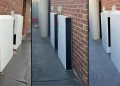
Perth’s suburbs are also part of the transformation. Community batteries are now installed across dozens of neighbourhoods to absorb excess rooftop solar and reduce pressure on local feeders. These mid-sized batteries act as shock absorbers within the distribution networks, helping avoid voltage problems and improving the reliability of suburban streets that now export more electricity than they consume. As more households adopt rooftop solar, EVs, and eventually home batteries, community storage will become essential to keeping the SWIS operating smoothly.
Meanwhile, upgrades to SWIS are laying the groundwork for more large-scale renewables. New transmission in the Midwest, expanded nodes for renewable connection, and the introduction of synchronous condensers will help stabilise the grid as coal retires. These upgrades are slower-moving than the microgrid rollouts, but they are critical to unlocking the next wave of industrial-scale wind and solar.
Taken together, these initiatives make WA one of the most innovative electricity systems in the country. While other states focus on centralised generation and big-grid upgrades, WA is proving the power of decentralisation—building a network that is flexible, modular, and tough enough to withstand the state’s isolation and extreme conditions.
What it means for the future
As coal exits before the decade’s end, the SWIS will depend on a coordinated mix of batteries, flexible gas, and better orchestration of rooftop solar. This means the future grid won’t be defined by one giant project, but by many smaller systems working together.
Key shifts ahead for the SWIS include:
- A growing reliance on community batteries to absorb midday solar and support evening peaks.
- More standalone power systems are replacing long rural lines.
- Increased use of smart inverters and DER orchestration to manage rooftop solar output.
- Expansion of large-scale batteries to support coal retirement.
In the north, the trajectory is different. The Pilbara’s privately operated industrial grids are rapidly becoming renewable hubs as mining companies invest in large-scale solar, wind, and storage. Their goal is to cut emissions, reduce fuel costs, and power new industries such as hydrogen and mineral processing.
The industrial expansion will drive:
- Multi-gigawatt renewable precincts designed around mining operations.
- New demand for long-duration storage and advanced grid controls.
- Opportunities for clean-energy exports tied to hydrogen and ammonia.
Across all regions, the shared challenge is firming. As renewables grow, WA will need more long-duration storage, demand flexibility, and digital coordination to keep the system balanced without interstate support.
Ultimately, WA’s future grid will be defined by:
- More local control
- More distributed infrastructure
- More resilience built into regional and remote areas
WA is showing that isolation can be an advantage, forcing innovation that other states will eventually need.
What It Means for Homeowners
For households, Western Australia’s energy transition will be felt most clearly in how solar, batteries, and pricing evolve over the next few years. With rooftop solar already dominant in the SWIS, homeowners are increasingly becoming part of how the grid manages supply and demand, not just passive consumers. The shift isn’t dramatic day to day, but it is steady — and it’s changing how homes interact with the system.
Here’s what homeowners can expect:
- More benefits from solar and storage
Rooftop solar remains one of the most cost-effective investments for WA households, but its value will increasingly depend on pairing it with a battery or using more power during the solar day, when prices tend to be lowest. - Greater use of community batteries
As more suburbs receive shared batteries, voltage issues will ease, solar exports will improve, and households may see new options for local energy storage without needing a battery of their own. - Sharper focus on smart energy use
As minimum demand continues to fall, WA will move further toward time-of-use pricing, demand flexibility, and automation that shifts household consumption away from the evening peak. - Better reliability in regional and fringe areas
The rollout of standalone power systems and microgrids means fewer long-line faults, shorter outage times, and more resilient supply for remote customers.
Overall, homeowners will gain more control over how they generate, store, and use energy — and many of the technologies WA is deploying today will eventually shape how everyday households interact with the grid nationwide.
Western Australia’s isolation has pushed it to design an electricity system built on resilience, flexibility, and local solutions. As coal retires and renewables continue to spread across both city suburbs and remote regions, WA is showing how a decentralised grid can operate reliably without leaning on interstate support. In the next instalment of our Electricity Grids: State by State series, we turn to Tasmania — a system shaped by water, wind, and one of the most flexible generation portfolios in the country.
Energy Matters has been in the solar industry since 2005 and has helped over 40,000 Australian households in their journey to energy independence.
Complete our quick Solar Quote Quiz to receive up to 3 FREE solar quotes from trusted local installers – it’ll only take you a few minutes and is completely obligation-free.