

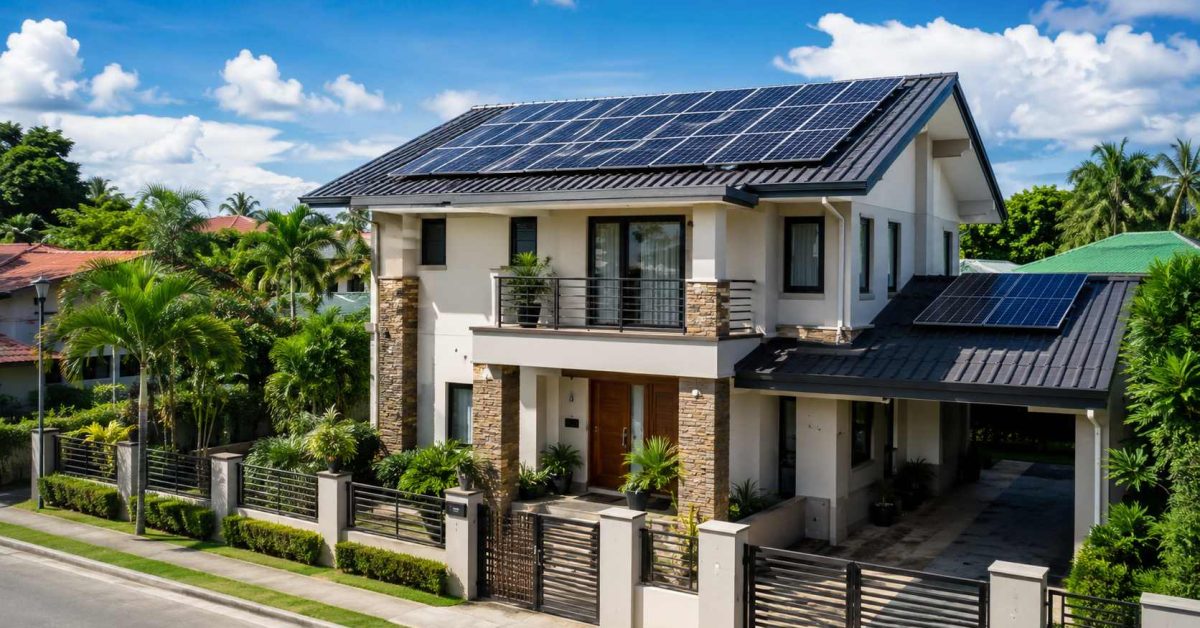
What are the requirements for rooftop solar installation in the Philippines?
- Roof assessment requirements
- System sizing requirements
- Equipment requirements
- Safe installation planning
- Legal and utility requirements
- Logistical and provider requirements
Overview
- Rooftop solar installation requires a strong roof, proper system sizing, quality equipment, safe installation planning, utility or net metering compliance, and a reliable provider.
- Meeting these ensures safe, efficient, and long-term energy savings.
- Solaric offers end-to-end solar solutions, helping homeowners transition smoothly from assessment to installation and ongoing system support.
Installing rooftop solar is not just about adding panels—it requires careful planning and compliance with key technical, structural, and regulatory requirements.
Understanding the requirements for rooftop solar installation is essential to ensure the system is safe, efficient, and fully compatible with both the property and the local utility standards. These requirements help determine whether the roof is suitable, the system is properly sized, and the installation meets legal and performance expectations for long-term reliability.
Roof Assessment Requirements

The first requirement is a suitable roof. It is where the photovoltaic panels are mounted to capture sunlight.
Roof Strength and Condition
Your roof should be strong enough to support panels, mounting rails, and workers during installation. It must have proper structural capacity, shape, and tilt before solar installation. If the roof is old, damaged, or due for replacement, it is better to repair it before installing solar panels.
Roof Space and Sunlight Exposure
Roughly 4 square meters of viable roof space can host 1 kilowatt peak of solar panels. This helps homeowners estimate whether their roof has enough usable area. Sunlight exposure is also important. Shade from trees, taller buildings, or water tanks can reduce solar output, so the roof should receive direct sunlight for most of the day.
System Sizing Requirements
A rooftop solar power system should match the property’s actual electricity consumption. As a general guide, at least 1 kWp of solar panels is recommended for every 100–130 kWh of monthly electricity use.
Here is a rough estimate based on monthly consumption:
-
- 300 kWh/month — around 3 kWp
- 500 kWh/month — around 4–5 kWp
- 800 kWh/month — around 6–8 kWp
Daytime electricity use also affects the ideal system size. Homes that regularly use appliances such as air conditioners, refrigerators, computers, and washing machines during the day can maximize solar energy production more effectively.
Before recommending a system, a solar provider should evaluate your electric bill, daytime usage, appliance demand, and roof conditions to determine the most suitable setup.
Equipment Requirements

A rooftop solar system needs more than panels. Each component affects safety, performance, and long-term efficiency.
Solar Panels
Solar panels convert sunlight into direct current (DC) electricity, but performance goes beyond wattage. Homeowners should consider the brand, rated output, warranty, and certification to assess long-term reliability.
It is also important to check the panel’s degradation rate, or expected loss in efficiency over time. Higher-quality panels may offer better long-term value by maintaining more consistent output throughout their lifespan.
Inverter
The inverter converts direct current (DC) from solar panels into alternating current (AC) used by household appliances. It is a key component of a solar PV system, as it enables solar energy to power appliances, lighting, air conditioning, refrigerators, computers, and other home electrical loads safely and effectively.
Mounting System
The mounting system secures solar panels to the roof and keeps them stable during heat, heavy rain, and strong typhoon winds. A reliable system should withstand harsh weather conditions, including winds of up to 250 kph.
The mounting method depends on the roof type:
-
- Metal roofs — commonly use brackets attached to the roof ribs or seams
- Tiled roofs — require tile hooks or specialized support brackets
- Concrete or flat roofs — often use rail-based or ballasted systems
Proper mounting also affects solar efficiency. Panels must be positioned at the correct angle and securely installed to maximize sunlight exposure while preventing leaks, misalignment, or structural issues.
Safe Installation Planning
A proper installation plan should account for panel placement, wiring routes, inverter location, roof access, and weather exposure before installation begins. This helps prevent issues such as poor energy output, unsafe wiring, roof leaks, overheating, and difficult maintenance access.
Wiring should be properly organized and protected, while the inverter must be placed in a safe, accessible, and well-ventilated area for efficient operation and easy maintenance. Installers should also assess roof access and working conditions to ensure safety during installation, as rooftop solar involves heights, electrical systems, and weather exposure. Proper planning ensures a safe, durable, and efficient system that is easier to maintain over time.
Legal and Utility Requirements
For grid-tied rooftop solar systems, homeowners must prepare the required documents for utility approval and net metering before connecting to the distribution grid.
The usual requirements may include:
- Accomplished net metering application form submitted to the distribution utility
- Valid electric bill or service account details for utility verification
- Technical specifications of the solar PV system, including panel and inverter details
- Single-line diagram showing the system’s electrical connection
- Electrical plan or wiring layout prepared by a qualified professional
- Solar panel and inverter datasheets for equipment verification
- Compliance documents for grid interconnection standards
- Required permits or approvals from the local government or utility provider
- Testing and commissioning documents before system activation
- Installation of a bi-directional meter after application approval
These requirements are important because net metering allows excess solar energy to be exported back to the grid for bill credits. To do this safely, the utility must confirm that the solar system is properly designed, installed, and protected.
Logistical and Provider Requirements
Before installation, homeowners should prepare safe access to the roof, electrical areas, and the main service panel. Installers may require space for ladders, tools, equipment delivery, and safety setup during the project. Roof conditions and possible obstructions should also be checked early to avoid installation delays.
Working with a reliable solar provider is equally important. The provider should clearly explain warranty coverage, monitoring systems, maintenance support, and after-sales service. For grid-tied systems, they should also assist with net metering requirements, utility coordination, and the necessary documentation to help ensure a smoother installation and approval process.
Key Takeaway
The requirements for rooftop solar installation include roof readiness, proper system sizing, high-quality equipment, safe installation planning, utility or net-metering documents, and a reliable solar provider. For Filipino homeowners, meeting these requirements ensures a safe, efficient system with long-term energy savings.
Solaric supports homeowners with complete rooftop solar solutions, from assessment and installation to ongoing maintenance and support.
Ready to prepare your home for solar? Request your free solar quote today and turn on the sun with Solaric now.