

What Should You Look for in Solar Companies Beyond the Price Tag?
- Check the company’s technical expertise and project experience.
- Review whether the system design is based on your actual energy use.
- Choose durable solar panels, inverters, and mounting systems.
- Compare warranty coverage and workmanship protection.
- Evaluate after-sales support, monitoring, and service response.
- Ask if the provider can assist with net metering requirements.
Overview
- Solar panel price is important, but it should not be the only factor when choosing a solar provider.
- A reliable solar company should assess your roof, energy use, equipment needs, and long-term savings goals before recommending a system.
- Product quality, warranty coverage, installation standards, and after-sales support can affect system safety, savings, and performance.
- Homeowners should also check whether the provider can help with net metering documentation and utility coordination.
When choosing a solar provider, homeowners should look beyond the initial quote and evaluate the company’s technical expertise, system design process, equipment quality, warranty coverage, after-sales support, and net metering assistance. A cheaper package may save money upfront, but a well-designed and properly supported solar power system can deliver better long-term value.
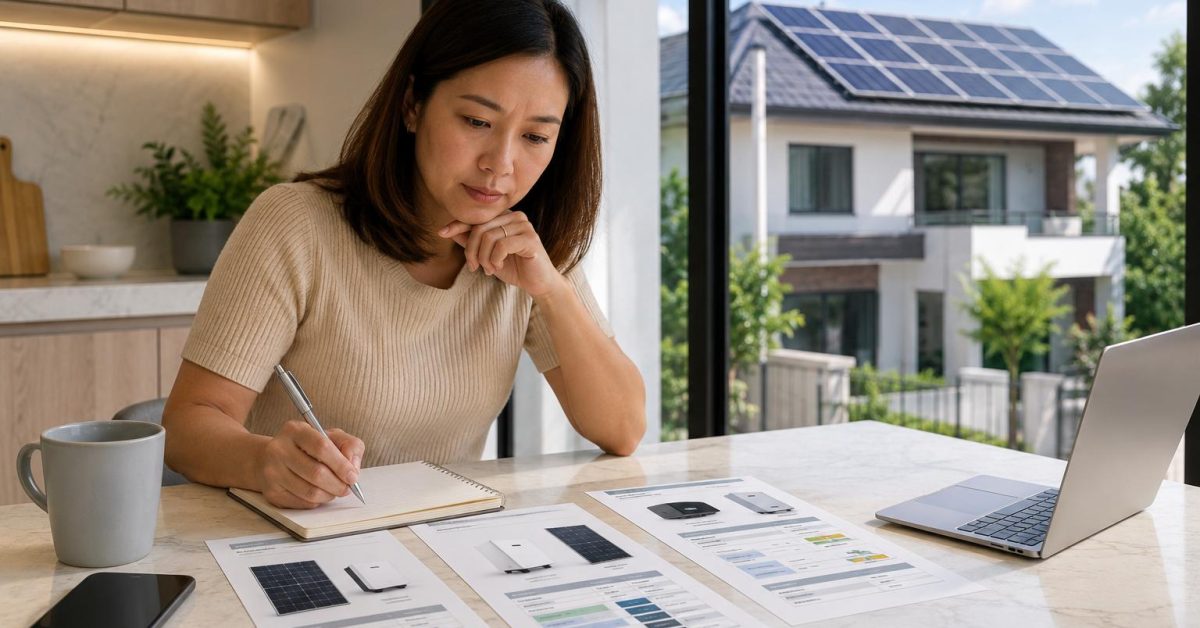
Solar power is a long-term investment. For many homeowners in the Philippines, the first instinct is to compare solar packages based on price. This is understandable because rooftop solar requires upfront planning and budget consideration.
However, a low price does not always mean better value. A cheaper quote may leave out proper engineering, durable mounting, reliable inverter selection, clear warranty coverage, or after-sales support. These details may not be obvious at the start, but they can affect system performance, safety, and savings over time.
This is why understanding what to look for in solar companies in the Philippines beyond the price tag matters. The right provider should not only install panels. It should help you design a solar power system that fits your home, roof condition, electricity use, and long-term energy goals.
Check the Company’s Technical Expertise and Project Experience
The first factor to check is technical expertise. A solar provider should be able to explain how the system size, panel layout, inverter selection, and expected production were computed.
A reliable company should not recommend a generic package without reviewing your home’s actual condition. Before installation, the provider should assess your roof direction, roof material, shading, available space, monthly electric bill, and daytime electricity use.
Project experience also matters. A provider that has completed many residential, commercial, or industrial installations is more likely to understand common site challenges, utility requirements, and installation risks. This matters in the Philippines because solar systems must perform under heat, rain, humidity, and typhoon exposure.
Full-service support from experienced solar companies in the Philippines can help homeowners compare providers based on system quality, not just package price. A good provider should be able to explain the design clearly, answer technical questions, and show how the system supports your savings goal.
Review Whether the System Design Is Based on Your Actual Energy Use

The second factor is system design. A solar power system should be designed around how your household uses electricity, especially during the day when solar production is strongest.
For example, a home that uses air conditioning, refrigerators, computers, fans, and washing machines during daytime hours may be able to use more solar power directly. A household that uses most of its electricity at night may need a different design approach or a closer review of net metering benefits.
The provider should review your electric bills and explain how the proposed system size matches your usage. It should also consider whether your energy needs may grow in the future because of additional appliances, work-from-home equipment, electric vehicles, or home improvements.
A professionally engineered rooftop solar system in the Philippines can help homeowners reduce electricity costs while making better use of available roof space. The goal is not simply to install the most panels possible. The goal is to install the right system for your household’s consumption pattern.
Choose Durable Solar Panels, Inverters, and Mounting Systems
The third factor is equipment quality. Solar panels may look similar from the outside, but their output, warranty, durability, and long-term performance can vary.
Homeowners should ask about the panel brand, inverter type, mounting system, protection devices, and warranty coverage. The Philippines has strong sunlight, heavy rain, humidity, and typhoon conditions, so equipment should be suitable for long-term outdoor use.
Inverters are especially important because they convert solar electricity into usable power for the home. A poorly matched inverter can affect performance and reliability. The mounting system is also critical because it keeps the panels secure on the roof through changing weather conditions.
Solaric’s solar solutions are built around professional installation, quality equipment, and responsive after-sales support for homes and businesses. This type of support matters because solar is expected to operate for many years, not just during the first few months after installation.
Compare Warranty Coverage and Workmanship Protection
The fourth factor is warranty coverage. A solar power system includes several components, and each may have different warranty terms. Homeowners should understand what is covered, how long the coverage lasts, and who handles the claim if a problem appears.
There may be separate warranties for panels, inverters, mounting systems, and installation workmanship. Equipment warranties usually cover product issues, while workmanship warranties cover installation-related concerns.
This is important because warranty coverage affects long-term service costs. A low-cost provider may offer attractive pricing but limited support after installation. A stronger provider should explain the warranty clearly before the project starts.
Before choosing a provider, ask:
- What is covered by the panel warranty?
- What is covered by the inverter warranty?
- Is installation workmanship covered?
- Who handles warranty claims?
- Are labor and replacement services included?
- How quickly can the team respond to service concerns?
Choosing trusted solar providers and installation teams matters because experience, credentials, and reliable support can affect installation quality, system safety, and long-term performance.
Evaluate After-Sales Support, Monitoring, and Service Response

The fifth factor is after-sales support. Solar installation should not end once the panels are mounted. Homeowners need support for monitoring, maintenance questions, inspections, troubleshooting, and warranty concerns.
Solar output can be affected by dirt, shading changes, inverter issues, loose wiring, roof work, or weather-related wear. A provider with reliable after-sales support can help identify performance issues before they affect savings.
Monitoring is also helpful because it allows homeowners to check whether the system is producing energy as expected. Some issues may not be visible from the ground, so system monitoring and periodic inspections can help maintain long-term performance.
Solaric’s home and business solar solutions emphasize long-term after-sales commitments, including system support after installation. For homeowners, this helps protect the value of the investment beyond the installation date.
Ask if the Provider Can Assist With Net Metering Requirements
The sixth factor is net metering assistance. Net metering allows qualified solar users in the Philippines to export excess solar electricity to the grid for bill credits. This can improve the value of a grid-tied solar power system, especially if the home produces more electricity than it uses during some daytime periods.
However, the process involves documentation, utility coordination, technical review, and meter changes. A provider that understands the process can help homeowners prepare the right documents and avoid unnecessary delays.
Net metering allows qualified solar users in the Philippines to export excess solar electricity to the grid for bill credits. The process may involve documentation, utility coordination, technical review, system inspection, and meter changes.
A provider familiar with net metering can help prepare system details, coordinate requirements, and reduce avoidable back-and-forth with the utility provider. Before choosing a company, homeowners should also understand what to know before hiring solar companies so they can evaluate expertise, support, and long-term service quality.
Why Price Should Not Be the Only Basis
Price matters, but it should not be the only basis for choosing a solar provider. A low upfront quote may be tempting, but homeowners should check what is included and what may cost extra later.
A complete proposal should clearly explain the system size, equipment specifications, expected energy production, installation scope, warranty coverage, after-sales support, and net metering assistance. If these details are missing, it becomes harder to compare providers fairly.
The better question is not “Which solar company is cheapest?” but “Which solar company can provide the best long-term value?” A reliable provider should help you save money, protect your roof, improve energy efficiency, and support your system after installation.
Key Takeaway
When deciding what to look for in solar companies Philippines beyond the price tag, focus on technical expertise, system design, equipment quality, warranty coverage, after-sales support, and net metering assistance.
A solar power system should be planned around your home’s actual energy use, roof condition, and long-term goals. The right provider can help you reduce grid dependence, improve savings, and get more value from your solar investment.
Ready to compare solar options for your home? Request your free solar quote today and turn on the sun with Solaric now.