


Most changes to home energy rules happen quietly. There’s no headline moment, no clear announcement that things have changed. But every so often, a small clarification reveals something bigger about where housing standards are heading.
A recent change in how New South Wales (NSW) applies battery installation rules is one of those moments. On the surface, it’s a narrow compliance detail. Look closer, and it points to a broader transition underway, one where home energy standards are starting to catch up with how Australian homes are actually being used. Garages are no longer passive spaces, energy systems are no longer standalone, and regulations are slowly moving from rigid assumptions toward more integrated, future-facing thinking.
Home energy standards are starting to reflect how homes are actually used
For a long time, residential energy rules were written around a fairly simple model of the home. Solar lived on the roof, switchboards stayed on the external wall, and garages were storage spaces. The reality inside most homes has changed much faster than the standards that govern them.
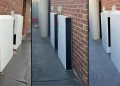
Today, garages are where energy systems increasingly converge. Home batteries are commonly installed there, and EV chargers are becoming standard inclusions. Inverters, monitoring hardware, and upgraded switchboards are often routed through the same space. What was once a low-risk, low-use area has quietly become one of the most energy-dense parts of the house.
The recent NSW battery clarification reflects regulators starting to acknowledge this change. Instead of treating garages as simple access points that must be kept clear at all costs, standards are beginning to recognise how these spaces are actually used and navigated. That doesn’t reduce the importance of safety, but reframes it in a way that aligns with modern home layouts rather than legacy assumptions.
This suggests future home energy standards will increasingly respond to real-world use, an important indicator for homeowners planning long-term electrification upgrades.
Future standards will treat the home as an integrated energy system
One of the clearest signs behind this is that batteries will no longer be regulated as isolated pieces of equipment. Where a battery is installed now affects how the rest of the home’s energy system functions.
As more households electrify, individual components start to overlap. Battery placement influences cable runs, inverter locations, airflow, access, and how easily additional technology can be added later. Treating each device under separate, rigid rules creates friction, extra cost and design compromises that don’t reflect how systems actually operate together.
The NSW clarification hints at a shift away from that fragmented approach. Instead of applying rules in isolation, regulators are starting to recognise the home as a connected energy system with multiple interacting parts. That systems-based thinking is likely to shape future standards, especially as homes add more energy hardware over time.
This means installation decisions are increasingly about integration. The more standards reflect how technologies work together, the easier it becomes to design energy systems that are safer, more efficient, and easier to expand in the future.
Compliance is shifting from rigid distances to risk-based thinking
Earlier battery rules were often applied in a literal way. Fixed distances and clearances were treated as absolutes, regardless of how a space was actually used or accessed. While that approach was simple to enforce, it didn’t always reflect real-world risk.
The NSW battery clarification suggests a gradual move away from that mindset. Rather than relying solely on blanket measurements, compliance is starting to consider context—how people move through a space, where escape paths actually are, and whether a rule meaningfully improves safety in practices.
This mirrors how building and electrical standards tend to evolve over time. Early versions prioritise certainty and consistency. As technologies become more common, standards mature and shift toward outcomes instead of checklists. The goal remains safety, but the method becomes more flexible and better aligned with real homes.
If this pattern continues, future home energy standards are likely to focus less on strict spatial rules and more on managing actual risk. That means designs that prioritise sensible layouts and safe access rather than working around inflexible technicalities.
Flexibility will matter more as home energy systems become more complex
Home energy setups are no longer static. A system installed today is unlikely to be the final configuration a household uses over the next decade. Batteries may be expanded, EV chargers added, or energy management systems integrated as technology and household needs change.
Rigid installation rules make that evolution harder. When standards assume a single, fixed setup, even small changes can trigger costly redesign or force compromises in placement and performance. Flexibility in how rules are applied makes it easier for homes to adapt over time without sacrificing safety.
The NSW clarification points to an acknowledgement of this reality. By allowing more practical interpretation, it reduces the risk of locking households into designs that only work under today’s assumptions. This becomes increasingly important as homes move toward bidirectional charging, smarter load control, and higher levels of electrification.
Future energy standards are likely to place greater emphasis on adaptability. Rather than defining one “correct” layout, they will need to accommodate a range of configurations that can evolve as technology advances, a change that benefits both homeowners planning ahead and the broader energy system.
What homeowners should take from this now
The most important takeaway isn’t the technical detail of the rule change itself. It’s the sign that sends a message about how home energy standards are evolving, and what that means for planning future upgrades.
Rules will continue to change as electrification accelerates. Standards written for solar-only homes are being reinterpreted for batteries, EVs, and integrated energy systems. That makes short-term optimisation risky if it ignores where things are heading.
For those considering solar, batteries, or EV charging, the focus should be on flexibility and future compatibility. Ask the installer how a system could be expanded later, whether placement allows for additional hardware, and how current designs align with likely changes in standards. Planning with that in mind reduces the chance of costly adjustments down the track and makes it easier to adapt as home energy requirements grow.
A small change with a larger signal
On its own, the NSW battery clarification is a minor adjustment. It doesn’t introduce new technology, new incentives, or new requirements. But taken in context, it reflects a broader shift in how home energy standards are being shaped.
As homes become more energy-active, regulations are starting to move away from static assumptions and toward practical, system-aware thinking. That transition won’t happen all at once, and it won’t always be obvious. But changes like this show standards slowly aligning with how homes are actually designed, used, and upgraded.
For homeowners, the message is clear. The future of home energy isn’t just about better technology. It’s also about rules that recognise integrated systems, evolving layouts, and the need for flexibility over time.
Energy Matters has been in the solar industry since 2005 and has helped over 40,000 Australian households in their journey to energy independence.
Complete our quick Solar Quote Quiz to receive up to 3 FREE solar quotes from trusted local installers – it’ll only take you a few minutes and is completely obligation-free.