


The U.S. Energy Information Administration (EIA) has released the first data of 2026 on electrical generation in the country, and renewables are out-performing, again.
Renewable energy sources provided over one-quarter of U.S. electrical generation in January 2026 — 11% more than a year ago — and accounted for over 36% of installed generating capacity. The SUN DAY Campaign reviewed data from EIA’s latest “Electric Power Monthly” report.
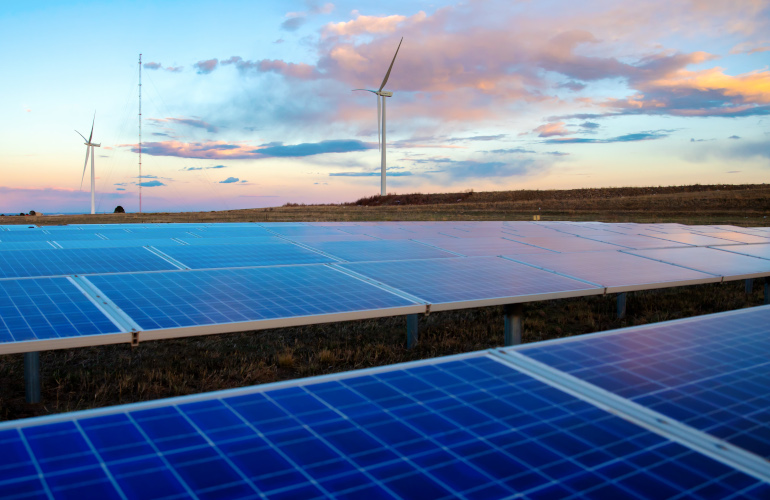
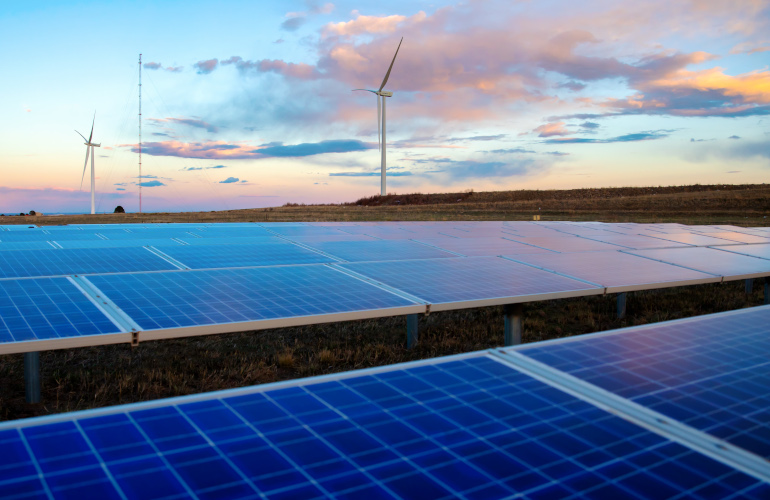
Photo by Werner Slocum/NREL
Electrical generation by utility-scale solar expanded by 16.4% while that from “estimated” small-scale/rooftop solar PV systems rose by 12.1% in January compared to the same month in 2025. The combination of utility-scale and small-scale solar increased by 15.3% while wind-generated electricity grew by 1.9% and geothermal power output was up by 2.0%. Significantly, electricity from the nation’s hydropower dams also rose by 30.2%.
Together, electrical generation by renewable energy sources (including biomass) in January was 11.5% more than a year earlier and provided 25.1% of the nation’s total. Meanwhile, the power provided in January by U.S. coal and natural gas plants was lower by 12.8% and 3.4% respectively than a year ago.
By the end of January 2026, renewables account for 33.5% of the country’s utility-scale capacity (not including storage). Adding estimated small-scale solar capacity, renewables’ share of total generating capacity was 36.6%.
EIA foresees continued strong solar growth, with 41.5 GW of utility-scale solar capacity being added by the end of January 2027. EIA also notes that planned battery capacity additions over the next 12 months total 22.7 GW — an increase of 43.9%.
Planned wind capacity additions in the coming year: 9,840.7 MW (onshore) plus 4,155.0 MW (offshore) would more than double those of the past year. Should EIA’s forecasts come to fruition, new capacity additions by solar, wind and batteries during the second year of the Trump Administration would be 60% more than those in its first year.
Meanwhile, forecasted growth for fossil fuels and nuclear power is even bleaker than that experienced last year. Zero growth is currently projected for nuclear power while net fossil fuel capacity is expected to fall by 4,261.3 MW.
Thus, during the coming 12 months, renewables and battery storage will account for all net new utility-scale capacity additions.
“EIA’s data show that the Trump Administration utterly failed to stop the nation’s transition to solar, wind, and battery storage during its first year in office,” noted the SUN DAY Campaign’s executive director Ken Bossong. “The second year of the Trump Administration is projected to be even more lop-sided in favor clean energy.”