


Most people think about electricity in monthly bills and daily habits. However, the grid does not; it thinks in minutes.
Behind every switch in your home, electricity is being traded in a wholesale market that updates constantly. It works by generators bidding power in, and the system chooses the cheapest mix available. This then sets the price. Then, it happens again after a few minutes.
This is because the electricity market is settled every 5 minutes (view the live Australian Generation Source Statistics). And when analysts group that data into 30-minute blocks, a clear pattern emerged: as renewables rise, gas drops away.
This is the part of the energy system most households never see. Yet it explains why midday power can be worth almost nothing, why evening power can still spike, and why batteries are becoming more valuable than simply adding extra panels.
To understand what is happening to gas in Australia’s grid, you need to understand the hidden clock that runs the market first.
How electricity is actually bought and sold in Australia
Australia’s main grid, the National Electricity Market (NEM), is operated by the Australian Energy Market Operator (AEMO). It links Queensland (QLD), New South Wales (NSW), the Australian Capital Territory (ACT), Victoria (VIC), South Australia (SA), and Tasmania (TAS) into one connected market where electricity is traded in near real time.
Here’s the part most households never see. Every 5 minutes, power stations and large generators submit bids saying how much electricity they can supply and at what price. The system then sorts those bids from cheapest to most expensive and dispatches just enough generation to meet demand in that moment.
The last and most expensive generator needed in that 5-minute window sets the wholesale price for everyone.
For years, that role was often filled by gas. That predictable rhythm is what the market was built around. And it is exactly the rhythm that rooftop solar, wind, and now batteries have begun to disrupt.
What used to happen before rooftop solar and wind changed the pattern
Before large amounts of rooftop solar and wind entered the system, demand followed a fairly predictable curve. Mornings climbed as homes and businesses switched on, midday demand stayed high, evenings peaked when people returned home, and overnight demand eased. The shape was consistent enough that the market learned to expect it.
Coal stations were the steady hand behind all these. When demand rose faster than coal could respond, though, gas added a flexible layer and stepped in. And when demand dipped, gas took the backseat. In this scenario, gas did more than just fill gaps. It became the generator that set the price in those 5-minute windows, especially during morning and evening peaks. This puts gas in that central role in supply and pricing.
That system worked because demand patterns were stable and generation patterns were predictable. What changed was what started happening on rooftops across the country every sunny day.
What the data now shows when you zoom out to 30-minute patterns
When analysts step back from the 5-minute dispatch data and group it into 30-minute blocks, a very clear behavioural pattern shows up. In those blocks, whenever renewable generation rises, gas output falls quickly. When renewable generation drops, gas briefly steps in. The relationship is consistent enough to show up as a strong negative correlation in the data. This isn’t a yearly trend or a seasonal average, and it happens throughout the day, over and over again.
Late morning and early afternoon, rooftop solar and large-scale solar push renewable supply high enough that gas is barely needed. In the evening, as solar fades, batteries and wind now cover more of the gap than they used to, leaving gas to operate for shorter bursts than in the past.
Gas is no longer shaping the day’s generation pattern. It is reacting to it. Not that renewables “beat” gas, but that gas has lost control of when it runs.
Why these changes affect who sets your electricity price
The shift in timing does more than change which generators run. It changes who sets the price. Before, gas frequently became the most expensive generator needed during peak periods. As a result, the wholesale price for that 5-minute window rose to match the gas bid. This happened often enough that gas had a strong influence on overall pricing behaviour.
Now, many of those windows never reach gas at all. In the middle of the day, abundant rooftop and large-scale solar mean the market can be satisfied by very low-cost generation. Prices in these periods can fall sharply and sometimes approach zero. Gas is not part of the equation because it is not needed.
In the evening, things change as well. Batteries are increasingly absorbing cheap solar during the day and releasing it after sunset. That reduces how often gas is called on to meet the peak.
At times, gas still sets the price, but it does so in fewer, shorter windows than before. This is why electricity prices can behave in ways that feel confusing to households. The generator that once shaped the market most of the time now only appears at the edges of the day.
Why this is difficult economics for gas plants
Gas plants were built for a market where they ran often enough to recover their costs steadily across the day. Now, it’s no longer the case.
As solar and wind supply more of the daytime load, and batteries begin to cover more of the evening peak, gas plants are dispatched for fewer minutes overall. They still need to be available, which means they still carry the same maintenance, staffing, and fuel infrastructure costs. And now, they earn revenue in shorter, less predictable outbursts.
This creates a problem because to remain viable, gas generators must recover most of their costs in the limited 5-minute windows when they are actually needed and when prices rise high enough to justify their operation.
That makes gas power more expensive in those moments and less attractive as an investment over the long term. It also explains why there is hesitation about building new gas capacity because the market conditions that once supported frequent gas operation no longer exist.
From being a regular contributor, gas has become a standby resource that only earns money when the system is under stress.
What this means for homes with solar and batteries
This has a direct effect on the value of rooftop systems. During the middle of the day, when solar generation is high across the grid, wholesale prices often fall because so much low-cost energy is available at once. That is when many homes are exporting excess solar. The market simply does not value that energy as highly in those moments.
In the evening, the opposite happens. Demand remains strong while solar fades and prices rise because more expensive generators are needed to meet the gap. This is where batteries change the game for households.
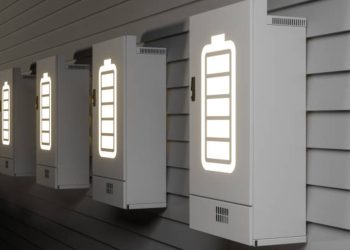
Instead of exporting solar when prices are low, a battery stores that energy and releases it later when grid prices are higher. In market terms, the battery changes energy from low-value periods to high-value periods. That mirrors exactly how the wholesale market behaves every five minutes. This is why batteries are becoming more valuable than simply adding extra panels. The opportunity is no longer just generating more energy, but it is using energy at the right time.
The grid now follows renewables
What these patterns show is a subtle but significant reversal in how the system operates. For years, the grid was planned around fossil fuel behaviour. Coal provided the base, and gas adjusted around demand. When renewables appeared, they were treated as additions to that structure. Now, that’s changed.
Solar and wind increasingly determine the shape of supply across the day. Batteries are starting to shape what happens after sunset, and gas no longer leads the pattern. It waits for the gaps created when renewable supply falls short.
This happens automatically, every 5 minutes. The market simply responds to what is cheapest and most available in the moment. Over time, this repeated behaviour adds up to a bigger shift. The grid is no longer organised around when gas can run, it is organised around when renewables are available.
The clock you never see
You never see the five-minute market. But it shapes when gas runs, when prices fall, and why batteries are becoming more valuable than extra panels. That hidden clock is now quietly running Australia’s electricity system.
Energy Matters has been in the solar industry since 2005 and has helped over 40,000 Australian households in their journey to energy independence.
Complete our quick Solar Quote Quiz to receive up to 3 FREE solar quotes from trusted local installers – it’ll only take you a few minutes and is completely obligation-free.