


Choosing the right solar battery storage is a major decision for any Australian homeowner. With the recent arrival of the latest model, many are asking: Tesla Powerwall 2 vs 3, which delivers more value? While both offer the same storage capacity, the internal technology has changed significantly to meet modern energy demands.
The evolution of Tesla Energy in Australia
The Tesla Powerwall 2 vs 3 debate isn’t just about “new versus old.” It represents a shift from a basic battery to a fully integrated home energy powerhouse.
The Powerwall 2 has been the gold standard in Australia for years. It is an AC-coupled battery, meaning it works alongside your existing solar inverter. This makes it a fantastic “bolt-on” for homes with a solar system already installed.
However, the Powerwall 3 Australia release has changed the game. It is a DC-coupled system with a built-in solar inverter. This all-in-one design simplifies installations and improves efficiency by reducing energy conversion losses.If you are looking for a Tesla Powerwall review that experts trust, you should consider how these units handle heat. The Powerwall 3 uses Lithium Iron Phosphate (LFP) chemistry, which is more durable and thermally stable than the previous model.
Tesla Powerwall 2 vs Powerwall 3: Key specification comparison
| Feature | Tesla Powerwall 2 | Tesla Powerwall 3 |
| Usable capacity | 13.5 kWh | 13.5 kWh |
| Continuous power | 5 kW | 10 kW (AU Version) |
| Peak power | 7 kW | 11.5 kW |
| Inverter | Requires an external inverter | Built-in Hybrid Inverter |
| Efficiency | 90% | 97.5% |
| Battery chemistry | NMC (Lithium-Ion) | LFP (Lithium Iron Phosphate) |
| Installation type | AC-Coupled | DC or AC-Coupled |
Power output: The biggest difference
The most striking difference between Tesla Powerwall 2 and 3 is power output. While the Powerwall 2 provides 5 kW of continuous power, the Powerwall 3 doubles this to 10 kW.
Why does this matter for your Australian home? Most standard household appliances, like kettles and ovens, draw a lot of power. With 5 kW, you might struggle to run a pool pump and an air conditioner simultaneously during a blackout.
The Powerwall 3’s 10 kW output allows you to run high-demand appliances with ease. This makes it a superior choice for “whole-home” backup. You won’t have to pick and choose which lights to keep on when the grid goes down.
Integrated inverter: A game changer
The Powerwall 3 Australia model includes a built-in hybrid solar inverter. This is a massive advantage for new solar installations. It eliminates the need to buy a separate inverter, saving you money on hardware and labour.
The Powerwall 3 supports up to 20 kW of DC solar input. It also features three Maximum Power Point Trackers (MPPTs). These allow your solar panels to be placed on different roof orientations, maximising energy harvest throughout the day.
For those with an existing solar system, the Powerwall 2 remains a viable option. Because it is AC-coupled, it doesn’t care what brand of solar inverter you already have. It simply connects to your switchboard and starts storing energy.
Check our page for our recommended solar products.
Tesla battery price in Australia: What to expect
Budget is always a factor when investing in renewable energy. The Tesla battery price in Australia has fluctuated recently due to high demand and new technology.
- Powerwall 2: Expect to pay between $12,000 and $14,000 fully installed.
- Powerwall 3: The total installed cost typically ranges from $15,000 to $17,000.
While the Powerwall 3 has a higher upfront cost, remember that it includes the inverter. If you are starting from scratch, the Powerwall 3 is often more cost-effective. You are essentially getting a high-end inverter and a world-class battery in one package.
Battery chemistry and longevity
Tesla has moved from Nickel-Manganese-Cobalt (NMC) in the Powerwall 2 to Lithium Iron Phosphate (LFP) in the Powerwall 3. This is a significant technical upgrade for the Australian climate.
LFP batteries are known for their safety and longevity. They can handle more charge cycles before their capacity begins to drop. They are also much more resistant to “thermal runaway,” making them safer for installations in hot areas like Queensland or Western Australia.
Both units come with a 10-year warranty. However, the LFP chemistry in the newer model is widely expected to outlast the NMC cells over the long term. This makes the Powerwall 3 a better “set and forget” investment for the next decade.
Use Energy Matters’ easy-to-use solar power and battery storage calculator to determine the size of your solar system with storage! Our solar calculator will generate performance information and potential savings.
We can send this information to 3 of our pre-vetted and trusted local installers in your area to receive obligation-free solar quotes and take the first step towards true energy independence!

Scalability and future-proofing
If you think you might need more storage later, scalability is key. The Tesla Powerwall 2 vs 3 comparison shows different paths for expansion.
The Powerwall 2 is highly stackable. You can connect up to 10 units together to create a massive 135 kWh system. This is usually more than any standard home needs, but it offers ultimate flexibility.
The Powerwall 3 is currently limited to 4 units (54 kWh). However, Tesla is introducing “Expansion Packs” specifically for the Powerwall 3. These units are cheaper because they don’t contain the power electronics—just the battery cells.
Can you mix them?
A common question is whether you can add a Powerwall 3 to an existing Powerwall 2 system. Unfortunately, the answer is no.
The two systems use different internal architectures and chemistries. They are not compatible within the same “stack.” If you already have a Powerwall 2 and want more storage, your best bet is to find another Powerwall 2 before they are phased out.
Installation and aesthetics
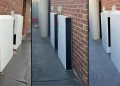
Tesla is known for sleek design, and both models look great on a garage wall. The Powerwall 3 is slightly narrower but deeper than its predecessor.
The Powerwall 3 also features improved weather resistance. It has an IP67 rating for the battery and power electronics, meaning it can even withstand flooding up to 60cm. This is a vital feature for homes in Australia’s flood-prone regions.
The simplified wiring of the Powerwall 3 also means a “cleaner” look. There are fewer boxes on your wall and fewer conduits running between components. For many homeowners, this aesthetic improvement is a major selling point.
Tesla Powerwall review: The verdict
Is the newer model always better? For Tesla Powerwall 2 vs 3, the answer depends on your current setup.
Choose the Powerwall 2 if:
- You already have a high-quality solar system and just want a battery.
- You already own a Powerwall 2 and want to expand your capacity.
- You are on a strictly limited budget and find a great clearance deal.
Choose the Powerwall 3 if:
- You are installing a brand-new solar system.
- You have high-energy appliances, such as ducted air conditioning or an EV.
- You want the safest, most efficient battery chemistry (LFP).
- You live in a region with extreme heat or potential flooding.
For most Australians starting their solar journey in 2026, the Powerwall 3 is the clear winner. Its higher power output and integrated design make it the most future-proof option on the market.
Why choose Energy Matters?
Installing the right battery is just as important as choosing the right model. Don’t guess when comparing Tesla Powerwall 2 vs 3. Energy Matters offers:
- Expert system design
- Clean Energy Council-accredited installers
- Competitive Tesla battery price Australia quotes
- Ongoing support
Ready to save on your energy bills? Get free quotes from Energy Matters today and discover the best battery deals in your area!