


Doral Renewables is working with Purdue University on an initiative aimed at helping rural Midwest communities to overcome extreme weather and rising energy demands.
 Hailstorms, heat waves and high winds are disrupting crops and straining energy systems across the Midwest. Purdue University and its partners launched the Midwest Agrivoltaics for Resilient Communities (MARC) in 2025 under the National Science Foundation’s Regional Resilience Innovation Incubator program to tackle these challenges. MARC’s mission is to combine solar and agriculture in a dual-use model that boosts food production and energy reliability.
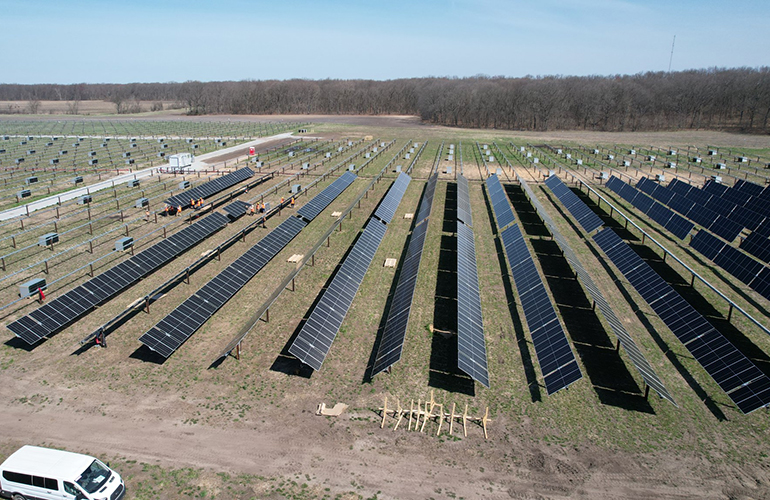
Doral Renewables is allocating part of Mammoth Solar‘s project space in Indiana for a demonstration zone exclusively for agrivoltaic research and community impact activities. This area will host crop trials, robotics testing and monitoring systems to evaluate how agrivoltaics can optimize land use and improve agricultural performance.
Doral is also collaborating with Nextpower (formerly Nextracker), which will contribute its flagship NX Horizon solar tracker technology, along with proprietary planning software, to support agricultural monitoring, performance modeling and resilience under challenging weather conditions.
“Agrivoltaics is already well established in other markets like Europe, and this initiative is an important opportunity to advance dual-use solar in the U.S.,” said Jake Morin, Nextpower CPO. “At Nextpower, our approach to resilience is grounded in research and field experience across more than 150 GW of systems operating in diverse terrain and extreme weather conditions. We’re proud to partner with Purdue University and Doral on research that applies that experience to agrivoltaics, helping landowners and rural communities better understand how solar infrastructure and agriculture can work together to enhance productivity and resilience.”
The MARC project hopes to address concerns for farmers and rural communities: power outages caused by storms, economic losses from crop damage and uncertainty about the performance of agrivoltaic systems under severe weather conditions.
“When hail ruins a harvest, heat strains livestock, or windstorms cut electricity, farmers and their communities are hit hard,” said Dan Chavas, principal investigator at Purdue University. “Our goal is to understand how agrivoltaics can make our nation’s rural communities more resilient and prosperous.”
News item from Doral Renewables