

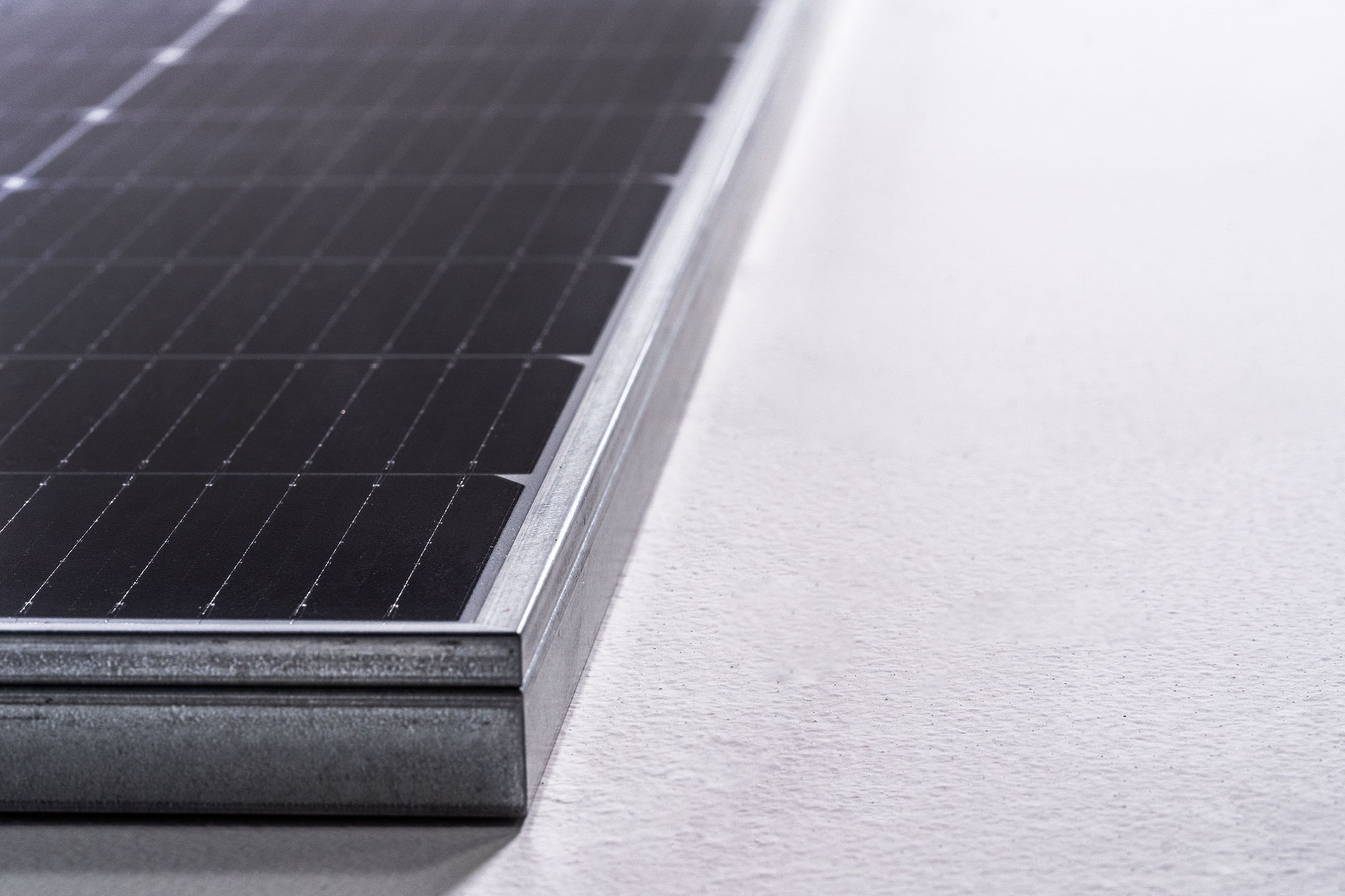

Nextpower has entered into a multi-year steel frame supply agreement with Jinko Solar (U.S.) Industries. Nextpower will supply more than 1 GW of steel frames, scalable to up to 3 GW over a three-year period, to support module manufacturing in Jinko Solar’s Jacksonville, Florida, facility, with production expected mid-2026.
For developers, U.S.-made steel frames add 6% to a tracker project’s domestic content calculation, according to Dept. of the Treasury guidance.
“This agreement with Jinko Solar represents clear market validation of steel frames as a reliable and cost-effective solution that supports both module durability and U.S. manufacturing priorities,” said Dan Shugar, founder and CEO of Nextpower. “It also reinforces how the U.S. solar industry is industrializing, aligning domestic manufacturing, policy incentives, and proven technology at gigawatt scale.”
To simplify project logistics and reinforce the domestic supply chain, Nextpower plans to further expand its steel frame manufacturing presence in the Southeastern United States to enable direct supply to the Jinko Solar U.S. facility in Jacksonville. This strategy follows Nextpower’s recent expansion of its steel component manufacturing capacity in Memphis, Tennessee – one of more than 25 U.S. factories Nextpower has opened or expanded since 2021.
“Improving module durability and strengthening domestic supply chains are closely linked priorities and areas where Jinko Solar has long been a leader,” said Nigel Cockroft, General Manager at Jinko Solar (U.S.) Industries. “From our fourth-generation extreme weather module platform to our Jacksonville facility, which has operated since 2018, we have consistently invested ahead of the market. Partnering with Nextpower to integrate domestically produced steel frames into our U.S. modules is a natural extension of that leadership, aligning with U.S. manufacturing priorities, while delivering greater durability at scale for customers and the broader solar industry.”
Industry-wide reliability data is increasingly shaping procurement decisions for utility-scale solar projects. Independent testing has demonstrated the structural advantages of steel frames, including improved torsional stiffness and reduced deflection under mechanical load — key factors in supporting long-term module reliability.