

by Robert Schreiber
Berlin, Germany (SPX) Apr 29, 2026
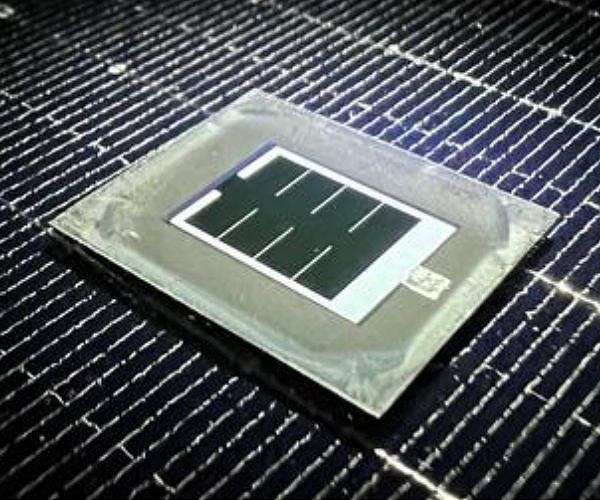
Researchers at LMU Munich have developed a targeted surface treatment for perovskite solar cell electrodes that improves molecular contact, boosting device efficiency, reproducibility, and long-term stability. The findings, published in Advanced Energy Materials, challenge a widely held assumption about electrode preparation and open new pathways for engineering high-performance photovoltaic contacts.
Perovskite solar cells have undergone rapid gains in power conversion efficiency in recent years, driven largely by the adoption of molecular charge-selective contacts — ultrathin interlayers just a few nanometres thick. These layers replace conventional bulk transport materials and play a central role in extracting and transporting electrical charges at the electrode interface. Yet the structural organization and surface coverage of these molecules on transparent conductive oxide substrates remain incompletely understood, and that gap has limited further progress.
The team, led by Dr. Erkan Aydin of LMU’s Department of Chemistry and Pharmacy, focused on the indium tin oxide (ITO) electrodes commonly used in perovskite devices. Their approach involves a solution-based method to precisely tune the chemical and electronic properties of the ITO surface so that self-assembled monolayers (SAMs) — the organic interlayers responsible for charge selectivity — can bind more uniformly and effectively.
A central finding of the work overturns a prevailing assumption in the field. “We show that maximizing surface hydroxylation is not the key,” said Rik Hooijer, first author of the study. “Rather, a balanced ratio of different oxygen species yields more uniform and electronically favorable interfaces.” This result reframes how electrode surfaces should be engineered for optoelectronic devices.
The optimized interfaces produced clear performance gains across multiple solar cell architectures. Charge transport became more efficient, and the cells converted a greater share of incident sunlight into electrical energy. Critically, the spread of performance values across devices narrowed substantially, indicating improved reproducibility — a property essential for any technology moving from laboratory research toward commercial manufacturing.
Stability improvements were equally notable. “Our treatment improves not only absolute performance but also enhances the lifetime of the molecular contact-coated substrates and the reliability of the devices,” said Aydin. “This is decisive if we want to take the technology out of the lab and into real-world applications.”
The treated cells also showed greater resilience under thermal stress testing that cycled temperatures between -80 and +80 degrees Celsius — conditions representative of the space environment. “The enhanced resilience under extreme conditions makes our approach especially promising for applications beyond conventional uses, such as space travel,” Aydin added.
The compatibility of the method with a broad range of materials, fabrication processes, and cell architectures — including single-junction and tandem configurations — increases its practical relevance. Because the treatment integrates into existing fabrication workflows without requiring new molecular materials, it presents a scalable and industry-compatible path to more robust perovskite devices.
The study reframes the electrode-to-active-layer interface not as a passive structural element but as a critical performance parameter. By demonstrating that surface preparation alone can unlock substantial gains in efficiency and durability, the LMU team provides a roadmap for advancing perovskite photovoltaics toward commercial and aerospace applications.
Research Report:Synthetic Surface Design of Transparent Electrodes for Enhanced Molecular Contact in Perovskite Solar Cells
Related Links
Ludwig-Maximilians-Universitat Munchen
All About Solar Energy at SolarDaily.com