


An independent conducted by Synapse Energy Economics for the Coalition of Community Solar Access (CCSA) finds that expanding distributed solar and energy storage across New York could deliver $1 billion in annual energy cost savings by 2035, lowering electricity bills for households across the state, while strengthening reliability during peak winter demand and reducing reliance on gas markets.
The study, titled “Sunlight into Savings: Evaluating Energy Cost Savings from Distributed Solar and Storage Additions in New York,” finds that increasing distributed solar + storage capacity to 20 GW by 2035 would reduce average residential electricity bills by $87 per year for upstate customers and $46 per year downstate. This still applies for customers not directly participating in solar programs. The findings were published after Gov. Kathy Hochul’s State of the State Address yesterday, which emphasized the need to make energy more affordable, despite a lack of state policy backing solar and storage.

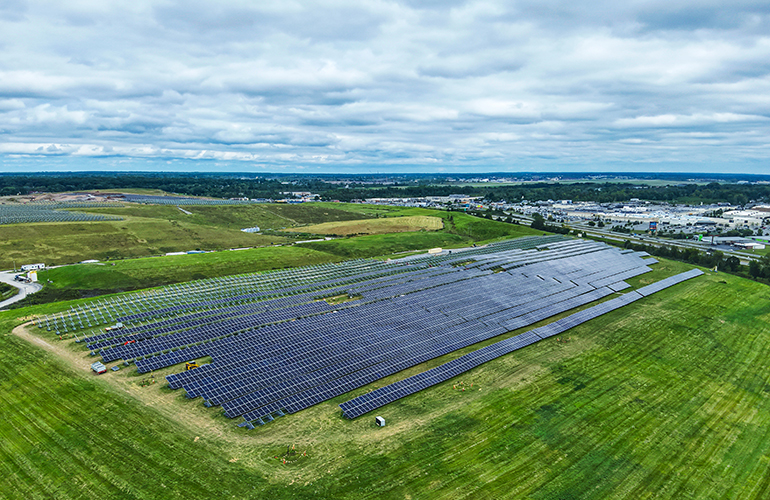
A community solar project in New York. Castillo Engineering
Senate Bill S6570, or the ASAP Act, which was drafted to accelerate solar deployment in the state, is currently under review by the the Senate’s Environmental Conservation committee.
“Solar energy is the cheapest form of energy to produce and a linchpin for affordability,” said State Sen. Pete Harckham, a sponsor of the ASAP Act. “This new study re-emphasizes the long-term, abiding value of renewable energy and storage systems in this regard. At this point, we should be exponentially increasing our clean energy efforts and gigawatt goals with distributed solar projects to create thousands of green jobs and save ratepayers millions of dollars.”
According to the study, expanded distributed solar and storage would also help New York avoid about 11% of the gas used for electricity generation in 2024. More than half of the estimated cost savings would occur during winter months, when the demand on the grid is highest.
“In these uncertain times and with headwinds from the federal government, it’s more important than ever for New York State to lean into and expand on our successes,” said Assemblymember Didi Barrett, chair of the Assembly Energy Committee and sponsor of the ASAP Act. “The ASAP Act is about scaling solutions that work for everyday New Yorkers — lowering electricity costs for consumers, supporting clean energy jobs, and meeting our climate goals.”
The report estimates that expanded distributed solar and storage would save $947 million per year in greenhouse gas costs by 2035, reflecting reduced emissions from fossil fuel generation and delivering an estimated $235 million in additional direct bill savings to participating customers and to low-income customers.
“Distributed solar and storage deliver value on multiple fronts at once—lower bills, stronger reliability, and reduced exposure to volatile gas markets,” said Kate Daniel, northeast director at the CCSA. “This study shows that smart policy choices can unlock real savings for all customers, not just those who install solar on their rooftops. The ASAP Act is an opportunity to build on New York’s leadership and scale solutions that are already working.”
New York has surpassed its original distributed solar targets ahead of schedule, with more than 7.3 GW installed today and another 2.8 GW in the development pipeline. Developers and policymakers have proposed expanding the state’s distributed solar goal to 20 GW by 2035.
“This timely report highlights the opportunity for New York to lower electricity prices by scaling up distributed solar and energy storage deployment,” said Noah Ginsburg, executive director of the New York Solar Energy Industries Association. “As policymakers seek to lower costs for ratepayers and drive continued progress toward New York’s clean energy goals, they needn’t look any further than the Accelerate Solar for Affordable Power (ASAP) Act — legislation to raise New York’s distributed solar goal and cut through red tape to ensure we get it done quickly and cost-effectively.”
News item from CCSA