

Content provided by Fronius Australia
Rooftop solar panels are now a familiar sight across Australia. With electricity prices remaining high and feed-in tariffs continuing to fall, more households are looking beyond panels alone and asking whether adding a battery makes sense.
A home battery allows excess solar energy generated during the day to be stored and used in the evening, overnight or during power outages, when solar panels are not producing electricity. However, choosing the right battery size and setup depends heavily on how a household actually uses energy.
Understanding Your Energy Use Comes First
Before selecting a battery, it’s essential to understand your electricity consumption patterns, not just your total usage.
Key questions to consider include:
- How much electricity does your household use each year?
- How much of that energy is consumed after sunset?
- Are you planning to add new loads, such as an electric vehicle, heat pump or air conditioning?
Homes that use a significant amount of power in the evening typically benefit the most from battery storage. By contrast, households with high daytime usage, for example, where someone works from home, may already be using much of their solar energy directly and may need a smaller battery, or none at all.
As a general guide, battery systems tend to make the most financial sense when they lift a household’s self-consumption of solar energy to around 60 per cent or more. The exact figure varies depending on electricity prices, feed-in tariffs and local network conditions.
How Much Storage Capacity Makes Sense?
Battery capacity is measured in kilowatt-hours (kWh) and determines how much energy can be stored.
For a typical Australian household with a 6.6–10 kW solar system and annual electricity consumption of around 7,000–8,000 kWh, a battery in the 6–10 kWh range is often sufficient to cover most evening and overnight energy use. While larger batteries can increase independence from the grid, the additional capacity does not always result in proportionally higher savings, particularly if the battery is not fully utilised on a regular basis.
Oversizing a battery is a common mistake. If the battery rarely fills during the day, some of its capacity will sit unused, reducing the return on investment.
New Solar Install vs Adding a Battery Later
Whether you are installing solar panels for the first time or adding a battery to an existing system will influence your options.
If you are installing panels and a battery together, the system can be designed as a whole, ensuring the inverter, battery and monitoring software work seamlessly together.
For homes that already have solar panels installed, batteries are generally added in one of two ways.
DC-Coupled Battery Systems
DC-coupled batteries connect directly to the solar system before the inverter. Because electricity is stored before being converted to AC power, these systems are typically more efficient and integrate closely with hybrid inverters.
DC-coupled batteries are often well-suited to homes that want backup power during blackouts, particularly in regional or bushfire-prone areas. The trade-off is that installation can be more complex and may require replacing or upgrading an existing inverter.
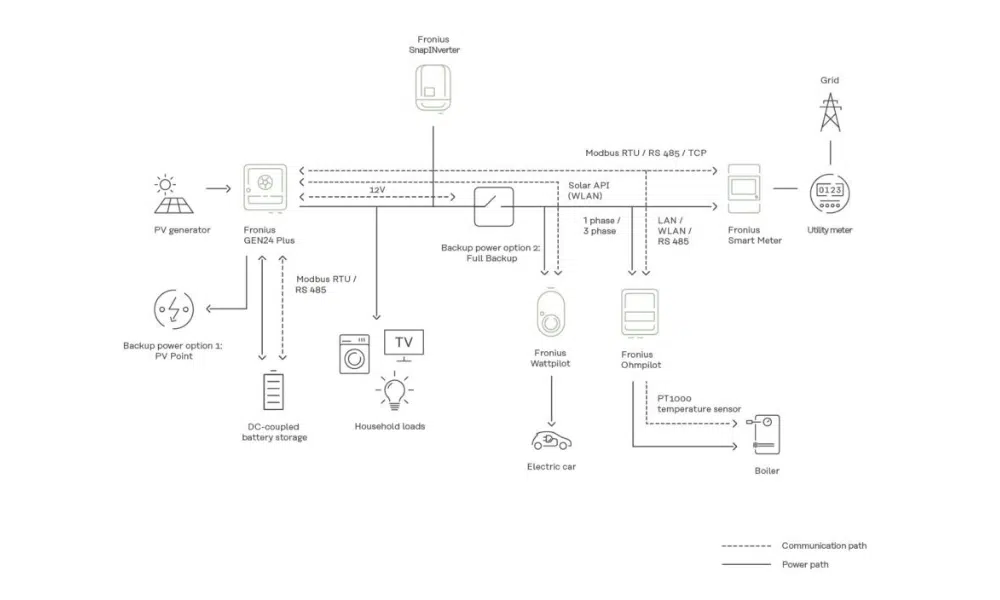
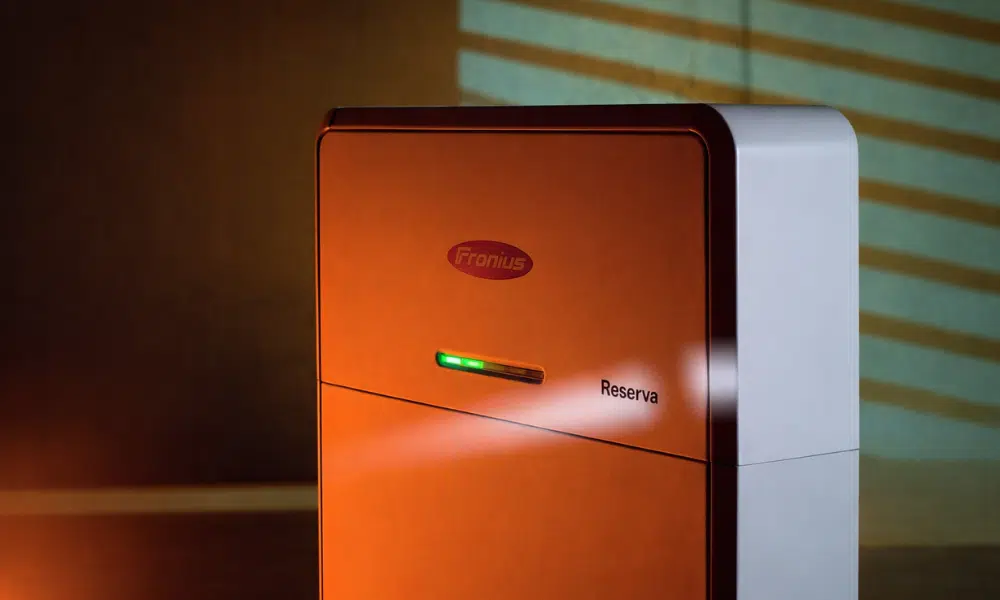
Battery storage devices of this type work most effectively with hybrid inverters and are designed to optimise self-consumption. One example of a DC-coupled storage solution available in Australia is the Fronius Reserva, which offers features such as a ten-year warranty, black-start capability when paired with a compatible Fronius GEN24 Plus inverter, and European data security standards.
AC-Coupled Battery Systems
AC-coupled batteries are installed after the inverter and can usually be added to existing solar systems without major changes. This makes them a popular choice for retrofits.
However, because electricity is converted multiple times, AC-coupled systems are slightly less efficient. Full-home backup power may also require additional hardware, depending on the system design.
Black start capability, restarting without the grid, using the power of the sun
Black-start capability allows a solar and battery system to restart independently after a complete power outage, even if the battery is fully depleted.
Many systems require an external power source or grid stabilisation before they can restart. A black-start capable system, by contrast, can begin operating again automatically as soon as sunlight hits the solar panels the next morning, without any grid support.
This feature is particularly valuable for households in regional or remote areas, as well as for those seeking a higher level of energy resilience. Not all solar inverters or batteries offer black-start capability, so it is an important consideration for homeowners aiming for greater energy independence.
The Role of the Inverter
The inverter is the heart of any solar system, converting electricity generated by solar panels into usable household power. For homeowners looking to add a battery to an existing system, inverter compatibility is a key consideration.
One option is to install an AC-coupled battery, which operates independently of the existing inverter.
Alternatively, some inverter platforms allow for software-based upgrades. For example, homeowners with a Fronius GEN24 inverter can upgrade to a hybrid configuration via a software update, enabling battery compatibility without replacing the inverter hardware. This approach can help reduce both costs and material use, though software installation must always be carried out by a qualified installer.
Is a Battery Worth It for Australian Homes?
Adding a battery to a solar system can:
- Increase self-consumption of solar energy
- Reduce reliance on the grid during peak pricing periods
- Provide backup power during outages
- Offer greater protection against future electricity price rises
That said, batteries remain a significant investment. The best outcomes come from systems that are carefully sized, professionally designed and matched to a household’s real energy needs.
For Australian homeowners, the decision is no longer just about generating clean energy; it’s about using it as efficiently and independently as possible.