

Australia is pushing hard to clean up its energy act, and NBN Co has thrown its full weight behind the effort. The national broadband builder has officially switched on renewable power from the new Munna Creek Solar Farm on Queensland’s Sunshine Coast. This marks a major step in its plan to run entirely on renewable electricity by December 2025. It is a big milestone, and it shows that one of Australia’s largest electricity users is serious about shrinking its environmental footprint.
A new solar farm driving national change
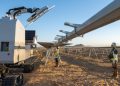
The new Munna Creek Solar Farm, located near Gympie, is not a small backyard operation. It spans roughly 467 hectares and features about 255,000 solar panels. Built and operated by global industrial energy company METLEN under an NBN Co Power Purchase Agreement, the site is expected to generate enough electricity to power the equivalent of 41,100 Australian homes each year. During construction, it also brought about 150 local jobs to the region, which never goes astray.

NBN Co has contracted to take about 59 GWh of power per year from Munna Creek, which accounts for more than 20 per cent of the farm’s total output. This makes it a key anchor customer and helps guarantee project viability. More importantly, it ensures that a hefty slice of NBN Co’s energy needs now comes from the sun.
A growing renewable energy portfolio
The Munna Creek site joins a growing portfolio of renewable deals designed to push NBN Co toward its clean energy targets. The company already has two other Power Purchase Agreements in place.
In 2023, NBN Co switched on power from the West Wyalong Solar Farm in New South Wales through its first PPA. Under this 10-year agreement, NBN Co purchases about 90 GWh per year. Then, in early 2025, the company started receiving renewable electricity from AGL’s Macarthur Wind Farm in south-western Victoria. This six-year deal delivers another 90 GWh each year.
Together with Munna Creek, these agreements provide the renewable electricity needed to meet NBN Co’s commitment to 100 per cent renewable electricity purchases by the end of 2025. They also support more clean generation into the grid, helping Australia edge closer to its national goal of 82 per cent renewables by 2030.
A climate plan backed by global standards
NBN Co’s renewable push is part of a much larger climate roadmap. As a member of RE100, a global initiative for companies committed to 100 per cent renewable electricity, NBN Co stands among more than 400 of the world’s largest businesses making the same pledge. It was the first Australian telco and the first Government Business Enterprise in the country to join.
The company aims to reach net-zero greenhouse gas emissions across its entire value chain by FY2045. To keep things honest, its long-term and near-term climate targets have been validated by the Science Based Targets initiative. These include:
- Cutting absolute scope 1 and 2 emissions by 95 per cent from FY21 levels by FY30
- Maintaining a minimum 95 per cent reduction from FY30 to FY45
- Cutting scope 3 emissions by 90 per cent by FY45
- Reducing emissions from sold products by 60 per cent per device by FY30
- Ensuring that 80 per cent of suppliers (by spend) set science-based targets by FY27
It is a hefty list, but it signals a company that understands the climate stakes and is acting accordingly.
Building a more efficient network for a digital nation
Running a national broadband network takes a stack of electricity, and NBN Co knows it. By shifting to renewable supply and improving energy efficiency, it can lower both emissions and long-term operating costs. A huge part of this strategy is taking energy-efficient fibre deeper into communities. Fibre requires far less power than legacy technologies, and it is more resilient.
By the end of 2025, NBN Co expects to enable around 10 million premises, or about 90 per cent of homes on the fixed line network, to access its Home Hyperfast wholesale speed tier. With peak wholesale downloads of up to 2 Gbps, this upgrade prepares Australia for heavier digital demand, from streaming to remote work to future technologies we have not dreamed of yet.

“We are delivering on our commitments”
Gavin Williams, Chief Development Officer, Regional and Remote at NBN Co, summed it up well:
“The NBN network is a significant consumer of electricity, and the harnessing of power from all three of our PPAs has enabled us to meet our target of 100 per cent renewable electricity purchases from December 2025.
“We set a target in 2021, and with the successful completion of the Munna Creek Solar Farm, we are delivering on our commitments.

“Expanding the use of renewable energy sources and investing in energy efficiency, including deployment of fibre, enables us to drive down our emissions and operating costs.
“The NBN network is critical digital infrastructure, and as we support the online needs of over 20 million people across Australia every day, we are committed to operating a climate-resilient, resource-efficient network and business, aligned with the latest climate science, which protects the natural environment.”
A cleaner, faster future for Australia
Munna Creek is more than a ribbon-cutting exercise. It is proof that big infrastructure providers can help lead Australia toward a cleaner energy future. By locking in long-term renewable supply, backing science-based targets, and building a more efficient network, NBN Co is showing how large organisations can make a real dent in national emissions.
For Australians, it means a broadband network powered by cleaner energy, a stronger grid due to more renewable investment, and a step closer to the low-carbon future we all need.