

Overview
Businesses in the Philippines are adopting solar power as a strategic move to achieve energy independence, reduce electricity costs, and improve operational resilience.
With net metering, companies can offset usage and export excess energy to the grid. Solar solutions also enhance sustainability, brand value, and long-term investment performance across industries.
Filipino businesses are increasingly prioritizing energy independence as rising electricity costs, supply risks, and sustainability demands influence operational decisions. For companies with high daytime energy consumption, solar power provides a practical solution to lower operating expenses while advancing cleaner energy goals.
This growing focus on how solar power boosts energy independence and efficient conversion is particularly important for investors who value long-term performance over short-term savings. Energy independence strengthens operational stability, enhances brand reputation, and supports sustained business growth.
Solaric supports this shift through turnkey solar solutions for residential, commercial, and industrial applications.
Why Energy Independence Matters to Filipino Businesses

For many companies, electricity is a significant operational expense. Offices, warehouses, factories, hotels, schools, and retail spaces all rely on stable power to sustain daily operations. When electricity rates increase or outages occur, business performance can be directly affected.
As a result, more companies are now treating energy independence as a business strategy rather than solely an environmental initiative.
According to the Philippine Department of Energy, qualified end-users may generate electricity from renewable sources for their own use and export excess power to the grid through the Net-Metering Program.
For businesses, this makes solar energy a practical solution to reduce reliance on utility power during peak daytime operations, especially for air conditioning, lighting, computers, refrigeration, and production equipment.
How Solar Power Supports Business Energy Independence
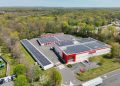
Solar power is a practical renewable energy option for Philippine companies, as many commercial and industrial buildings have large, sun-exposed rooftops. Instead of leaving these spaces unused, businesses can convert them into long-term energy assets.
Lower Operating Costs
Commercial solar panel systems can help businesses reduce electricity costs and improve return on investment by using unused rooftop space for power generation.
A typical 100 kWp rooftop grid-tie commercial solar installation can yield estimated savings of about PHP 1.2 million per year, while solar system owners may reduce power costs by 35% to 75%, depending on usage and setup.
Better Protection Against Power Rate Changes
Energy independence also helps companies manage uncertainty. If a business depends entirely on the grid, it is more exposed to fuel price changes, power rate adjustments, and supply disruptions.
Renewable energy adoption is also becoming part of the country’s wider energy security direction. Currently, renewable energy makes up a growing share of the Philippine generation mix. This reduces our country’s reliance on imported fuels and improves energy security, with solar positioned as a low-cost electricity source.
Stronger Sustainability and Brand Impact
Filipino companies are also prioritizing energy independence because customers, investors, employees, and business partners are paying more attention to sustainability. A company that uses solar power can communicate a stronger commitment to cleaner operations and a reduced carbon footprint.
This is valuable for brands in real estate, hospitality, manufacturing, retail, education, and logistics. For example, a hotel that uses rooftop solar can reduce energy costs while improving its sustainability positioning. A factory can lower operating expenses while preparing for stricter environmental expectations. A school can reduce utility bills while showing students and parents that it supports renewable energy.
For large facilities, Solaric’s industrial solar installation solutions can support long-term energy savings and more reliable operations.
What Types of Filipino Companies Benefit Most?
Many industries can benefit from solar power, but the biggest opportunities are usually found in companies with high daytime electricity use and available roof space.
Manufacturing and Warehousing
Factories and warehouses often have wide rooftops and large daytime electricity demand. Solar power can help offset electricity used for lighting, ventilation, cooling, machinery, and support systems.
Offices, Schools, and Retail Spaces
Offices, schools, and retail buildings use electricity heavily during daylight hours, which aligns well with solar power generation. Solar power can help cover air conditioning, lights, computers, elevators, and other daily loads.
Hotels, Resorts, and Remote Facilities
Hotels and resorts can use solar power to manage high energy demand while strengthening their eco-friendly image. In remote or weak-grid locations, solar power systems with batteries also support backup power and reduce reliance on diesel generators.
Why This Matters to Investors

For investors, energy independence is both a value-driven and performance-driven decision. A company that invests in solar power reduces electricity costs, improves operational resilience, and demonstrates stronger environmental responsibility—factors that influence how customers, tenants, partners, and future investors perceive the business.
This aligns with the growing trend of how Filipino companies prioritizing energy independence, where solar adoption is increasingly viewed as a strategic, long-term business decision rather than merely a cost-saving measure.
Solar power also supports long-term planning, as systems can be designed for current energy needs and later expanded with improved monitoring systems, smart inverters, or battery storage. This makes it a future-ready investment rather than a one-time utility expense.
Key Takeaway
Filipino companies are prioritizing energy independence because it supports cost savings, cleaner operations, and stronger long-term resilience. For investors, this makes solar power more than an environmental upgrade. It becomes a practical business asset that can reduce electricity costs, improve brand credibility, and support future-ready operations.
Solaric helps companies turn unused roof space into productive energy systems through commercial, industrial, and rooftop solar solutions designed for Philippine conditions. Request your free solar quote today. Turn on the sun with Solaric now.