

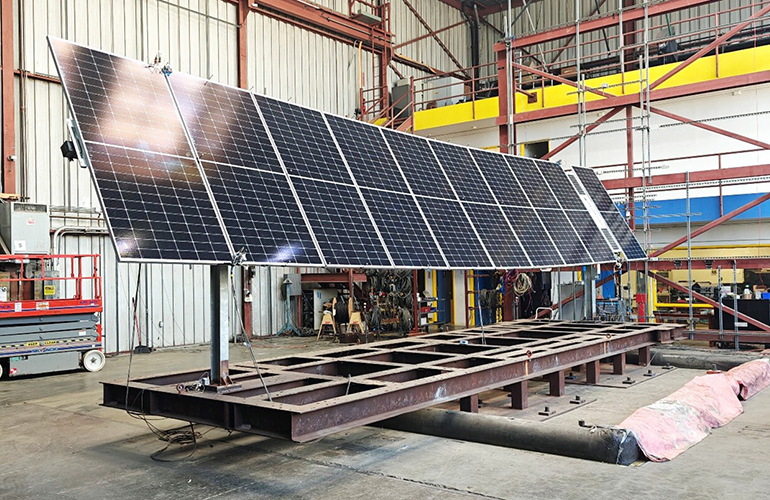

GameChange Solar, a solar tracker and fixed-tilt racking technology supplier, completed of the industry’s first full-scale seismic shake table testing program for its Genius Tracker system at UC Berkeley’s Pacific Earthquake Engineering Research Center. The testing was conducted in accordance with IEEE 693 seismic design standards, simulating extreme earthquake conditions.

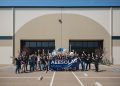
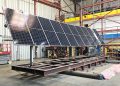
GameChange Solar seismic shake table testing. Credit: GameChange Solar
A full-scale tracker system with mounted PV modules was subjected to increasingly stronger seismic conditions, and the system experienced no structural damage to key components, including torque tubes, bearings, posts, and actuators, and no microcracking or meaningful power loss to modules. The tracker uses GameChange’s proprietary Lateral Capture System to redistribute loads from seismic forces during testing. And tracker motors continued operating after the test. This was validated by third-party observer Renewable Energy Test Center in Fremont, California.
“As solar expands into seismic-risk regions like California, Chile and the New Madrid Fault Zone, the industry has had negligible real-world data on how modern utility scale trackers and modules perform in an earthquake,” said Scott Van Pelt, chief engineer at GameChange Solar. “This test changes that. We now have conclusive evidence that a solar tracking system, such as GameChange’s Genius Tracker, can be designed to withstand the forces associated with a meaningful earthquake.”
GameChange covers the test results in the white paper “Seismic Shake Table Testing of Single Axis Solar Trackers.” Seismic failures can affect a tracker system’s generating capacity and can pose safety risks O&M personnel.
News item from GameChange Solar