


Unsurprisingly, the EnergySage solar marketplace experienced significantly increased traffic during the second half of 2025, due to July’s One Big Beautiful Bill Act (OBBBA) phasing out residential tax credits on Dec. 31, 2025. EnergySage saw 205% year-over-year increase in homeowners actively working with installers and an all-time high in customer inquiries over the prior 30-day record. Most installers reported reaching annual capacity by October 2025, introducing supply constraints and forcing both installers and homeowners to make atypical decisions.
These details and more were revealed in the 22nd “EnergySage Intel: Home Electrification Marketplace Report,” released today. The semiannual report analyzed millions of transaction-level data points from homeowners shopping on energysage.com between July and December 2025 across solar panels, inverters, batteries, heat pumps and other electrification upgrades from companies operating in all 50 states and Washington, D.C.

Other insights from the latest report include:
Solar and storage prices rose modestly amid overwhelming demand
Solar prices increased just 0.4% to $2.49/W in H2 2025, while storage prices rose 3.6% to $1,074/kWh, with increases concentrated late in the year after installers reached capacity. Even during the year-end rush, competitive pricing persisted, suggesting that marketplace transparency limited price inflation.
“When demand outweighs supply, that often results in panic pricing within any industry,” said Emily Walker, Director of Insights at EnergySage. “But marketplace transparency acted as a check on inflation: When buyers can see what competitive pricing looks like, it’s hard for costs to spiral, even under historic demand.”
Supply constraints drove equipment diversification as availability outweighed preference
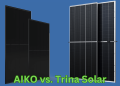
Panel wattages shifted lower for the first time in years as installers prioritized available inventory over ideal specifications. The recently dominant 450- to 460-W range dropped from 33% to 26% of quotes, while the 430- to 440-W range jumped from 8% to 30%. REC, the consistent solar panel leader on EnergySage, fell from 43% to 20% market share. The fragmentation reflects a market prioritizing installation timelines over equipment optimization.
“Installers and homeowners became far more flexible about equipment to hit the tax credit deadline,” Walker said. “Getting installed before the cut-off mattered more than system preference, opening up opportunities for alternative solar panel brands and models to gain share.”
Battery attachment rates declined as homeowners prioritized securing solar incentives
National battery attachment fell from 41% to 38% even as interest held nearly steady, dipping only from 74% to 73%. The pattern was even more pronounced in high-value storage markets: California dropped from 79% to 71% attachment, Texas from 61% to 53%, and Hawaii from 100% to 85%. The gap between interest and purchase suggests many homeowners deferred storage investments to capture expiring solar incentives, creating a significant retrofit opportunity moving forward.
“The dip in battery attachment wasn’t reduced interest — it was deferred adoption,” Walker said. “Thousands of new solar households are now prime candidates for storage retrofits, and that wave is just beginning.”
Contractors positioned for integrated electrification growth
A survey of EV charger installers revealed that 55% derive less than 25% of revenue from chargers alone, demonstrating business diversification across multiple electrification products. The findings indicate homeowners increasingly approach solar, storage, EV charging and HVAC upgrades as a coordinated strategy rather than isolated purchases.
“We’re watching the market evolve from buying a point solution clean energy product to designing a home energy system,” Walker said. “The question homeowners are asking installers has fundamentally changed: It’s not just ‘Should I get an EV charger or solar panels?’ — it’s ‘How do I design a home energy system that gives me control over my costs and my power?’ And installers are responding to that change by diversifying their offerings.”
The industry now enters a post-incentive phase for purchased residential solar systems, in which financing flexibility, product diversification and operational adaptability will determine long-term competitiveness. With the tax credit eliminated for purchased systems, third-party ownership (TPO) options like leases and power purchase agreements (PPAs) — which remain eligible for the tax credit until 2028 — are already gaining share on EnergySage. EnergySage will be tracking that data in the next Marketplace Report.
“Federal incentives spent decades kickstarting the home electrification market, and they succeeded,” said Naman Trivedi, Group CEO of EnergySage and VP of Home Energy at Schneider Electric. “But the forces shaping the next chapter are bigger and more durable — unprecedented electricity demand, rising utility rates, extreme weather and grid strain are all resulting in the desire for energy independence. Homeowners are increasingly motivated by savings, resilience, and control, and that combination is more powerful than any single incentive.
“We’re moving from an incentive-driven point-solution market to an integrated home energy market,” Trivedi added. “The companies that succeed will be the ones that help households manage energy, not just install equipment.”
News item from EnergySage