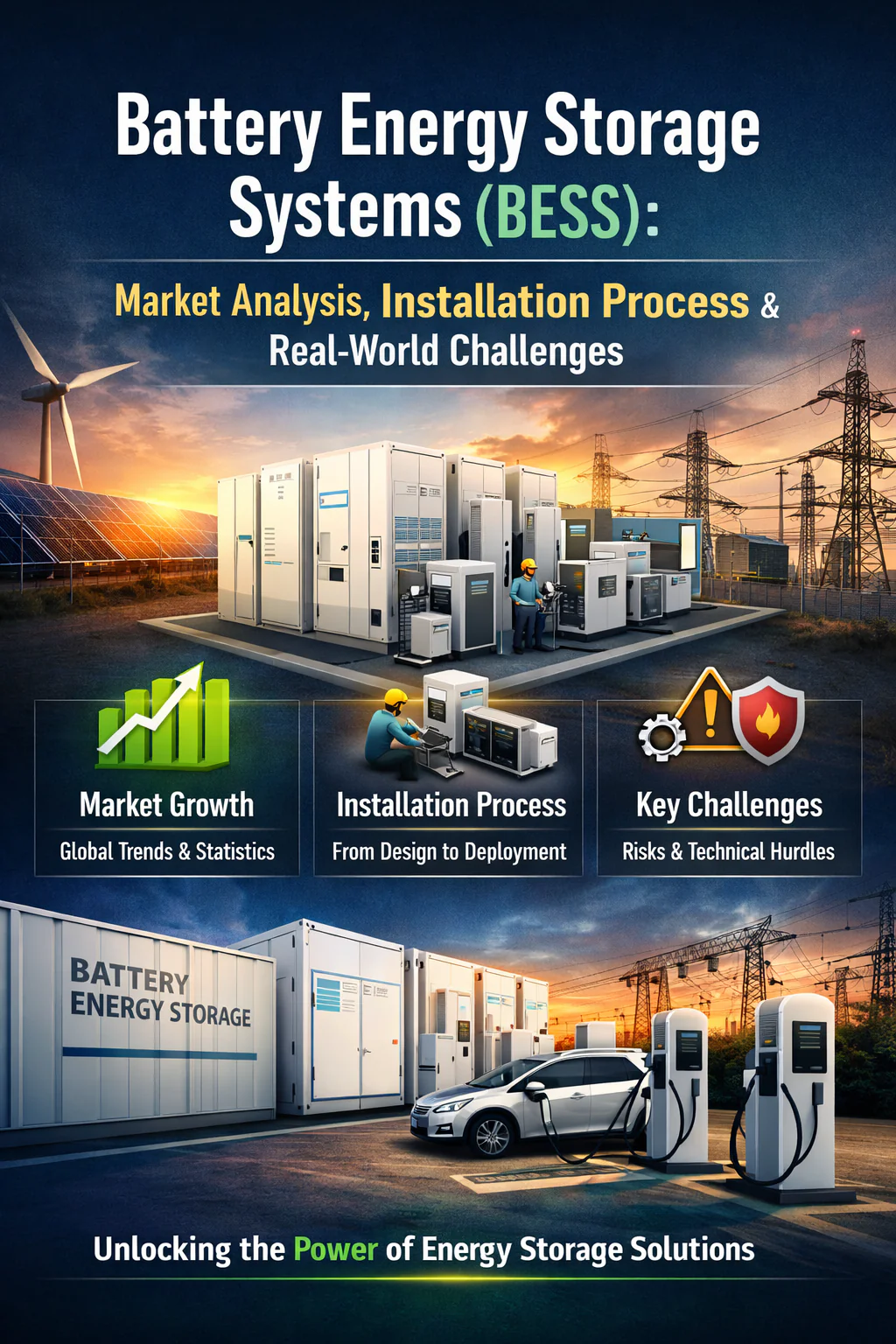
Battery Energy Storage Systems (BESS) are no longer an emerging technology — they are becoming a critical pillar of modern power infrastructure. As renewable energy adoption accelerates and grids face increasing pressure from peak demand, electric vehicles, and decentralised generation, energy storage has moved to the centre of the global energy conversation.
From utility-scale projects to commercial and industrial installations, BESS is reshaping how electricity is produced, stored, and consumed. However, behind the impressive market numbers lies a complex installation process and a set of challenges that developers and EPC players must navigate carefully.
BESS Market Overview: Where the Industry Stands Today
The global BESS market has grown rapidly over the last decade, driven largely by renewable integration and grid modernisation. In 2015, global installed battery storage capacity was under 5 GWh. By 2024, that number had crossed 90 GWh, with projections pointing to several hundred GWh before the end of this decade.
What’s driving this surge?
-
Solar and wind expansion: Renewable energy is intermittent by nature. Storage bridges the gap between generation and consumption.
-
Grid stability needs: Utilities are using BESS for frequency regulation, voltage support, and peak shaving.
-
Falling battery prices: Lithium-ion battery costs have dropped by more than 80% since 2010, making storage economically viable.
-
Policy support: Many regions now recognise energy storage as a standalone asset class, unlocking new revenue streams.
An interesting industry fact: large-scale battery systems can now respond to grid fluctuations in milliseconds, far faster than traditional gas-based peaker plants — a major reason grid operators are investing heavily in BESS.
Types of BESS Applications Gaining Momentum
Today’s battery energy storage systems are being deployed across multiple segments:
-
Utility-scale BESS for grid balancing and renewable firming
-
Commercial & Industrial (C&I) storage to reduce demand charges and improve energy resilience
-
Hybrid solar-plus-storage systems for self-consumption and backup power
-
Microgrids for campuses, remote areas, and critical infrastructure
Each use case has different technical requirements, which directly impact the installation approach.
Understanding the BESS Installation Process
Installing a BESS is a multidisciplinary task that blends electrical engineering, civil works, software integration, and safety compliance.
1. Site Assessment & Energy Modelling
The process begins with understanding the site’s load profile, grid connection strength, and energy goals. Engineers model energy flows to determine optimal battery capacity, discharge duration, and expected returns.
2. System Design & Component Selection
This stage defines:
-
Battery chemistry (LFP, NMC, or emerging alternatives)
-
Power conversion systems (PCS)
-
Energy management systems (EMS)
-
Cooling and fire suppression solutions
Design choices influence system lifespan, safety, and performance more than most people realise.
3. Permitting & Approvals
Local electrical codes, fire safety standards, and environmental regulations must be met. In many regions, this phase takes longer than the physical installation itself.
4. Installation & Grid Integration
Once on site, containers or cabinets are installed, wired, and integrated with existing electrical infrastructure. Software configuration ensures seamless communication between batteries, inverters, and grid systems.
5. Testing, Commissioning & Handover
Before going live, systems undergo performance tests, safety checks, and simulated operating scenarios to ensure reliability under real-world conditions.
Key Challenges in BESS Installation
Despite strong market growth, BESS deployment is not without obstacles.
High Upfront Capital Costs
While battery prices are falling, total installed system costs remain significant. Beyond batteries, costs include inverters, transformers, civil works, fire protection, and control systems. This can slow adoption, especially for first-time buyers.
Regulatory Complexity
Energy storage regulations vary widely across regions. In some markets, storage is still treated as both generation and load — creating tariff and permitting confusion that delays projects.
Safety & Thermal Management
Battery safety is a top concern. Poor design or installation can lead to overheating or thermal runaway. This is why modern BESS projects invest heavily in monitoring systems, ventilation, and fire suppression.
Grid Compatibility Issues
Not all grids are designed to accommodate fast-responding storage assets. Weak grids, outdated substations, or limited interconnection capacity can restrict BESS performance.
Skill Gaps
The industry is growing faster than the talent pool. Skilled engineers, installers, and commissioning experts are in high demand, making experienced solution providers essential for successful projects.
Why Smart BESS Deployment Matters
When designed and installed correctly, BESS delivers benefits far beyond backup power:
-
Reduces peak electricity costs by 20–40% in some C&I settings
-
Improves renewable energy utilisation
-
Enhances power reliability and resilience
-
Lowers carbon emissions by reducing fossil-fuel reliance
Companies like Loom play a key role in this ecosystem by offering well-engineered, scalable energy storage solutions that address both performance and safety concerns — helping businesses transition confidently toward cleaner energy systems.
What the Future Holds for BESS
The next phase of BESS growth will focus on:
-
Longer-duration storage
-
Smarter AI-driven energy management
-
Deeper integration with EV charging infrastructure
-
Declining lifecycle costs
As grids evolve and energy demand rises, battery storage will become less of an option and more of a necessity.
Conclusion
Battery Energy Storage Systems are redefining how power systems operate. While the market outlook is undeniably strong, successful deployment depends on understanding the installation process and addressing real-world challenges head-on. For businesses and utilities alike, partnering with experienced energy solution providers can make the difference between a system that simply stores power — and one that delivers long-term value.