

The conversation is changing around solar energy as we enter 2026. The biggest change is now about how solar systems behave once they are connected to a crowded grid.
Across the country, networks are managing record midday generation, evening demand spikes, and growing pressure on local infrastructure. That reality is driving a new wave of solar innovation focused on control, coordination, and flexibility. Smarter inverters, dynamic export limits, batteries that actually earn their keep, and tighter links between solar, electric vehicles (EVs), and the grid are moving from trials into everyday use.
The technology is evolving fast, but so are expectations. Understanding what is changing now helps you make better decisions before your next upgrade, install, or battery add-on.
Smarter inverters become the new baseline
In 2026, the inverter is doing far more than converting DC to AC. It has become the control centre of the home energy system, controlling how solar responds to grid conditions in real time. As export limits tighten and networks look for stability, inverters are increasingly expected to adjust output, support voltage, and communicate with the grid rather than operate independently.
The change is already seen in the hardware entering the Australian market. Redback Technologies offers a clear example of where inverter design is heading. Its Smart Hybrid systems combine solar conversion, battery management, and energy control in a single platform. Instead of operating on fixed rules, the system can decide when to store energy, when to export it, and when to prioritise self-consumption based on real conditions such as household demand, tariffs, and grid constraints. In practical terms, the inverter behaves like a switch and more like the brain of the energy system.
Regulation is reinforcing this direction. From 2026, new and proposed frameworks such as Western Australia’s Common Smart Inverter Profile are expected to require inverters to be grid-interactive by default. That means built-in support for dynamic export limits, remote updates, and active grid response rather than optional add-ons. As a result, inverter intelligence is becoming a baseline requirement for compliant, future-ready solar systems across the nation.
Dynamic export limits move from trials to everyday reality
Static export limits are giving way to something more flexible. In 2026, many solar households will no longer have a fixed cap on how much energy they can export at all times. Instead, export limits are increasingly set dynamically, changing based on local grid conditions, time of day, and network demand.
The logic is straightforward. In the middle of a mild, sunny weekday, some suburbs generate more rooftop solar than the local network can absorb. At other times, especially later in the afternoon, that same export capacity is valuable. Dynamic export limits loosen or tighten export permissions in response to those conditions rather than relying on blunt, permanent restrictions.
This represents a shift in how solar value is realised. Maximum exports may not always be available, but smarter systems can respond by diverting energy into batteries, EV charging, or household loads instead of wasting it. Over time, this approach is expected to reduce forced curtailment while rewarding homes that can adjust when and how they use energy.
By 2026, dynamic exports will be less of a technical experiment and more of a practical operating rule. Solar systems that can see, respond, and adapt to those limits will deliver more consistent value than systems designed around unrestricted midday exports.
Home batteries enter a more practical phase
By 2026, home batteries will be more about function. Early adopters were often motivated by blackout protection or energy independence. The next wave is driven by economics and system behaviour. As export limits tighten and feed-in tariffs (FiTs) remain modest, storing solar for later use is becoming the most reliable way to preserve value.
What is changing is how batteries are sized and used. Instead of aiming for maximum storage, more households are matching battery capacity to evening demand, when grid prices rise, and solar generation fades. This makes batteries a tool for load shifting rather than backup alone. In homes with EVs or high evening usage, batteries increasingly work alongside smart chargers to smooth demand across the day.
Policy settings are also pushing batteries into the mainstream. Incentives are becoming more structured, and installation standards are more consistent, which reduces friction for homeowners considering storage for the first time. At the same time, batteries are being designed to integrate more tightly with inverters, tariffs, and network signals rather than operating as standalone add-ons.
In 2026, the question for many households is whether their solar system is set up to use a battery effectively when the time is right.
Virtual power plants grow up
Virtual power plants (VPPs) are no longer pitched as clever experiments or passive bill discounts. By 2026, they are evolving into genuine grid tools, using coordinated home batteries and smart inverters to supply energy when and where it is needed. As networks deal with sharper peaks and deeper midday oversupply, this kind of flexibility capacity is becoming more valuable.
What is changing is how VPPs operate at the household level. Early programs often focused on simple incentives with limited transparency. Newer models place more emphasis on clear dispatch rules, predictable participation, and visibility into when batteries are being used. Homeowners are increasingly able to see how often their system is called on and what they receive in return.
VPP maturity also depends on better integration. Batteries, inverters, and retail plans are starting to work together, allowing homes to respond to price signals as well as grid events. This makes participation less disruptive and more aligned with household needs, rather than treating stored energy as something the grid can draw on at any time.
By 2026, VPPs will be more about trust. Programs that balance grid support with homeowner control are likely to define the next phase of distributed energy in Australia.
Community batteries fill the gap that many homes cannot
Community batteries are emerging as a practical solution to a growing problem in high-solar areas. Not every household can install a home battery. Renters, apartments, and homes with limited space are often locked out of storage, even when rooftop solar is already feeding excess energy into the local grid. Community batteries are designed to sit in that gap.
These neighbourhood-scale systems store surplus solar generated during the day and release it later when demand rises. From the grid’s perspective, they reduce congestion and voltage issues. From a household perspective, they help preserve the value of local solar without requiring every home to invest in its own battery.
Community battery rollouts are expected to expand beyond pilots into more permanent infrastructure in selected suburbs. The key question now is how access works. Credit structures, eligibility, and bill impacts vary by program, and those details will determine how useful community storage feels in practice.
As rooftop solar continues to scale, community batteries are becoming the missing middle. They offer a way to support solar-heavy neighbourhoods without forcing every household to solve the same problem individually.
EVs start behaving like energy assets
EVs are shifting from being a new load on the grid to an active part of the energy system. In the coming year, the focus is less on simply charging an EV at home and more on when and how that charging happens. Smart chargers are increasingly designed to follow solar production, tariffs, and network conditions rather than dropping power whenever the car is plugged in.
For solar households, this is important because EV charging can absorb large amounts of midday solar that might otherwise be curtailed by export limits. Charging during high-generation periods helps stabilise the grid while increasing self-consumption at home. As more retailers and platforms automate this behaviour, EVs begin to function like flexible demand rather than fixed consumption.
Early steps toward vehicle-to-home and vehicle-to-grid capability are also becoming more visible. While still limited in availability and regulation, these technologies point to a future where EVs can discharge energy back into the home or grid during peak periods. Even without full bidirectional charging, smarter scheduling alone is changing how EVs interact with solar systems.
Those who are planning solar upgrades are increasingly treating EV readiness as part of the energy conversation.
Next-generation panels move closer to the mainstream
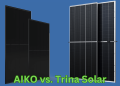
Panel technology is evolving, but not in a way that makes today’s systems obsolete. The most watched development heading into 2026 is the progress of next-generation cells, particularly perovskite-silicon tandem panels, which aim to deliver higher efficiency from the same roof space. Instead of replacing conventional silicon, these designs layer new materials on top to capture more of the solar spectrum.
What makes this relevant now is that these technologies are moving out of the lab and into early commercial pathways. Australian research and pilot manufacturing projects are already underway, with timelines stretching into the late 2020s.
The practical reality is that efficiency gains tend to arrive first in premium products and large-scale projects. For next year, the bigger gains still come from system design, inverter capability, and energy management rather than waiting for a step-change in panel chemistry.
Next-gen panels are part of the future story, but they reinforce a key theme of 2026. How solar behaves and integrates matters more than chasing the next marginal efficiency jump.
Made-in-Australia solar manufacturing gains momentum
Alongside changes in how solar systems operate, there is renewed attention on where key components are made. Australia’s push to rebuild parts of its solar manufacturing supply chain is moving from policy ambition into early delivery. The focus is not on competing with global volume producers but on targeted manufacturing that supports quality, resilience, and innovation.
This includes local activity across cells, modules, and specialised components, often linked to research institutions and clean-energy precincts. For the industry, local manufacturing reduces exposure to global supply shocks and shortens lead times. This opens the door to products designed specifically for Australian conditions rather than adapted after the fact.
The impact will not be immediate or universal. Imported panels and inverters will continue to dominate installs in 2026. However, locally developed technology is beginning to influence design standards, performance expectations, and long-term support models. That matters in a market where systems are expected to last decades and adapt to changing grid rules.
As solar becomes core infrastructure rather than an add-on, where and how equipment is made is becoming part of the value conversation.
What to ask your installer in 2026
As solar rules and tariffs become more dynamic, the installer conversation needs to go beyond panel counts and system size. In 2026, the goal is to install a system that can adapt as conditions change, not one that is optimised for a single moment in time. These questions help reveal whether a system is designed for that reality.
- Inverter capability: Does the inverter support dynamic export limits, remote firmware updates, and current network requirements in your area? Can it adapt as those rules change?
- Monitoring and visibility: Will you be able to see generation, exports, imports, and curtailment in plain terms? Can the system show how it responds when export limits or tariffs shift?
- Battery readiness: If a battery is included or planned later, how was the size calculated? Is it designed around evening usage and load shifting rather than maximum storage?
- EV integration: Can the system coordinate with smart EV chargers to prioritise solar charging and avoid peak pricing?
- Future participation: Is the system compatible with VPPs or community battery programs if you choose to participate later?
In 2026, flexibility is a value. A system that can respond to change will almost always outperform one designed around fixed assumptions.
Common questions homeowners are asking in 2026
As solar systems become more interactive, homeowners are focusing less on headline specs and more on how systems behave day to day. These are the questions coming up most often.
Do dynamic export limits reduce savings?
They change how savings are earned. Export income can be less consistent, but households that store energy or use it during the day often recover value through higher self-consumption.
Should I add a battery or install more panels?
For many, the deciding factor is evening usage. Where demand peaks after sunset, batteries tend to deliver more value than extra daytime generation.
Are VPPs worth joining?
Newer programs are clearer and more predictable than early trials. They suit households comfortable trading some flexibility for incentives and grid participation.
Should I wait for next-gen panels?
Efficiency improvements are coming, but most households benefit more from better system design and control today than from delaying an install.
These questions point to a clear shift. Solar decisions in 2026 and increasingly about adaptability, not just capacity.
What these innovations mean for Australian households
Taken together, the innovations shaping solar in 2026 point to a clear change in priorities. Solar is no longer treated as a standalone system that simply exports excess energy and collects a credit. It is becoming part of a managed energy environment where timing, flexibility, and coordination matter.
For households, this means value is increasingly created by how well systems respond to local conditions. Smarter inverters, batteries, EV chargers, and export controls all work best when they are designed as a single system rather than bolt-on upgrades added over time. Homes that can shift usage, store energy, or respond to grid signals are better placed to maintain returns as rules evolve.
It also means decisions made today have longer consequences. Choosing equipment that can be updated, monitored, and integrated reduces the risk of being locked into outdated settings. In 2026, solar systems that adapt will outperform those designed around static assumptions.
The technology is moving quickly, but the direction is consistent. Solar that behaves well on the grid is becoming just as important as solar that generates well on the roof.
Energy Matters has been in the solar industry since 2005 and has helped over 40,000 Australian households in their journey to energy independence.
Complete our quick Solar Quote Quiz to receive up to 3 FREE solar quotes from trusted local installers – it’ll only take you a few minutes and is completely obligation-free.