

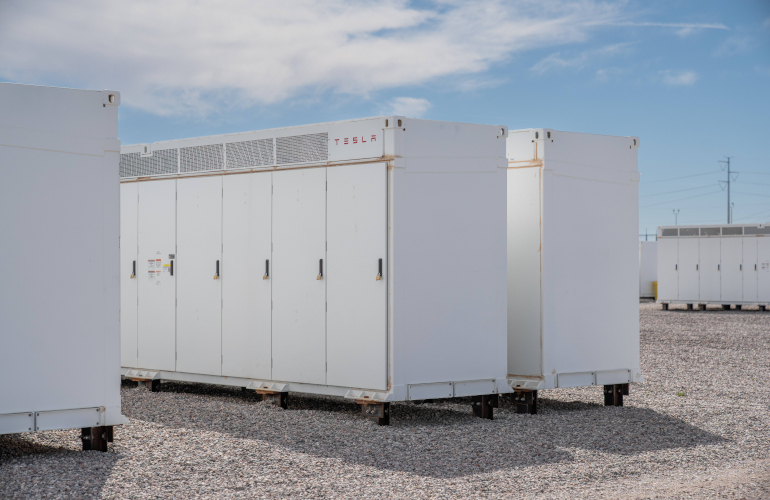

UL Solutions is starting a new evaluation service to help battery energy storage system (BESS) manufacturers, developers and integrators address National Fire Protection Association (NFPA) requirements for mitigating fire and deflagration hazards.

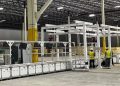
Credit: EDP Renewables North America
“Energy storage systems are growing in scale and importance,” said Ken Boyce, VP of principal engineering at UL Solutions. “Manufacturers, developers, integrators and other stakeholders involved in energy storage system deployment need clear, science-based support to evaluate risk, organize documentation and move through the approval process with confidence.”
These evaluation services supplement UL Solutions’ existing battery energy storage system testing and certification capabilities, including UL 9540, the Standard for Energy Storage Systems and Equipment, and UL 9540A, the Test Method for Evaluating Thermal Runaway Fire Propagation in Battery Energy Storage Systems.
UL Solutions’ new evaluation services support work related to NFPA 855, the Standard for the Installation of Stationary Energy Storage Systems. The evaluation services provide data to demonstrate alignment with NFPA 855 requirements, as well as with explosion protection and prevention requirements addressed in NFPA 68 (deflagration venting) and NFPA 69 (explosion prevention systems).
Specifically, UL Solutions provides an NFPA 855 assessment that identifies gaps, documents findings and strengthens justification packages for code authorities’ review. For NFPA 68 and NFPA 69, customers receive detailed engineering reports that include modeling, simulation-based analysis and expert interpretation of explosion risk and safety performance. These services include virtual sessions with UL Solutions technical specialists to review results.
By integrating evaluation, simulation, testing and certification, UL Solutions helps stakeholders identify a clearer, more efficient path to compliance and project approval.
News item from UL Solutions