

Since 2010, solar panels have become an integral part of India’s energy market, and with the technology in the solar sector advancing and becoming more efficient year after year, the demand for high-performance solar panels rises, and the traditional technology is now being replaced by the more advanced cell architecture.
One of these innovations includes TOPCon (Tunnel Oxide Passivated Contact) technology. According to MERCOM India research, “70% of installed module manufacturing capacity was based on TOPCon technology as of the end of 2025.”
To understand the concept of TOPCon technology, read the full blog.
What is TOPcon technology?
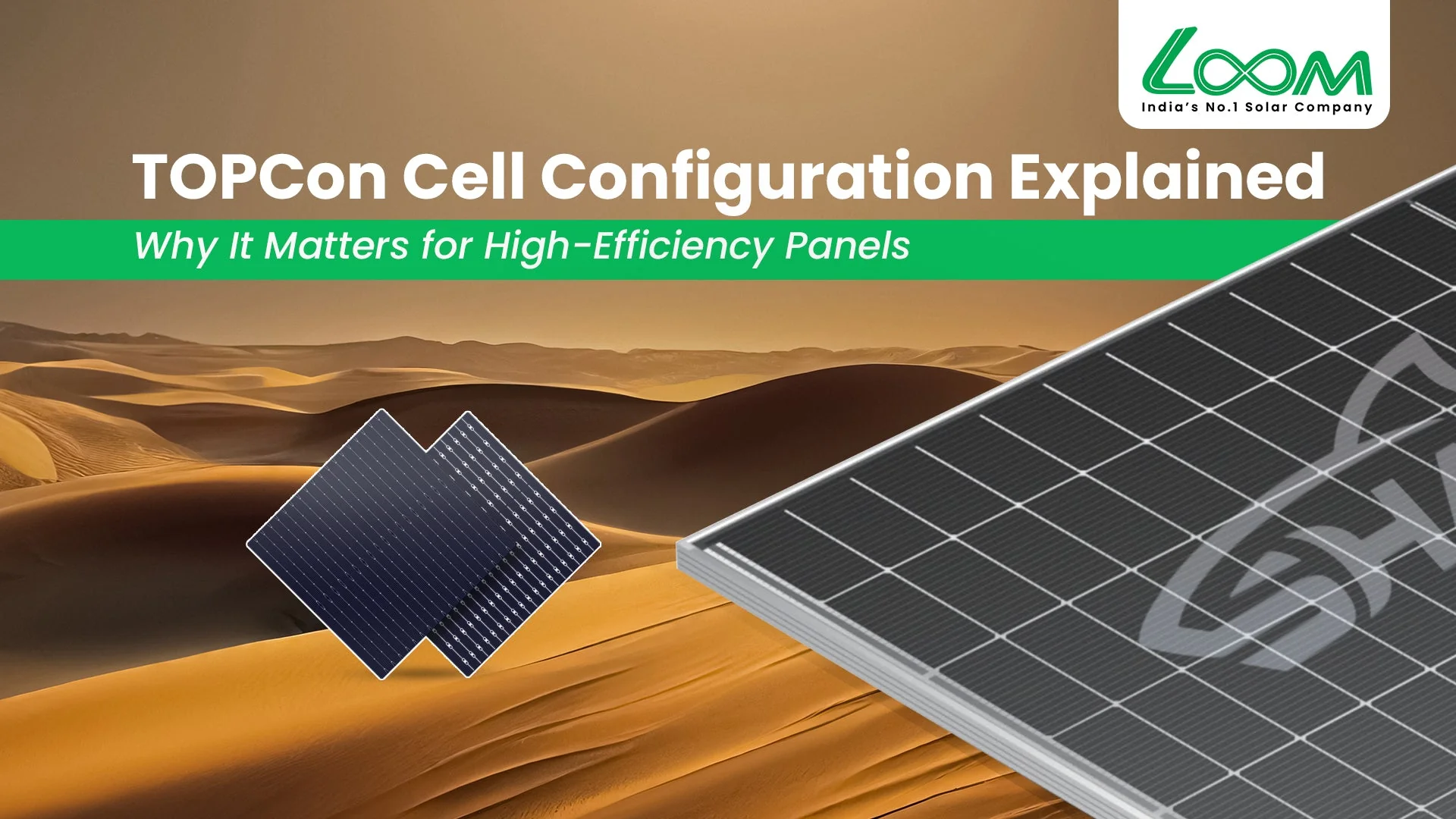
TOPCon (Tunnel Oxide Passivated Contact) is an advanced solar technology designed to increase the efficiency of solar panels by reducing the internal energy loss inside the solar cells.
TOPCon technology is primarily built on N-type silicon wafers, which are known for better performance with an efficiency of 22-25% and low degradation compared to traditional P-type wafers used in standard PERC panels.
The technology uses an ultra-thin layer that works together to improve electron movement and reduce recombination loss. Through minimizing the recombination energy loss and improving the electricity generation, the TOPCon cells can convert more sunlight into electricity, which eventually makes them the next generation of solar technologies in the market.
Understanding the TOPcon cell configuration.
The process of TOPCon cells heavily depends on their advanced cell configuration. Unlike traditional solar panels, the TOPCon solar panels include an additional layer that helps the electrons flow better and reduces energy loss.
A typical TOPCon cell consists of the following components:
-
N-type silicon wafers: The base of the TOPCon cell is an N-type silicon wafer. Being resistant to the light-induced degradation (LID), they help in maintaining the panel performance over a longer period of time.
-
Ultra-thin tunnel oxide layer: A very thin layer of silicon is added to the rear side of the cell. This layer allows the electrons to pass through while reducing the unwanted recombination losses.
-
Polycrystalline silicon layer: On top of the tunnel oxide layer, a polycrystalline layer is added. This layer improves carrier transport and reduces contact resistance.
-
Passivated rear contact: The passive rear contact is developed to improve electron extraction while minimizing resistance and energy leakage.
For a basic understanding of how the structure of a panel integrated with a TOPCon cell looks, below is the flowchart of how the solar is structured:
Front Glass → Anti-Reflective Coating → Front Metal Contacts → Emitter Layer → N-type Silicon Wafers → Ultra-Thin Tunnel Oxide Layer → Polycrystalline Silicon Layer → Rear Metal Contact.
How does TOPcon reduce energy loss?
One of the biggest problems with solar cell technology is electron recombination. This is when the electrons lose their energy before they can be used to generate electricity, hence reducing the overall efficiency of the panel.
This problem is solved by the advanced passivation and selective contact design of TOPCon technology.
The ultra-thin tunnel oxide layer minimizes the direct contact of the silicon wafer with metal contacts, and hence, the recombination losses are significantly reduced. At the same time, the passivated contact structure allows useful charge carriers to move efficiently around the cell.
This allows the TOPCon cells to achieve the following:
-
Higher open circuit voltage.
-
Enhanced selectivity of the carrier.
-
Reduced resistance losses.
-
Increased energy conversion efficiency.
This optimized cell architecture allows more sunlight to be converted into usable power, especially in tough conditions like high temperatures or low-light environments.
Why does TOPcon matter for high-efficiency panels?
As the solar installations continue to grow, the demand for higher-efficiency panels has become more and more important. Rooftop space is at a premium, and consumers want to generate maximum power from fewer panels.
TOPCon technology addresses this need with:
-
Higher efficiency of the module.
-
Improved temperature performance.
-
Enhanced bifaciality.
-
Lower long-term degradation.
-
Increased lifetime energy yield.
TOPCon panels can generate more electricity over their service life than legacy ones. PERC technology. This translates into better returns for homeowners, businesses, and utility-scale projects.
In real-world conditions, TOPCon also outperforms. In areas with high temperatures or changing weather, the better thermal stability of TOPCon panels helps to maintain higher performance during the day.
Why does the solar industry need better cell technology?
TOPCon technology is emerging as a critical component in the next stage of solar innovation as manufacturers upgrade production lines from PERC. Traditional solar technologies, while effective, face limitations in terms of:
-
Efficiency ceiling
-
Heat-related performance loss
-
Degradation over time
-
Lower bifacial performance
To continue improving solar adoption and reducing the cost of electricity generation, the industry needs advanced technologies that can produce more power with greater reliability. TOPCon technology addresses many of these challenges by offering:
-
Higher energy density
-
Better long-term reliability
-
Improved low-light performance
-
Greater compatibility with future solar advancements
As manufacturers continue upgrading production lines from PERC to TOPCon, the technology is becoming a key part of the next phase of solar innovation.
Benefits of TOPcon panels.
Below are the benefits of using a TOPCon solar panel:
|
High Efficiency |
TOPCon modules can achieve higher conversion efficiency by minimizing recombination losses and enhancing charge transport. |
|
Better temperature performance |
These panels work better in high temperatures, which gives a better power output in hot weather. |
|
Lower degradation |
N-type TOPCon cells show lower annual degradation rates, leading to more sustained performance. |
|
Improved low-light performance |
TOPCon panels are better at producing electricity on cloudy days and in the morning and evening. |
|
Higher bifacial gain |
Many of the TOPCon modules are designed to be highly bifacial, so they can also produce power from sunlight reflecting on the back side of the panel. |
|
Greater lifetime energy yield |
TOPCon panels are more efficient and degrade less, generating more electricity over the lifetime of the panel than traditional panel technologies. |
Conclusion.
The shift to advanced N-type solar panels is picking up pace, with almost 70% of India’s installed module manufacturing capacity already on TOPCon technology by the end of 2025.
TOPCon technology is changing the future of solar energy with improved efficiency, less degradation, and better long-term performance than traditional solar cell technology. TOPCon’s advanced cell design, featuring an ultra-thin tunnel oxide layer and passivated contact structure, is effective in reducing energy losses and increasing electricity generation.
These panels produce more electricity over their lifetime than legacy PERC technology. That means better returns for homeowners, businesses, and utility-scale projects. Loom Solar and other companies are also leveraging advanced TOPCon technology to offer Indian consumers higher efficiency and better-performing solar panels.