

Australia’s energy future is no longer some far-off concept. It’s happening right now in homes across the country, and Episode 1 of Season 9 of Open Homes Australia proves exactly that.
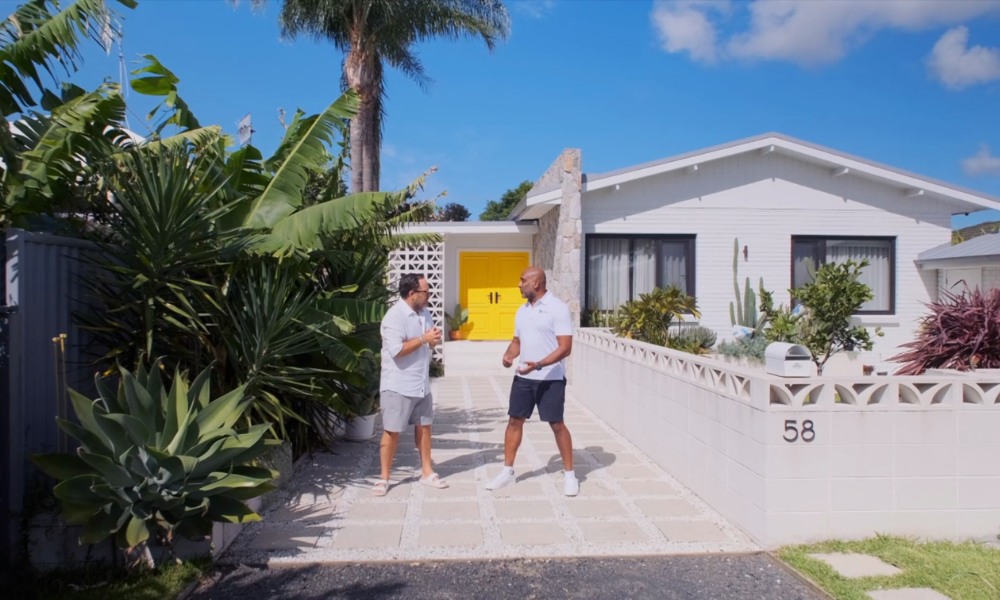
In one of the standout segments of the episode, Roshan Ramnarain visits the stunning coastal home of interior designer and TV personality James Treble. What unfolds is far more than a tour of a beautiful property. It’s a practical demonstration of how solar, battery storage, EV charging, and electrification can work together to create a smarter, more resilient home.
At the centre of it all is a fully integrated energy ecosystem powered by GoodWe.
A home designed for the future
James’ home already turns heads before you even step inside. Positioned close to the beach, the property combines bold architectural styling with practical sustainability upgrades.
“We put solar on the house because it just made sense,” James explained during the episode.
The home features solar panels installed across three sections of the roof to maximise solar generation throughout the day. Rather than relying on a single roof orientation, the setup captures sunlight from morning through to late afternoon.
That solar foundation eventually evolved into something much larger. James and his family later added a guest house at the rear of the property, effectively creating two fully functional homes powered by the same energy system.
The 60-square-metre guest house was designed as a premium accommodation space, with James revealing it doubles as a short-term Airbnb-style holiday stay. Located just minutes from the beach, the secondary dwelling adds both lifestyle and income potential to the property. However, adding another home also significantly increases energy demand.
Air conditioning, hot water, lighting, cooking, entertainment systems, and EV charging all place pressure on household electricity consumption, especially when guests are involved.
That’s where battery storage became the missing piece of the puzzle.
Why battery storage made financial sense
Like many Australian households, James originally installed solar without a battery. At the time, battery pricing and lack of rebate support made many homeowners hesitant to leap immediately. Fast forward to today, and the equation has changed dramatically.
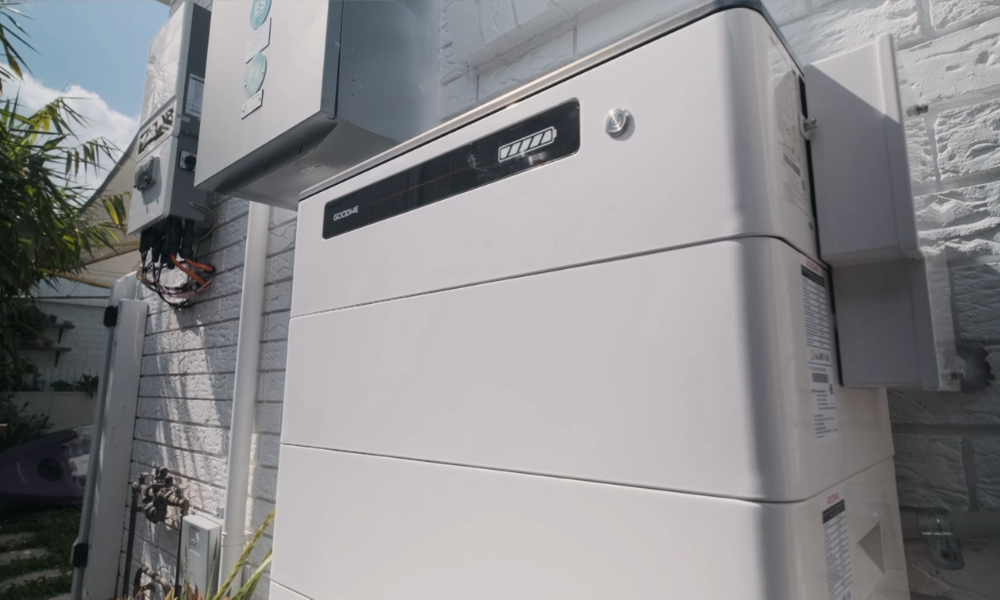
With two dwellings running from the one system, James explained that battery storage simply became the logical next step. The home now features more than 19kWh of GoodWe battery storage capacity. That stored solar energy allows the property to continue running well into the evening using excess daytime solar generation. Instead of exporting large amounts of unused solar back to the grid for a relatively small feed-in tariff, the home stores that energy for later use.
This becomes especially valuable in a property with guests.
As James pointed out, tenants and visitors are unlikely to carefully manage appliance usage around solar generation times. A battery removes that concern by allowing guests to use energy naturally, without sacrificing efficiency.
The result?
“The bills came down dramatically,” James said.
He also highlighted an important mindset shift many Australians are now learning with solar ownership. Running appliances like dishwashers during the day, while solar production is highest, helps maximise self-consumption and reduce grid reliance. With battery storage added into the mix, the home gains even greater flexibility.
GoodWe hybrid inverter technology ties everything together
A battery system is only as effective as the technology managing it. In James’ case, the system uses a GoodWe hybrid inverter, which acts as the central hub connecting solar generation, battery storage, household consumption, and EV charging.
Hybrid inverters are becoming increasingly popular across Australia because they simplify the transition to battery storage. Many homeowners already have solar installed, just like James did. Instead of completely rebuilding an energy system from scratch, a hybrid inverter allows batteries to integrate seamlessly with existing infrastructure.
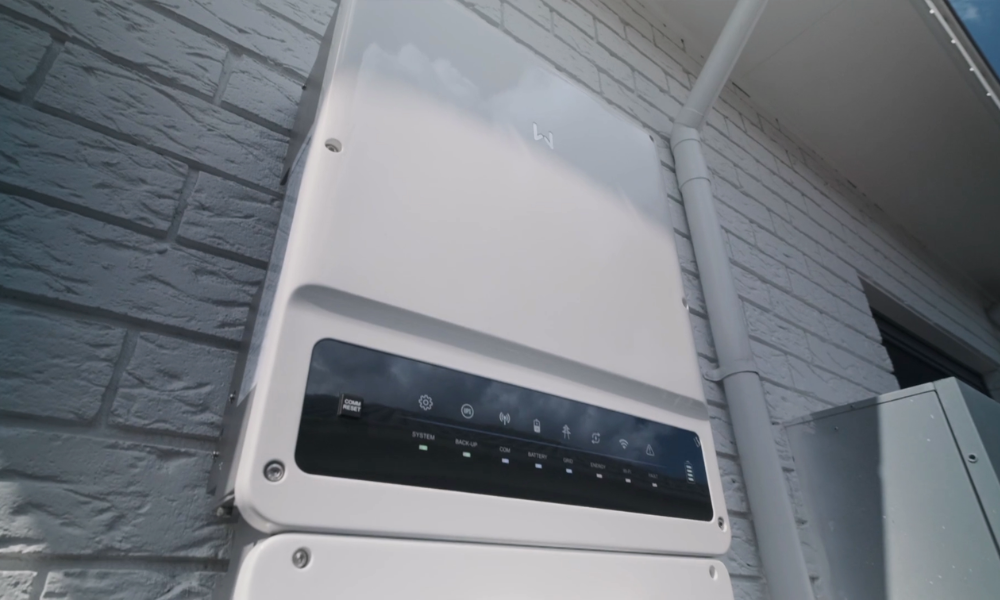
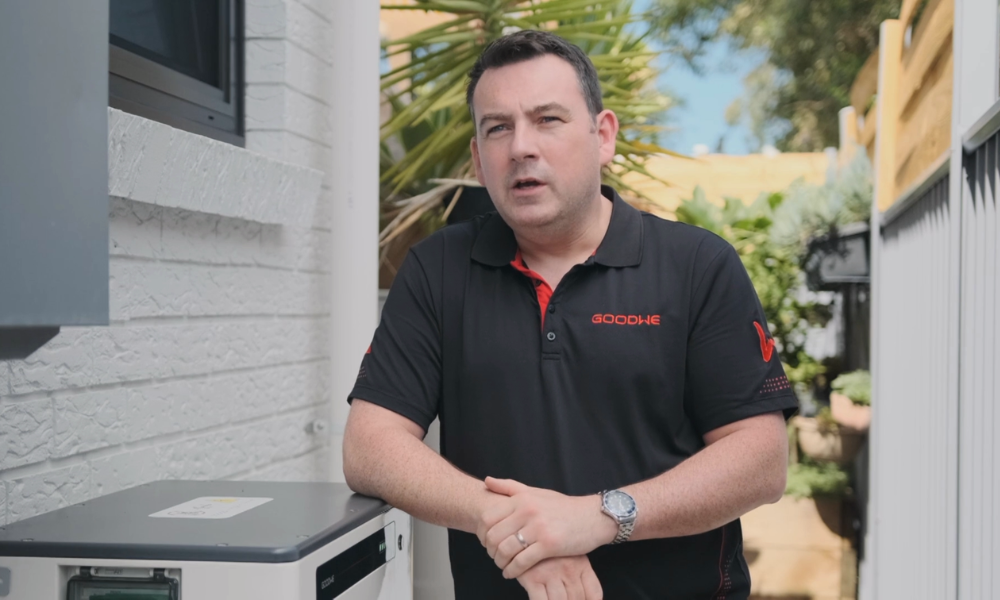
During the segment, GoodWe’s John Wright explained that the system was DC-coupled. In simple terms, this allows solar energy to flow directly into the battery with minimal conversion losses, improving overall efficiency. It also future-proofs the property for increasing energy demands.
As more Australians adopt electric vehicles, electrified appliances, and all-electric homes, energy systems must do more than simply reduce bills. They need to provide reliability and resilience. That includes blackout protection. John explained that the GoodWe system provides backup power not only for the main home, but also for the guest house during outages. For households in areas prone to blackouts, or for properties operating short-term accommodation, that reliability can become a major advantage.
EV charging becomes part of the modern home
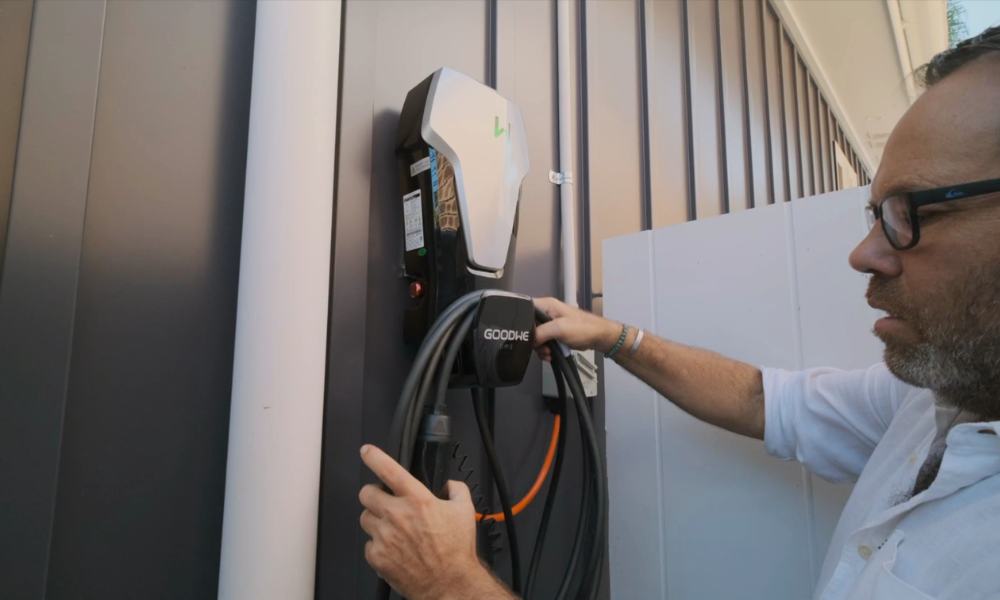
One of the strongest takeaways from the episode is how naturally EV charging now integrates into modern Australian homes. James installed EV chargers at both the primary home and guest house. That decision was made with future demand in mind.
More Australians are purchasing electric and hybrid vehicles each year, and access to home charging is rapidly shifting from luxury to expectation. For the guest house, EV charging also becomes a premium feature for visitors.
“And now they’ve got an extra bonus,” James said of guests staying at the property.
Combined with solar and battery storage, EV charging becomes significantly more cost-effective. Vehicles can charge during the day using excess solar generation, or at night using stored battery energy. That reduces dependence on expensive peak electricity pricing while lowering transport emissions at the same time.
A glimpse into Australia’s electrified future
What makes this Open Homes Australia segment so compelling is that it doesn’t feel experimental or unrealistic. It feels achievable.
James Treble’s property demonstrates how Australian homes can gradually evolve into fully electrified, energy-smart ecosystems. Solar panels start the journey. Batteries improve self-sufficiency. Hybrid inverters manage the flow of energy intelligently. EV chargers prepare households for the next generation of transport.
Most importantly, every piece works together. As the federal battery rebate continues to encourage adoption across Australia, more households are likely to follow a similar path. Existing solar owners are now realising they can unlock far greater value from their systems through battery storage and energy management technology.
For James, the outcome is clear.
Lower bills, greater energy independence, backup protection, EV readiness, and a future-proofed property that works for both family living and short-term accommodation.
Not bad for a house with a bright yellow front door!