


Media Release
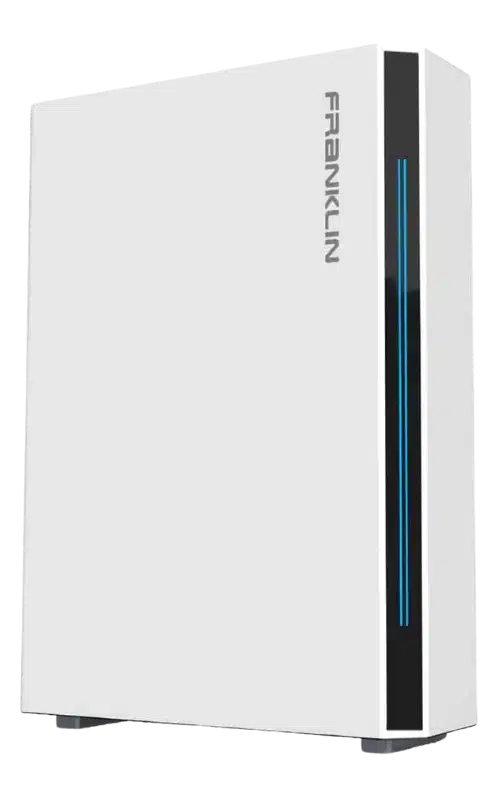
The residential battery market in Australia is heating up, and FranklinWH is stepping in with a timely upgrade. The company has launched its enhanced 15 kWh aPower battery across Australia and New Zealand, responding to rising electricity costs, shifting policy settings, and growing demand for energy independence.
For Australian households, this is not just another product release. It is a clear signal that battery technology is evolving to deliver more long-term value, not just better specs on paper.
A smarter battery for a changing energy landscape
Australia’s energy market is shifting fast. Households are no longer focused solely on upfront costs. They want reliability, long-term savings, and systems that actually perform over time.
FranklinWH’s latest upgrade leans directly into that mindset.
“The energy landscape is shifting quickly, and more homeowners are thinking beyond the upfront specs to what really pays off over time,” said Steve Ruskin, General Manager of FranklinWH Australia. “This upgrade is about delivering more performance over the life of the system, more usable energy, greater throughput, while staying true to our ‘buy once, buy right’ philosophy.”
It is a philosophy that aligns well with how many Australians now approach solar and battery investments. Do it once, do it properly, and make it last.
What has actually improved?
The enhanced aPower builds on an already established platform, but the upgrades are far from minor.
The headline change is the increase in usable capacity. The battery now delivers 15 kWh, up from 13.6 kWh. That means more stored energy available to power your home at night, during peak pricing periods, or during outages. The second major improvement is warrantied throughput. This has jumped from 43 MWh to 60 MWh, representing a 40 per cent increase.
Throughput is where things get interesting. It reflects how much energy a battery can deliver over its lifetime. A higher number means more usable energy over the years, which directly translates to better value.
Perhaps most impressive is that these upgrades come without increasing the system’s footprint or price. That is a rare win for consumers.
Real savings that stack up
Let’s talk dollars, because that is what most homeowners care about. Based on typical usage and an electricity rate of $0.35 per kilowatt-hour, the increased throughput could deliver up to approximately $5,950 in additional value over the battery’s lifetime.
That is a meaningful figure. It can shorten payback periods and make battery storage more accessible for households that have been sitting on the fence.
The increased capacity also improves energy density. In simple terms, you are getting more usable energy per unit, which lowers the effective cost per kilowatt-hour.
Timed perfectly with policy changes
This launch is not happening in isolation. It lands just as Australia’s battery rebate landscape continues to evolve.
The enhanced 15 kWh configuration aligns with current and upcoming policy frameworks, including updates to the Cheaper Home Batteries Program that came into effect on 1 May 2026.
For households looking to maximise rebates and incentives, this timing is ideal. It allows them to invest in a higher-capacity system that is well-suited to both current and future schemes. In other words, it is not just about buying a battery. It is about buying the right battery at the right time.
Built for the long haul
Specs are one thing. Performance over time is another.
FranklinWH has clearly focused on durability and reliability in this updated model. The aPower includes structural reinforcement to reduce stress on battery cells, per-cell temperature monitoring, and a separation between the battery pack and control systems.
These features are designed to maintain consistent performance across years of operation, not just during the honeymoon period after installation.
“We believe performance should be measured over years, not just at installation,” Ruskin added. “We focus on building systems that deliver consistent, reliable results over time. That long-term perspective is what ultimately defines value for homeowners.”
That long-term view is critical, especially as more Australians look to rely less on the grid and more on their own energy systems.
More than just storage
The aPower is designed to work as part of the FranklinWH System, which is a fully integrated home energy management platform. This system coordinates energy generation, storage, and consumption within the home. It can optimise multiple energy inputs, provide reliable backup power, and support more efficient energy use overall.
For homeowners, that means a smarter system that does more than just store solar. It actively manages energy use to maximise efficiency and reduce costs. It also supports greater energy independence, which is becoming increasingly important as electricity prices continue to rise.
Why this matters right now
Australia already leads the world in rooftop solar adoption. Batteries are the next logical step, and demand is accelerating quickly. Rising power prices, evolving rebates, and ongoing concerns about grid reliability are pushing more households to take control of their energy.
The enhanced aPower arrives at a time when Australians are ready for solutions that deliver real, measurable value over the long term. It offers more capacity, greater lifetime output, and a stronger focus on durability, all without increasing cost.
For households considering a battery, that is a compelling proposition. And if the trend continues, it will not be long before systems like this become the standard, not the exception.