


kWh Analytics has launched a data-sharing pilot program to reward renewable energy assets for extreme weather mitigation efforts. kWh Analytics is expanding its risk modeling capabilities by leveraging data from solar projects that employ advanced resilience measures beyond the information typically captured in standard insurance submissions.
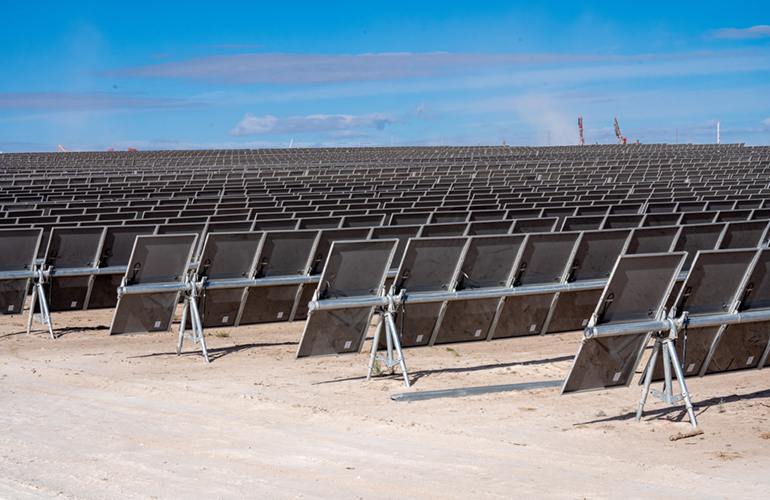
Credit: Nextpower
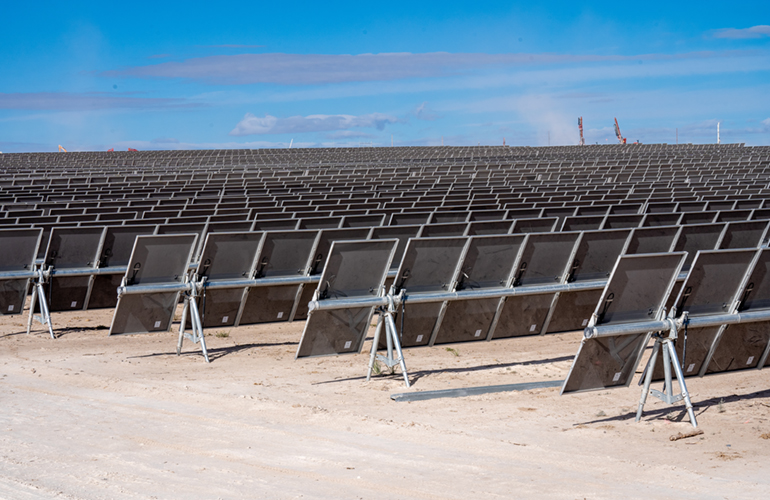
The initial focus of the pilot is on improving how project-level resilience data is captured and relayed to insurance carriers. Advances in tracker technology, including 70° stowing capabilities, automated stow procedures and the growing availability of historical stow performance data, create new opportunities to give insurers clearer visibility into how assets are designed and operated ahead of severe weather events.
Modeling these resilient configurations yield substantial reductions in portfolio-level average annual losses and insurance premiums compared to baseline assumptions and stow protocols. Projects that incorporate additional risk mitigation measures, including thicker, heat-tempered module glass, reduce loss profiles further.
For solar developer owners enrolled in the collaborative telematics program, Nextpower will share real-time and historical hail stow performance data, enabling a more dynamic and evidence-based view of project risk. By integrating this operational data into its proprietary risk modeling platform, kWh Analytics can better evaluate how system design and operational readiness affect expected losses. This approach mirrors the use of telematics in the auto insurance industry, where driving behavior data is shared with carriers to better align premiums with actual risk.
“Extreme weather continues to be a significant driver of loss for utility-scale solar, and the industry is rapidly advancing how those risks are managed,” said Jason Kaminsky, CEO of kWh Analytics. “By incorporating real-world data, including stow performance from Nextpower tracking systems, we can tie insurance structures more closely to demonstrated resiliency, encouraging investments that protect assets and strengthen the long-term bankability of solar projects.”
In the kWh Analytics Solar Risk Assessment 2024, Longroad Energy and Nextpower published a case study showing that proactive stowing at 75° would have reduced the damage probability of an actual 2022 event by 87%, compared to stowing at 60°.
“We’re excited to partner with kWh Analytics on this ground-breaking program that will bring greater transparency and precision to how solar asset risk is evaluated,” said Jyoti Jain, head of software product management at Nextpower. “By allowing customers to share verified stow performance data from our NX Horizon trackers with Hail Pro technology, we’re enabling a shift from modeled assumptions to real-world evidence. This level of insight allows insurers to reward projects that are truly engineered and operated for long-term resilience.”
The new framework recognizes the growing role of advanced solar tracker systems and site design strategies in strengthening projects against severe weather risks, including high winds, hail, and flooding. As extreme weather events become more frequent across the United States, this approach is designed to better align insurance pricing with the engineering, technology, and operational choices that materially reduce loss potential and enhance long-term asset durability.
kWh Analytics expects additional technologies and operational practices to qualify for premium differentiation over time as data quality, verification and modeling continue to advance. The company plans to expand this framework through continued collaboration with industry leaders.
News item from kWh Analytics