

“The lucky country” – Aussies have rung this bell for decades, leaning on the slogan to bolster tourism and to give ourselves a slap on the back when the sun shines and things seem rosy. Few of us realise that the one-liner was actually meant as a warning.
The Lucky Country, written by Donald Horne in 1964, revealed the ‘ease’ with which Australians have ridden the wave of prosperity that has protected us from events that have crippled others. We’ve swiftly recovered from the impact of wars, financial crises, and natural disasters. But that wave might just be teetering out. The pandemic, the Ukraine War, and now the conflict in Iran have chipped away at our economic fabric and revealed our weaknesses. Fuel shortages are but one of a laundry list of ever-present issues that have pulled back the curtain of an economy that appears to be held together by a hope and a prayer. While all arrows point to the biggest economic downturn in our history, there is hope.
Fuel security is exposing cracks
Australia’s fuel security has become one of the most pressing concerns. We import the vast majority of our refined fuel, which leaves us exposed to global supply disruptions. When geopolitical tensions rise, as they have in recent months, the impact is felt quickly at home. Lack of stockpiling has many in a flurry, and even with our Prime Minister urging Aussies to carry on as usual, there’s a palpable fear in the air that fuel prices will reach a point of no return, or that we’ll simply run out.
Fuel is not just about filling up the car. It underpins nearly every part of the economy. Trucks deliver food, machinery powers construction and farming, and logistics keep shelves stocked. When supply tightens or prices spike, the effects cascade through the system.
Even whispers of shortages can shift behaviour. Businesses begin to plan conservatively, and households feel the pinch through rising prices. It highlights a simple truth. Australia does not control a critical input to its own economy.
Gas: a local problem in a global export market
Australia is one of the world’s largest exporters of liquefied natural gas, yet domestic users are paying increasingly high prices. It is a contradiction that has become difficult to ignore.
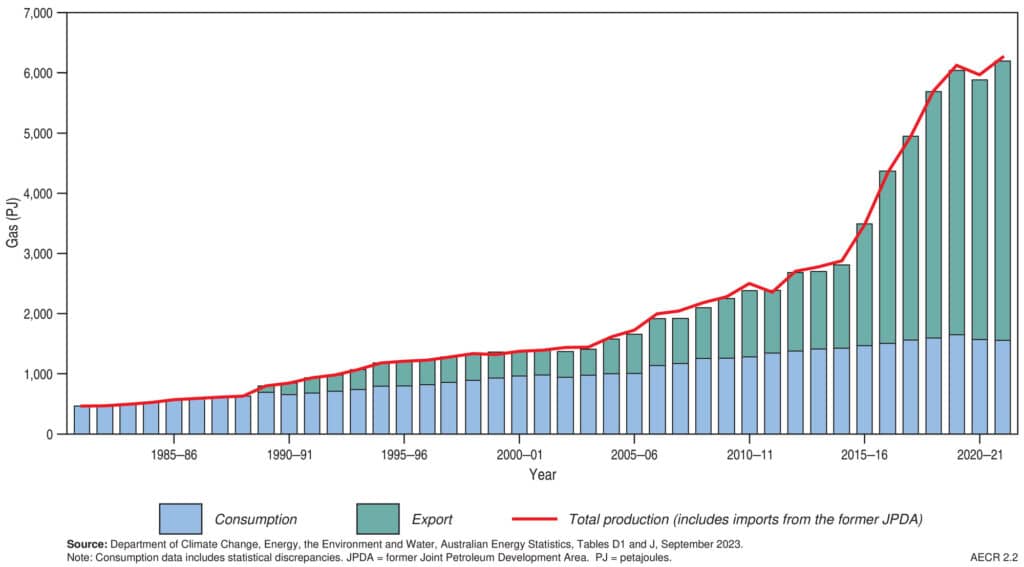
Long-term export contracts have locked in supply for overseas markets. Meanwhile, local supply has tightened, pushing up costs for households and industry. Many homes still rely on gas for cooking, heating, and hot water, which means rising prices hit quickly and directly.
This imbalance is accelerating a broader shift. Electrification is no longer just an environmental talking point. It is becoming a financial decision. Households are replacing gas appliances with electric alternatives, and pairing them with solar and battery systems to regain control over energy costs.
Manufacturing decline and the cost of outsourcing
Australia’s manufacturing sector has steadily declined over the past few decades. While globalisation has delivered cheaper goods, it has also reduced our ability to produce locally.
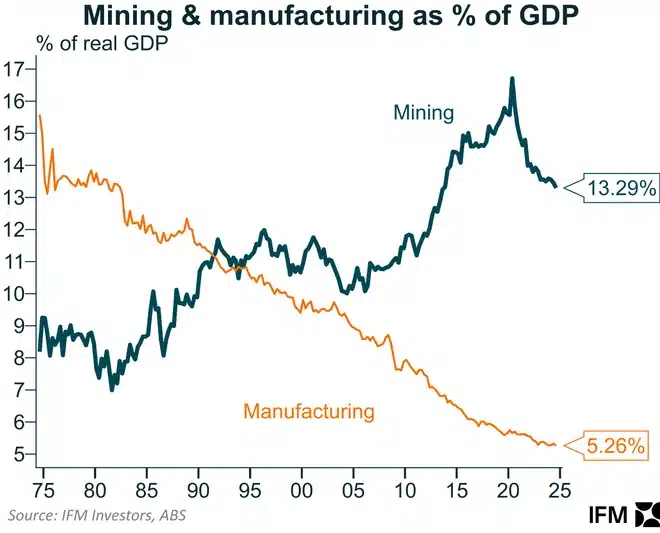
This has created a structural weakness. When global supply chains are disrupted, Australia has limited capacity to respond. The pandemic made this clear, with shortages of essential goods and delays across multiple industries.
The loss of manufacturing is not just economic. It also impacts jobs, skills, and innovation. Rebuilding this capability will not happen overnight, but there is growing recognition that relying entirely on imports carries risk.
Housing pressure is reshaping the Australian dream
Housing affordability has become one of the most visible challenges facing Australians. Property prices have surged, rents have climbed, and vacancy rates remain tight in many areas.
Population growth, limited supply, and rising construction costs have created a perfect storm. For first-home buyers, the barrier to entry continues to rise. For renters, competition has intensified, often leading to higher costs and reduced security.
Even existing homeowners are feeling the strain. Higher interest rates and increased living costs are placing pressure on household budgets. Housing is no longer just a long-term investment. It is a daily financial concern. The Australian dream of owning your own home appears all but impossible for a whole generation.
Cost of living is the common thread
Across all these issues, the cost of living is the unifying factor. Energy prices, groceries, fuel, and housing costs are all moving in the same direction. For many households, income growth has not kept pace.
This creates a compounding effect. Higher fuel costs increase transport expenses, which flow into the price of goods. Energy costs impact everything from manufacturing to retail. Housing absorbs a larger share of income, leaving less for other essentials.
It is not a single issue driving concern. It is the accumulation of pressures that is reshaping how Australians live and spend. It is little wonder why so many are feeling jibbed – generations before have seemingly been able to prosper while the future looks bleak for others.
Where Australia can turn the tide
While the challenges are significant, Australia is not without options. In fact, it holds a unique advantage in one critical area. Energy.
Australia has some of the best renewable resources in the world. Solar uptake is already among the highest globally, and battery adoption is accelerating as technology improves and costs fall. Electrification is gaining momentum, with households and businesses looking to reduce reliance on gas and volatile energy markets.
This transition offers more than environmental benefits. It provides a pathway to greater energy independence. Homes with solar and battery systems can reduce their exposure to price fluctuations and supply risks. At a broader level, investment in renewables and storage can strengthen national resilience.
The recent accelerated uptake in electric vehicles, driven by fuel shortages, is a sign that Aussies are ready to take their future into their own hands.
A turning point, not the end of luck
The idea of Australia as “the lucky country” is not entirely misplaced. We still have strong foundations, vast natural resources, and a high standard of living. But relying on luck alone is no longer enough. The pressures facing the country are interconnected and structural. They require coordinated action, long-term thinking, and a willingness to adapt.
The encouraging part is that change is already underway. From households installing solar, batteries, and EVs, to businesses investing in electrification, the shift has begun.
Australia’s future will not be defined by luck. It will be shaped by how we respond to this moment.
Looking to take hold of your energy future? Get FREE Quotes for solar, batteries, EV chargers, heat pumps, and more. Energy Matters will connect you with local and trusted installers ready to give you no-obligation quotes.