


Solar has meant one thing for the past decade: panels on the roof. By 2026, that assumption is starting to crack.
A growing number of households are running into the same limitations. Roof space is capped. Shading is unavoidable. Some roofs are simply the wrong orientation. At the same time, outdoor living areas are getting bigger, gardens are becoming more productive, and EVs are pushing energy demand higher.
That’s where residential agrisolar steps in, led by a fast-growing backyard solution: the solar pergola.
Rather than treating solar as something bolted onto the house, the pergola turns energy generation into part of the landscape itself.
What a solar pergola is and why it’s different
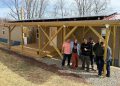
A solar pergola is a freestanding or attached outdoor structure where the roof is made from solar panels instead of timber slats or polycarbonate.
Functionally, it works like any other grid-connected solar system. The difference is where and how it’s used.
Instead of competing for roof space, a pergola sits over patios, walkways, gardens, or driveways. It creates shade, defines outdoor zones, and generates electricity at the same time.
In agrisolar terms, it’s dual-use infrastructure. One structure, two outputs.
Why bifacial panels made pergolas viable
Early solar pergolas struggled with one key problem: lower output compared to roof-mounted panels.
That changed with the rise of bifacial panels.
Bifacial modules use glass on both sides, allowing them to capture:
- Direct sunlight from above
- Reflected light from below, known as albedo
In a pergola setting, this matters. Light reflects off concrete, gravel, grass, pavers, and even pale soil. Instead of being wasted, that reflected energy is captured by the rear side of the panel.
In real-world conditions, bifacial panels typically deliver 15–25% more energy than older monofacial panels installed in similar locations. That uplift is what makes pergolas a serious generation asset rather than just an architectural add-on.
The dappled light advantage for home gardens
Unlike solid roofing, solar pergolas are intentionally spaced.
Most residential systems are designed to allow around 40–50% light transmission through the structure. That creates dappled shade similar to a forest floor environment.
For gardeners, this is a feature, not a flaw. Many premium vegetables and herbs perform better with partial shade, especially in hot Australian summers. Leafy greens, herbs, and heat-sensitive crops benefit from reduced direct sun, lower soil temperatures, and slower moisture loss.
The result is a productive microclimate beneath a structure that is also feeding power back into the home.
Where solar pergolas work best around the home
Solar pergolas tend to shine in spaces where rooftops fall short.
Common residential applications include:
- Outdoor dining and entertaining areas
- Covered garden beds or raised planters
- EV carports and driveways
- Poolside shade structures
- Courtyards with limited roof access
In each case, the pergola earns its footprint twice. Once as a usable space, and again as an energy generator.
Solar pergola vs rooftop solar output
Here’s how solar pergolas stack up against traditional rooftop systems in 2026.
| Feature | Solar Pergola | Rooftop Solar |
| Typical Panel Type | Bifacial glass-glass | Monofacial or bifacial |
| Output Efficiency | High, boosted by reflected light | High, dependent on roof angle |
| Energy Uplift | +15–25% vs older panels | Baseline performance |
| Shading Impact | Minimal, elevated structure | Roof shading can be limiting |
| Light Transmission | 40–50% below panels | No light transmission |
| Dual Use | Energy + shade + garden | Energy only |
| Installation Flexibility | High, location-independent | Limited to roof geometry |
| Visual Impact | Architectural feature | Functional rooftop asset |
The takeaway is not that pergolas replace rooftops entirely. Instead, they extend solar generation into parts of the property that were previously unused.
Aesthetics finally caught up with performance
Another reason solar pergolas are accelerating in 2026 is design.
Earlier systems often looked industrial. Today’s kits are engineered to resemble premium outdoor architecture. Powder-coated aluminium frames, concealed wiring, and modular designs are now standard.
Brands like Pergolux and SmartKits offer CEC-approved systems that integrate cleanly into modern backyards without looking like a retrofit.
For homeowners, that visual acceptance is critical. A pergola is seen every day, not hidden on a roofline.
Compliance and grid connection in Australia
From a regulatory standpoint, solar pergolas are straightforward.
They use standard CEC-approved panels, inverters, and mounting systems. They connect to the grid in the same way as rooftop solar and can be paired with batteries or home energy management systems.
The key difference is structural. Because pergolas are freestanding, council approvals and engineering sign-off may apply depending on size and location. That’s a planning issue, not an energy one.
Why 2026 is the turning point
Solar pergolas aren’t new, but 2026 is when they stop being niche.
Three things are converging:
- Bifacial panels delivering meaningful performance gains
- Homeowners demanding multi-use infrastructure
- Backyard spaces being redesigned for productivity, not just aesthetics
Residential agrisolar doesn’t require a farm or hectares of land. In 2026, it fits neatly between the clothesline and the veggie patch.
Solar is no longer confined to the roof. It’s becoming part of how homes are designed, lived in, and powered.
Energy Matters has been in the solar industry since 2005 and has helped over 40,000 Australian households in their journey to energy independence.
Complete our quick Solar Quote Quiz to receive up to 3 FREE solar quotes from trusted local installers – it’ll only take you a few minutes and is completely obligation-free.