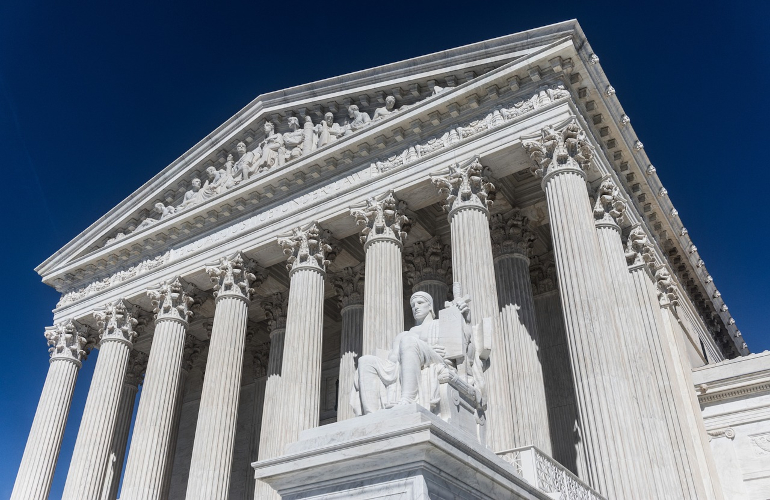

The Supreme Court of the United States has struck down President Donald Trump’s 2025 tariff policy, which his administration justified under the International Emergency Economic Powers Act (IEEPA), a national security law from 1977 that allows the president to “regulate” imports under an emergency. In a 6-3 decision, the Supreme Court said IEEPA does not authorize the president to impose tariffs.
Chief Justice John Roberts wrote the majority opinion with Justices Clarence Thomas, Samuel Alito and Brett Kavanaugh dissenting.
“The government reads IEEPA to give the president power to unilaterally impose unbounded tariffs and change them at will,” Roberts wrote. “That view would represent a transformative expansion of the president’s authority over tariff policy.”
Trump placed reciprocal tariffs on all trading partners on April 2, 2025 — deemed “Liberation Day.” Some of the highest reciprocal tariff rates targeted Southeast Asian countries, including areas popular for solar panel exports. Two groups of businesses filed lawsuits challenging Trump’s authority to impose tariffs under IEEPA. The Supreme Court ultimately sided with the businesses.
During the Supreme Court’s consideration of the case, hundreds of American businesses began submitting complaints to the U.S. Court of International Trade, essentially getting in line for potential refunds. Some of the refund requests came from companies involved in the solar industry, including American Wire Group, Canadian Solar, GameChange Solar, Fluke, Hellermann Tyton, Kinematics, JA Solar, Jinko Solar, Longi, Merlin Solar, Qcells and Trina Solar.
The ruling did not outline a refund process. A coalition of small businesses, We Pay the Tariffs, is requesting swift refunds.
“A legal victory is meaningless without actual relief for the businesses that paid these tariffs,” said Dan Anthony, executive director of We Pay the Tariffs. “The administration’s only responsible course of action now is to establish a fast, efficient and automatic refund process that returns tariff money to the businesses that paid it. Small businesses cannot afford to wait months or years while bureaucratic delays play out, nor can they afford expensive litigation just to recover money that was unlawfully collected from them in the first place. These businesses need their money back now.”
Neil Bradley, executive VP and chief policy officer at the U.S. Chamber of Commerce, said that the reciprocal tariffs greatly affected small and midsize businesses, and today should act as a reset.
“We encourage the administration to use this opportunity to reset overall tariff policy in a manner that will lead to greater economic growth, larger wage gains for workers and lower costs for families,” he said.