


If you’re building or doing a major renovation in New South Wales (NSW) this year, your home is being designed in a way that quietly makes solar panels and batteries work far better than they used to. You won’t see it on the plans. Your builder might not even mention it.
Suddenly, there’s talk of eaves, window sizes, sealing gaps, heat pump hot water, and which way the house faces. It can feel unrelated to solar, but these design choices are reducing the amount of energy the house needs before a single panel goes on the roof.
The result is a new kind of home emerging across NSW in 2026: homes that need less heating and cooling, use more electricity during the day, and are far easier for rooftop solar and batteries to power efficiently.
Most homeowners don’t realise it’s being driven by changes to BASIX and how homes now have to meet stricter thermal and energy performance targets under NatHERS modelling. BASIX isn’t a solar policy, but this year, it’s accidentally creating the most solar-friendly homes NSW has ever built.
The invisible reason: BASIX now shapes the house before the appliances
If you ask a builder what’s changed, you’ll hear practical things: smaller windows on the western side, deeper eaves, stricter insulation, heat pump hot water, careful sealing, and conversations about which way the living area faces.
What you won’t hear is that all of this is happening because the home has to pass a performance model before it can be approved. That model sits inside BASIX and is guided by NatHERS. Instead of ticking boxes for “efficient appliances” at the end, the assessor now looks at how the entire building behaves across the year— how much heat it gains, how much it loses, and how much energy it will realistically need to stay comfortable.
This flips the order of design. Older homes were often designed first, then had efficiency added later. In 2026, the efficiency has to be designed in from the start. The walls, windows, roofline, orientation, and shading matter more than the brand of air conditioner or the size of the hot water tank. And this is the part most homeowners miss: when a house is designed to need less energy in the first place, solar panels don’t have to work as hard to cover it.
4 design changes you’ll see on 2026 plans that solar quietly loves
Open a set of NSW plans in 2026, and you’ll notice details that didn’t use to get this much attention. They don’t look like “solar features,” but together they change how well solar and batteries perform.
1. Orientation, eaves, and controlled glazing
Designers are being careful about which side of the house gets the most glass, how deep the eaves are, and how roofs are positioned. This reduces heat gain in summer and heat loss in winter, which means the air conditioner and heater run far less.
2. Insulation, glazing choice, and airtightness
It’s no longer enough to meet minimum insulation. Continuity matters. Window specs are chosen for the climate zone, and small gaps that used to be ignored are now sealed. The house holds its temperature for longer without mechanical help.
3. Heat pump hot water systems
These are appearing in plans everywhere. Unlike old electric or gas systems, heat pumps run mostly during the day. That daytime energy use lines up almost perfectly with when solar panels are producing the most power.
4. Roof design that accidentally favours solar
Once orientation and shading are optimised for thermal performance, the roof often ends up with better sun exposure and fewer shading issues. There’s suddenly clear, usable space for panels without trying to “make it work later.”
None of these choices was made for solar, but together, they create a home that solar and batteries can power far more efficiently than older designs.
Why smaller solar systems can now do more work than they used to
Here’s the part that surprises most homeowners. A typical house built 10 or 15 years ago needed a large solar system to make a noticeable dent in the bill. Not because solar was inefficient, but because the house itself leaked energy all day. Heating, cooling, and hot water chewed through whatever the panels produced.
A 2026 home is different.
Because the design has reduced heat gain, heat loss, and overall energy demand, the daily load of the house is simply lower. Air conditioning and heating run less. The structure holds comfort for longer without help. And when a heat pump hot water system runs during the day, it uses solar power instead of grid power.
That changes the maths. Instead of solar trying to “keep up” with a high-demand house, the house now needs far less to begin with. The same number of panels can cover a much larger share of the home’s usage. In many cases, a system that would have felt undersized in an older home can now offset most of the bill in a new one. It’s not that solar has improved, but because the house has.
Why batteries make more sense in these homes than in older ones
Solar panels generate power in the middle of the day. Batteries make sense when you can store that power and use it later. The problem in many older homes is that evening and overnight demand is too high. Heating or cooling kicks in, hot water reheats, appliances run, and the battery drains quickly.
Things change now because the building holds its temperature better, and heat pump hot water systems run during the day, which means there’s no large night-time reheating load. And the overall energy demand is lower, which also means that the battery isn’t trying to feed a hungry house.
That means stored solar energy lasts longer into the evening. More of what the panels generated during the day is actually used inside the home, instead of being exported for a low feed-in tariff (FiT) or wasted.
In practical terms, this is where batteries start to feel “worth it” for many NSW homeowners. Not because battery technology has changed dramatically, but because the homes they’re going into are far more efficient than the ones built a decade ago.
The NSW climate zone factor that most homeowners don’t realise
Across the state, the same house design won’t perform the same way. What works on the coast can struggle inland, while what helps in a cooler tablelands climate can hurt in a hot western suburb.
This is where NatHERS modelling comes in. Every home is assessed against its specific climate zone, and that directly affects decisions about glazing, shading, insulation levels, and orientation. For solar and batteries, this matters more than people think.
In a hot inland zone, controlling the western sun and sealing the home tightly can dramatically reduce cooling loads, meaning solar covers more of the daily demand. In cooler zones, well-placed glazing and insulation help the home retain warmth, reducing how much heating is needed after sunset, which helps batteries last longer into the night.
This is why you’ll hear designers talk about window sizes, eaves, and insulation before anyone mentions solar panels. They’re responding to climate modelling first. Solar just benefits from the result.
The result is that homes across NSW are being tailored to their environment in a way that naturally lowers energy demand — and that’s exactly what makes solar and batteries perform better.
Renovations and knock-down rebuilds: where this shows up the most
This change isn’t only affecting brand-new homes on empty blocks. Many NSW homeowners run into it during major renovations or knock-down rebuilds.
Change enough of the house, and the project can trigger fresh BASIX requirements. Suddenly, plans that looked straightforward need to account for window sizes, insulation continuity, shading, sealing, and hot water choices. This is often where people first notice something has changed.
What used to be a simple “add a room” project now involves conversations about thermal performance and orientation. While that can feel like a bit more challenging, it creates an unexpected opportunity: you’re effectively redesigning the home to be far more solar-friendly without setting out to do so.
For a knock-down rebuild, the effect is even stronger. You’re starting from scratch under the current standards, which means the new house is built from day one to need less energy. Adding solar and a battery to that kind of home is far more effective than retrofitting them onto an older, leaky design.
What homeowners should do differently in 2026
- Bring up solar and batteries before plans are finalised, not after drawings are complete.
- Tell your designer you intend to run an all-electric home with a heat pump hot water system.
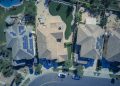
- Ask for a roof layout that leaves clear, unshaded space for future solar panels.
- Consider orientation, eaves, and window placement with solar in mind.
- Involve a BASIX or NatHERS assessor early so small design tweaks can reduce energy demand.
- Prioritise insulation, glazing choice, and sealing before spending money on larger solar systems.
- Think about where outdoor units (like heat pumps) will sit so they can run efficiently during the day.
In 2026, the homes that get the best results from solar and batteries won’t be the ones that spend the most on equipment. They’ll be the ones designed from the start to need less energy.
The big idea: a policy about comfort is creating solar-ready homes
What’s happening across the state in 2026 wasn’t designed as a solar initiative. BASIX exists to make homes more comfortable, reduce energy waste, and improve performance across different climates using NatHERS modelling. But the side effect is powerful.
By forcing homes to hold their temperature better, use less heating and cooling, run hot water during the day, and reduce overall energy demand, these standards are creating houses that are naturally easier for rooftop solar and batteries to power. Solar isn’t working harder; the house is asking for less.
That’s why many NSW homes built or heavily renovated in 2026 will find that smaller systems go further, batteries last longer into the night, and electricity bills drop faster than expected once panels are installed. BASIX may never mention solo panels. But in practice, it’s quietly setting the stage for the most solar-friendly homes the state has seen.
In 2026, NSW homes aren’t just being built to be more comfortable. They’re being built to need less energy. That’s what makes solar panels and batteries work better than ever — often without homeowners realising why.
Energy Matters has been in the solar industry since 2005 and has helped over 40,000 Australian households in their journey to energy independence.
Complete our quick Solar Quote Quiz to receive up to 3 FREE solar quotes from trusted local installers – it’ll only take you a few minutes and is completely obligation-free.