

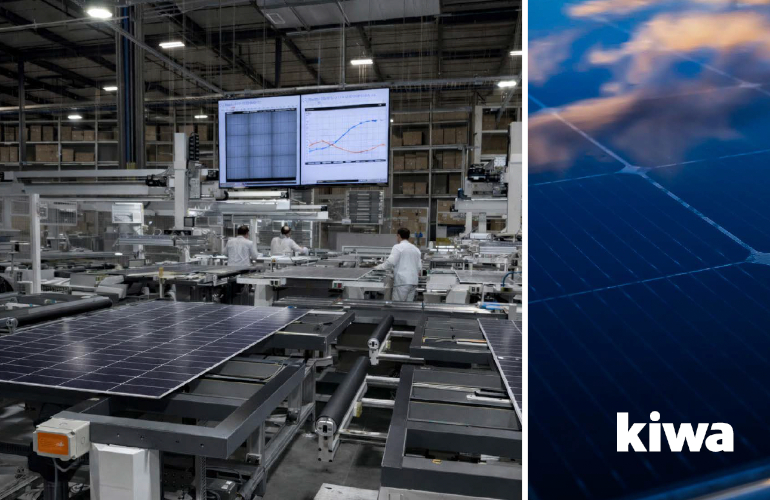

Kiwa PI Berlin released its latest report reviewing the quality of solar panel manufacturers, noting that new production regions (especially the United States) report higher manufacturing mistakes.
 “The 2026 PV Module Manufacturing Quality Report” summarizes Kiwa PI Berlin’s quality assurance findings from factory audits, production oversight and pre-shipment inspections. The organization found new defect patterns emerging in high-impact processes, including layup precision, lamination integrity and junction box assembly. These failures show weakness in the panel manufacturer’s ability to manage bills-of-materials and process controls.
Kiwa PI Berlin noted that U.S. factories show the highest critical and major quality issues; the Middle East and Africa show higher amounts of defects; while Vietnam and Indonesia perform strongest.
Lamination issues — bubbles and edge delamination — are leading defects seen at module manufacturing facilities. Improper encapsulant storage and inadequate lamination process control were identified as the primary root causes.
“The adoption of advanced cell architectures, regional manufacturing incentives and evolving compliance frameworks will reshape production landscapes. It’s a legitimate challenge to manufacture many millions of PV modules in dozens of new and growing factories using hundreds of BOM combinations,” Kiwa PI Berlin contributors said in the report. “By integrating data-driven QA practices into procurement and project execution, stakeholders can not only navigate these complexities but also strengthen PV’s role as a cornerstone of global energy transition. With collaboration, transparency and commitment to quality, the industry is well-equipped to deliver safe, reliable, and sustainable solar power for decades to come.”
The report can be downloaded here.