

Overview
- Choosing trusted solar providers requires evaluating credentials, installation experience, reputation, equipment quality, and after-sales support.
- Reviewing proposals, warranties, and maintenance services helps homeowners and investors avoid risks, ensure regulatory compliance, and secure reliable solar installations suited for Philippine conditions.
In the solar industry, long-term performance depends heavily on the expertise behind the installation. When selecting a provider, trust should be based on proven experience rather than persuasive marketing.
Understanding how to choose trusted solar providers and installation teams helps homeowners and investors ensure their solar systems are installed safely and perform reliably over time.
Verify Credentials and Experience

Proper licenses, industry certifications, and installation experience demonstrate that a solar provider has the technical knowledge and regulatory compliance needed to deliver a safe and efficient system. Verifying these qualifications helps protect your investment.
Ensure Licenses and Certifications
Solar companies operating in the Philippines should be registered with the Department of Trade and Industry (DTI) or the Securities and Exchange Commission (SEC), depending on their business structure.
For energy-related projects, providers may also coordinate with the Department of Energy (DOE), particularly when working with grid-tied systems.
Installers and engineers should also hold valid electrical engineering licenses or training certifications. These qualifications ensure they understand electrical codes, mounting standards, and grid interconnection requirements under Philippine regulations.
Look for Experience Level and Local Knowledge
Providers with extensive installation experience understand the challenges of the Philippine environment, including intense heat, heavy rain, typhoons, and grid fluctuations.
Local knowledge helps installation teams recommend suitable panel types, mounting systems, and system placement strategies that maximize energy generation under these conditions.
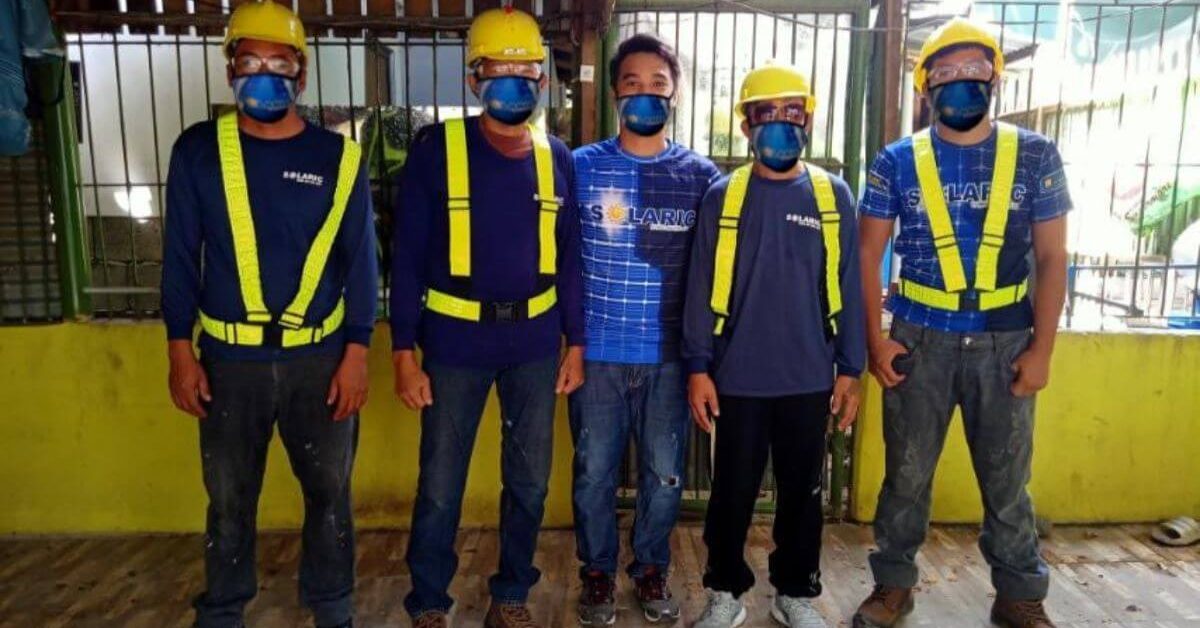
Solaric has completed numerous rooftop installations across the country and focuses on designing systems suited to local climate conditions and household energy requirements.
Guarantee In-house Crews
A reliable solar provider should maintain an in-house team of engineers, installers, and technicians instead of relying entirely on outsourced contractors.
An in-house team helps maintain consistent workmanship, improves coordination during installation, and allows faster response for maintenance or troubleshooting. This approach also increases accountability for installation quality.
Research Reputation and Portfolio
Evaluating a provider’s past projects, testimonials, and case studies can provide valuable insight into reliability and workmanship.
Check Online Reviews
Look for consistent patterns in customer feedback rather than isolated comments. Repeated praise for professionalism, reliability, and service quality can indicate a dependable provider, while frequent complaints may signal potential concerns.
Also, observe how companies respond to negative feedback and whether they address issues constructively.
Assess Project References
Request examples of completed solar installations with similar roof types, system sizes, or energy needs.
When reviewing references, consider the quality of installation, adherence to project timelines, and overall customer satisfaction. Speaking with past clients can also help you understand system performance and post-installation support.
Evaluate the Proposal and Equipment
Reviewing a provider’s technical proposal ensures that the recommended system aligns with your energy requirements, budget, and long-term goals.
Request Detailed Quotes
A transparent proposal should clearly outline equipment specifications, installation costs, permits, and available warranties.
Clear pricing helps homeowners understand the full investment and avoid unexpected charges during the installation process.
Solaric provides detailed quotations that explain system design, expected performance, and installation costs to help customers make informed decisions.
Inspect High-Quality Components
High-quality components improve system efficiency, durability, and resistance to harsh weather conditions.
Look for equipment certified by recognized organizations such as the International Electrotechnical Commission (IEC) and Technical Inspection Association (TÜV). Warranty coverage for major components is also important when evaluating equipment reliability.
Understand Warranties and After-Sales Support
A solar system is a long-term investment, and reliable after-sales support helps maintain performance throughout its lifespan.
Make Sure of Workmanship and Equipment Warranties
Workmanship warranties protect against installation errors such as faulty wiring or improper mounting. These warranties typically last five to ten years.
Equipment warranties cover solar panels, inverters, and other components. Solar panels often carry warranties ranging from 10 to 25 years, while inverters typically have warranties of five to ten years.
Guarantee Maintenance Services
Reliable solar providers should offer maintenance services to keep systems operating efficiently. Regular inspections may include panel cleaning, system diagnostics, inverter checks, and monitoring of performance levels.
Providers that offer ongoing support demonstrate long-term accountability for their installations.
Red Flags to Watch Out For

While evaluating providers, watch for warning signs that may indicate potential risks.
- High-Pressure Sales: Be cautious of providers who pressure you to sign contracts quickly or discourage questions. Trustworthy companies allow clients sufficient time to review and make informed decisions.
- Unrealistic Savings Promises: Avoid providers that promise exaggerated or guaranteed returns, as such claims often ignore real-world factors like weather conditions and energy usage.
- Lack of Licenses and Insurance: Do not work with providers that lack proper business registration, electrical licenses, or insurance, as this may expose you to legal and financial risks.
- “Too Good to Be True” Offers: If a solar proposal seems unusually cheap or promises unrealistically high returns, it may indicate substandard equipment, inexperienced installers, or hidden costs that may arise later.
Key Takeaway
Understanding how to choose trusted solar providers and installation teams is essential to ensure reliable solar system performance and long-term value.
For a trusted solar partner in the Philippines, Solaric offers decades of experience, certified in-house teams, and a proven track record of successful rooftop installations.
To learn more or get started on your journey, reach out to us today!