

When we ask “how is solar energy used in real life?“, we’re really asking two things: where does it show up in our daily world, and how much of our power needs can it actually cover?
The short answer: far more than most of us realize. From rooftop panels and backyard pools to factory roofs, highway signs, and the phone charger in our backpack, solar has quietly slipped into almost every corner of modern life.
In this guide, we’ll walk through how solar energy works, then jump into its practical applications at home, in business and industry, in our cities and transportation systems, and in the everyday devices we rely on, along with the key benefits and limitations we should keep in mind.
What Solar Energy Is And How It Works
Solar energy is the radiant light and heat that comes from the sun. Every hour, the sun delivers more energy to Earth than humanity uses in an entire year. Our job is to capture a tiny fraction of that and turn it into useful forms of power, mainly electricity and heat.
To understand how solar energy is used, we first need a basic picture of the underlying technologies and conversion processes.
Key Types Of Solar Technologies
When we talk about “going solar,” we’re usually referring to one of three main technologies:
- Solar photovoltaics (PV)
This is what we picture on rooftops and in large solar farms.
- PV panels are made of semiconductor materials, usually silicon.
- When sunlight hits a panel, it knocks electrons loose and generates direct current (DC) electricity.
- An inverter then converts that DC to alternating current (AC), which our homes and grid actually use.
- Solar thermal (solar heating)
Instead of making electricity, solar thermal systems capture the sun’s heat directly.
- Solar water heaters use collectors (often flat, dark panels with pipes) to warm water for showers, sinks, and pools.
- Solar space heating systems circulate heated air or fluid to warm living or working spaces.
- At a larger scale, concentrated solar power (CSP) uses mirrors to focus sunlight and create very high temperatures, often to run steam turbines.
- Hybrid and integrated solutions
We’re seeing more systems that blend or embed solar technologies, such as:
- Building-integrated PV (BIPV), where solar cells are built into windows, facades, or roofing materials.
- PV-thermal (PVT) collectors that generate electricity and capture waste heat at the same time.
From Sunlight To Usable Power: The Basic Conversion Process
Let’s zoom in on the most common setup: a standard rooftop solar PV system.
- Sunlight hits the panels
Photons from the sun strike the solar cells. If the light is strong enough and the angle is right, electrons in the cells are energized and begin to flow.
- DC electricity is produced
The panel outputs low‑voltage DC power. At this point, it’s not directly usable by typical household outlets and appliances.
- Inverter converts DC to AC
A solar inverter turns DC into grid‑standard AC. Modern “smart” inverters can also communicate with the grid and optimize performance.
- Power is used, shared, or stored
- First, our home or building uses the solar power on site.
- Any excess can flow back into the grid (often earning credits via net metering, depending on local rules).
- Or we can store it in solar batteries for use at night or during outages.
- Monitoring and control
Most systems now include apps or dashboards that let us see, in real time, how much power we’re generating and using. This visibility often leads to better energy habits.
That’s the technical backbone. Next, we’ll look at how this translates into practical, day‑to‑day uses in our homes.
Solar Energy In Homes
Residential applications are the first place many of us encounter solar. When we ask, “How is solar energy used at home?”, the answer spans everything from running the fridge to heating the pool.
Rooftop Solar Panels For Electricity
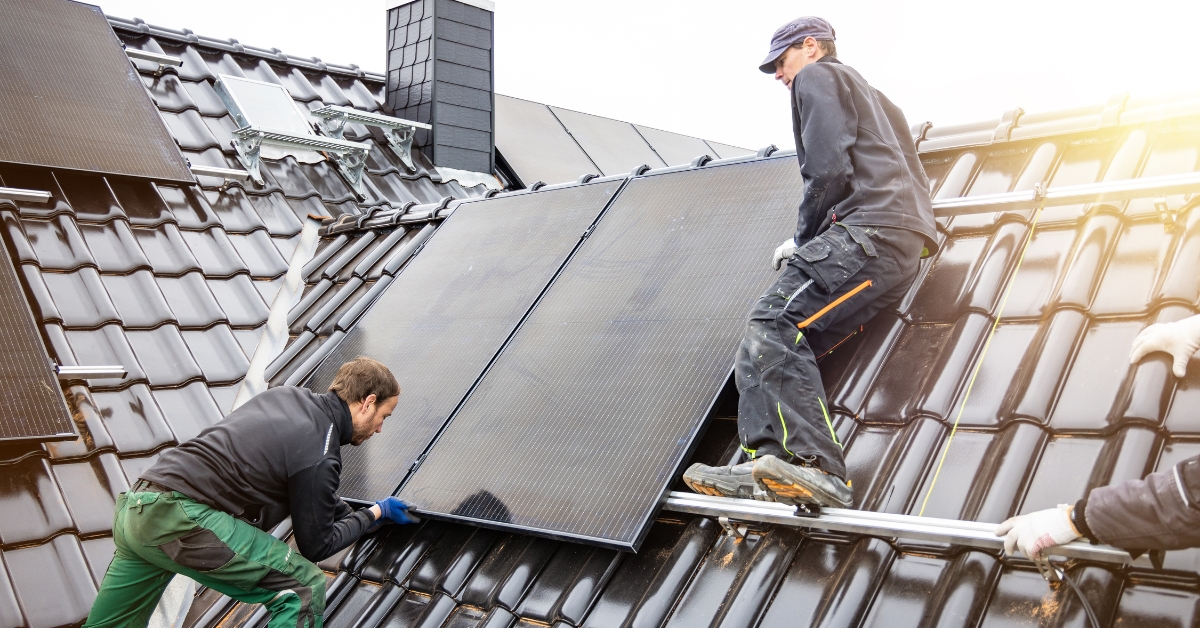
Rooftop PV is the classic home solar setup.
What they do:
- Generate electricity for lights, appliances, electronics, and heating/cooling systems.
- Offset our utility bills, sometimes dramatically.
- Provide backup power when combined with battery storage.
How they’re typically used:
Grid‑tied systems:
- The most common setup. Our home stays connected to the electric grid.
- In the daytime, solar covers part or all of our usage.
- Excess energy flows to the grid, potentially earning bill credits.
- At night, we draw from the grid as usual.
Grid‑tied with batteries:
- We add a battery (or several) to store extra solar.
- Great for areas with frequent outages or time‑of‑use rates.
- We can run critical loads, like refrigerators, Wi‑Fi, medical devices, during blackouts.
Real‑world impact:
In many sunny regions, a well‑sized rooftop system can cover 60–100% of a home’s annual electricity needs, depending on roof space, shading, and usage patterns.
Solar Water Heating And Pool Heating
Not all home solar involves electricity. Solar thermal is often the most efficient way to heat water.
Solar water heating:
- Roof‑mounted collectors absorb sunlight and transfer heat to water or a heat‑transfer fluid.
- A storage tank keeps that hot water ready for showers, dishwashers, and washing machines.
- These systems can often provide 50–80% of a household’s annual hot water needs, especially in warmer climates.
Solar pool heating:
- Black plastic or rubber collectors circulate pool water and warm it using the sun.
- They’re relatively low‑tech and inexpensive.
- We extend the swimming season without a big electric or gas bill.
Using the sun directly for heat is one of the simplest, most cost‑effective answers to the question, “How is solar energy used at home beyond electricity?”
Off‑Grid Cabins, RVs, And Tiny Homes
For off‑grid living or mobile lifestyles, solar can be more than just a money saver, it can be the only practical power source.
Cabins and tiny homes:
- Roof or ground‑mounted solar arrays paired with batteries and sometimes a small backup generator.
- Provide electricity for lights, refrigeration, small appliances, and internet.
- Often combined with propane, wood stoves, or solar thermal for heating and hot water.
RVs and vans:
- Lightweight solar panels mounted on the roof, connected to a battery bank.
- Charge laptops, phones, lights, fans, and small DC appliances.
- Reduce reliance on noisy generators and crowded hookups.
In these setups, we size our systems around essential loads first, then add comfort items as budget and space allow.
Solar Energy In Businesses And Industry
Commercial and industrial users consume a huge share of global electricity, so how solar energy is used in this sector has an outsized impact on emissions and operating costs.
Commercial Rooftops And Solar Carports
Look at the roofs of big box stores, warehouses, and office buildings: they’re often covered in panels.
Commercial rooftop solar:
- Turns underused roof space into a productive asset.
- Helps businesses hedge against rising energy prices.
- Can improve ESG scores and demonstrate visible climate action.
Because businesses tend to use the most power during the day, when solar is strongest, self‑consumption rates are high. That makes projects financially attractive even in places with modest incentives.
Solar carports:
- Elevated canopies with solar panels installed over parking lots.
- Provide shade and weather protection for vehicles.
- Generate on‑site power that can feed the building or adjacent EV chargers.
This is a smart way to add solar capacity when roof space is limited or structurally constrained.
Solar Farms And Utility‑Scale Power Plants
At the largest scale, solar farms and utility‑scale PV plants feed electricity directly into the grid.
Key features:
- Thousands (or millions) of panels installed on open land or repurposed sites like brownfields.
- Often use tracking systems that tilt panels to follow the sun, boosting energy output.
- Compete with fossil fuel plants on cost in many regions: in some places, utility‑scale solar is now the cheapest new source of electricity.
Concentrated solar power (CSP) plants:
- Use mirrors or lenses to focus sunlight onto a receiver.
- Produce very high‑temperature heat, which drives a steam turbine.
- Often include thermal storage (like molten salt) to deliver power after sunset.
These projects answer the question “how is solar energy used at the grid level?” by acting like traditional power plants, just without the fuel.
Industrial Processes And Solar‑Powered Operations
Industrial facilities typically need both electricity and heat.
Process heat from solar:
- Low‑ and medium‑temperature process heat (for food processing, textiles, chemical production, etc.) can come from solar thermal collectors.
- This displaces natural gas or oil burned in boilers, cutting both emissions and fuel costs.
Solar‑powered operations:
- Mining sites and remote operations use solar and batteries to reduce diesel generator use.
- Data centers pair large solar arrays with energy storage to meet sustainability goals.
- Cold storage facilities add solar to offset 24/7 refrigeration loads.
As technologies mature, we’re seeing more co‑designed facilities, where solar, efficiency upgrades, and electrified processes are planned together rather than bolted on at the end.
Solar Uses In Cities, Transportation, And Public Infrastructure
When we zoom out from individual buildings, we see solar woven into urban infrastructure and mobility systems.
Solar Streetlights, Signs, And Public Facilities
Solar‑powered streetlights:
- Combine a small PV panel, LED light, battery, and controller on a single pole.
- Ideal for remote roads, parks, and pathways where trenching power lines would be expensive.
- Keep lights on during grid outages, improving safety.
Traffic signs and signals:
- Many flashing warning signs, speed feedback displays, and emergency call boxes are solar‑powered.
- They draw very little energy and often operate reliably for years with minimal maintenance.
Public facilities:
- Schools, libraries, and municipal buildings install rooftop or canopy solar to cut utility costs.
- Community centers sometimes use solar plus storage as resilience hubs, providing power, cooling, and device charging during disasters.
These applications show how solar energy is used to make cities more resilient and self‑sufficient.
Solar In Transportation And EV Charging
Transportation is a major emissions source, so the interaction between solar and mobility matters.
EV charging with solar:
- Homes and businesses pair solar arrays with Level 2 chargers to fuel electric vehicles.
- Solar carports at workplaces and shopping centers offer shaded parking plus low‑carbon charging.
Transit and rail:
- Some bus depots power depots and maintenance yards with rooftop solar.
- Rail operators use solar for signaling equipment, remote crossings, and station buildings.
Solar on vehicles:
- We’re seeing experimental and niche products, like solar‑assisted refrigerated trailers, boats, and off‑grid service vehicles.
- Fully solar‑powered cars are still a stretch for everyday use, but solar can meaningfully extend range or reduce auxiliary loads.
In short, as we electrify transportation, solar becomes a natural partner, supplying clean power close to where it’s needed.
Solar Gadgets And Everyday Devices
Not all solar installations are massive or permanent. Some of the most practical uses of solar energy appear in small, everyday gear.
Portable Solar Chargers And Power Banks
For anyone who spends time outdoors, or just wants backup power, portable solar is incredibly handy.
Common uses:
- Foldable solar panels charging phones, tablets, cameras, or laptops.
- Solar power banks that recharge during the day and top off devices at night.
- Small solar panels on backpacks or windowsills for trickle charging.
These aren’t meant to replace a home system, but they do offer independence from wall outlets and help keep essentials powered on the go.
Solar For Remote And Emergency Use
Solar really shines when grid power is unavailable or unreliable.
Remote applications:
- Off‑grid sensors and monitoring stations.
- Rural telecom towers and Wi‑Fi hotspots.
- Water pumps for agriculture and livestock.
Emergency and disaster response:
- Solar generators (portable battery + PV) replacing noisy gas generators.
- Solar‑powered lanterns and radios for households after storms.
- Rapid‑deploy microgrids that bring critical services, lights, refrigeration, communications, back online in affected areas.
In these contexts, the question isn’t just “how is solar energy used?” but “how quickly can we deploy it when we need it most?”
Benefits And Limitations Of Using Solar Energy
Solar is powerful, but it isn’t magic. To use it well, we need a clear view of both its advantages and its constraints.
Environmental And Cost Advantages
1. Lower greenhouse gas emissions
Once installed, solar PV systems produce electricity without burning fuel. Over their lifetime, they avoid substantial CO₂ emissions compared with coal or gas, contributing significantly to lowering the environmental impact of our energy use.
2. Falling costs and bill savings
Panel prices have dropped sharply over the past decade. In many regions, rooftop or community solar can deliver power at or below retail electricity rates, especially when paired with incentives or tax credits.
3. Energy independence and resilience
By generating power on site, we:
- Reduce exposure to volatile fuel prices.
- Keep critical loads running during outages (with batteries or hybrid systems).
- Strengthen community resilience through distributed generation.
4. Low operating and maintenance needs
No fuel deliveries, no frequent moving parts. Most PV systems just need periodic inspections and occasional cleaning to maintain performance, such as following best practices for cleaning and maintaining solar panels.
Challenges: Intermittency, Space, And Storage
1. Intermittency and variability
Solar only produces when the sun is shining. Clouds, seasons, and day–night cycles all affect output.
- At the building level, we can smooth this with batteries and smart load management.
- At the grid level, we need flexible resources, storage, demand response, and complementary generation.
2. Space and siting
We need enough suitable surface area:
- Roofs that are structurally sound, with minimal shading and good orientation.
- Land for solar farms that balances energy production with agriculture, conservation, and community concerns.
Creative solutions, like solar carports, agrivoltaics (combining farming and solar), and building‑integrated PV, help ease this challenge.
3. Upfront cost and access
Even as prices fall, the initial investment can be a barrier.
- Financing tools, leases, power purchase agreements (PPAs), and community solar share programs help spread costs and broaden access.
- Policy and incentive frameworks make a big difference in who can participate.
Understanding these limitations doesn’t weaken the case for solar: it helps us deploy it more intelligently, in the right places and combinations.
Turning Sunlight Into Your Next Step: How To Act On Solar Today
When we look across homes, businesses, cities, and everyday devices, how solar energy is used turns out to be remarkably diverse. It powers our lights and laptops, heats our water and pools, feeds the grid from sprawling solar farms, and keeps critical systems running in remote and emergency situations.
The common thread is simple: we’re steadily replacing fuel burned in centralized plants with sunlight captured closer to where we live and work.
As storage improves, costs continue to fall, and more of our vehicles and industrial processes electrify, the role of solar will only grow. Our opportunity now is to be deliberate, choosing the solar applications that make the most sense for our roofs, our businesses, our communities, and our resilience needs.
If we get that mix right, the sun shifts from being just background weather to a core part of our energy future.