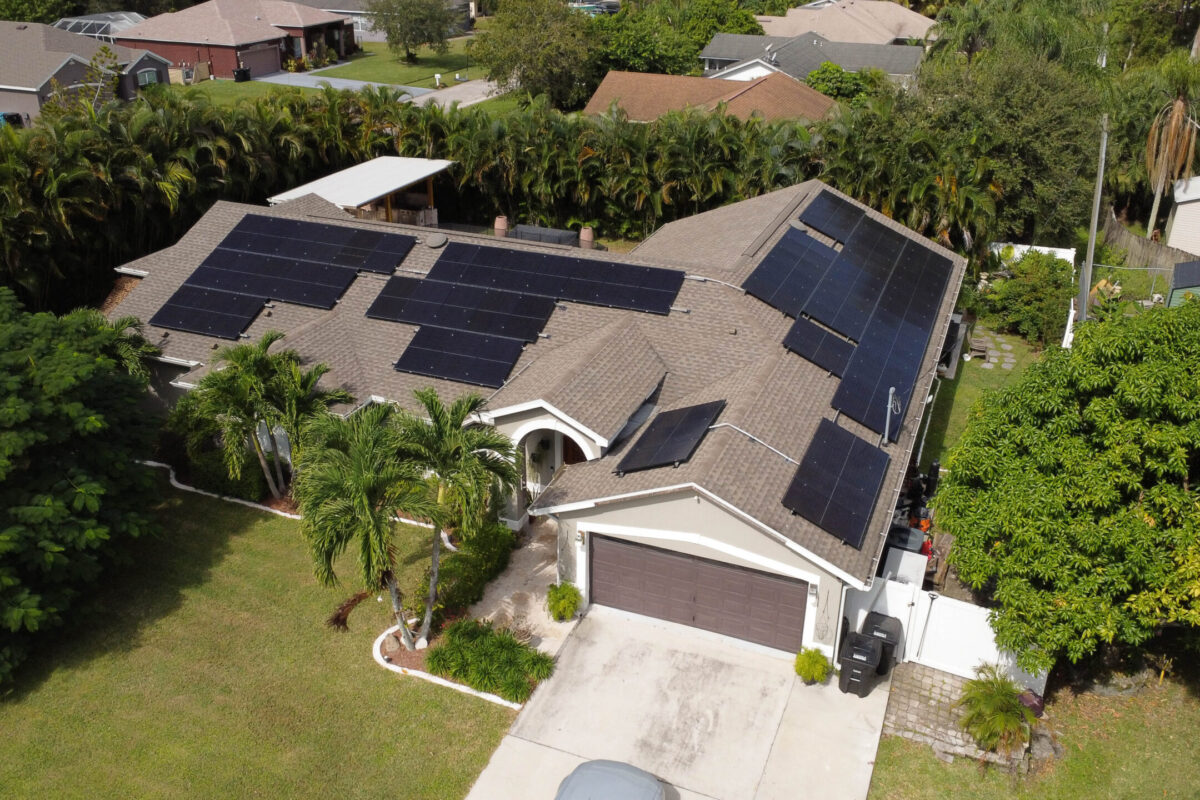
A 2025 update from the Institute for Local Self-Reliance (ILSR) finds that small-scale solar installations accounted for 19% of the 36 GW of total solar capacity added to the national grid last year.
The United States added 6.8 GW of distributed solar capacity in 2025, according to the ILSR update. This distributed segment represents approximately one-fifth of all new solar capacity installed during the year.
California led the nation in new volume by adding 2 GW of distributed solar, followed by New York with 1.2 GW and Maine with 1.1 GW. In several states, including North Dakota, North Carolina, Indiana, Vermont, and Arkansas, all recorded solar growth in 2025 came from distributed sources.
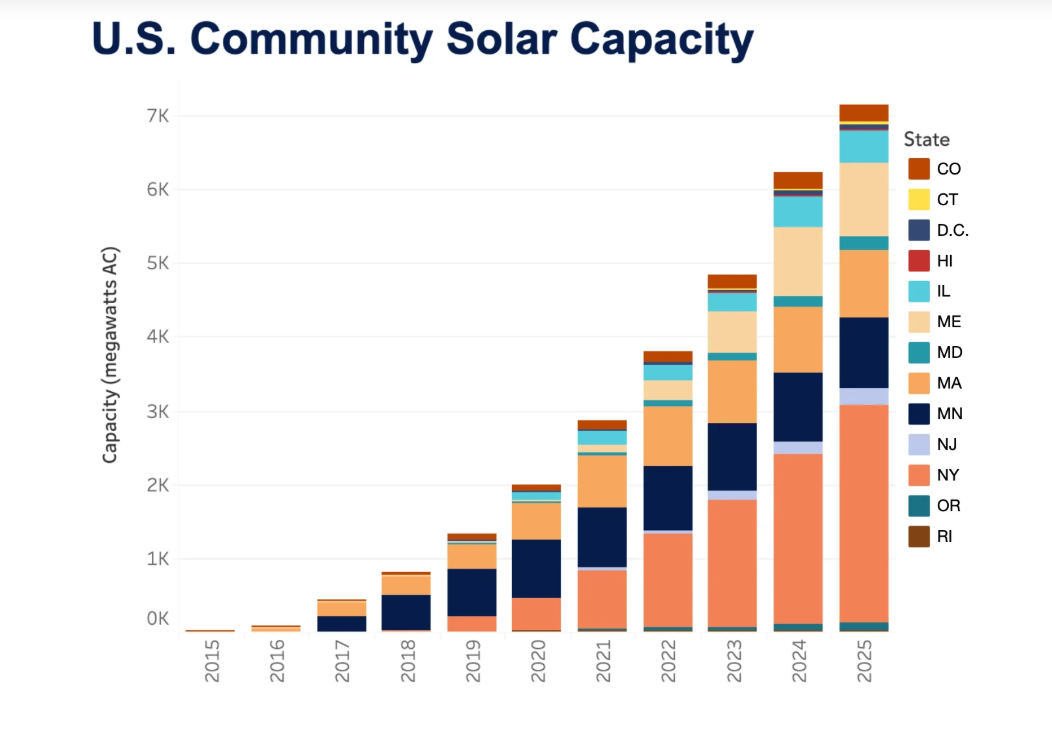
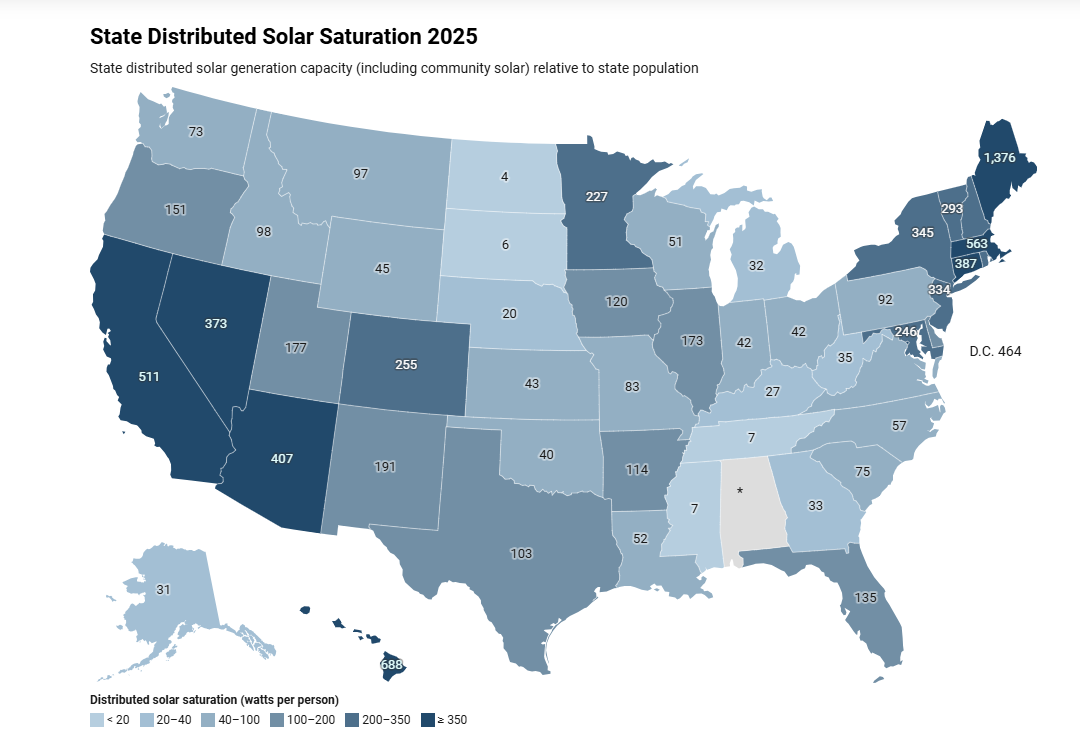
Maine surpassed other states to reach the highest distributed solar saturation in the country with 700 W per person. The state’s growth was driven heavily by community solar, which accounted for 53% of Maine’s total existing solar capacity by the end of 2025. Other states showing significant growth in distributed capacity since 2024 include D.C. at 45%, West Virginia at 30%, and Montana at 27%.
The report identifies 25 states and the District of Columbia as leaders in solar saturation, with each having more than 100 W of distributed solar per person. This level of capacity is sufficient to serve one in every 25 households. The average saturation among these leading states increased from 273 W to 329 W per person over the last year. In Tennessee and Idaho, distributed solar made up over 90% of all new solar growth.
New York and Minnesota remain prominent in the community solar market, with community solar representing 42% of the total solar marketplace in both states. D.C. and Massachusetts follow with community solar accounting for 20% of their respective markets. Nationally, solar energy as a whole accounted for over three-quarters of all new electric generating capacity installed in 2025.
In addition to solar capacity, the ILSR report notes that 15 GW of battery storage was added to the U.S. grid in 2025. Approximately 14% of this storage capacity, or 2.1 GW, was installed in a distributed fashion behind the meter. This decentralized storage growth occurred alongside a total solar market dominated by California, Texas, Florida, Arizona, and North Carolina.
This content is protected by copyright and may not be reused. If you want to cooperate with us and would like to reuse some of our content, please contact: editors@pv-magazine.com.
Popular content