

An All Glass Tube Solar Water Heater is one of the most widely used and affordable solar heating systems in the global market.
It is especially popular among manufacturers, suppliers, factories, and exporters in China, offering a strong combination of efficiency, durability, and competitive price.
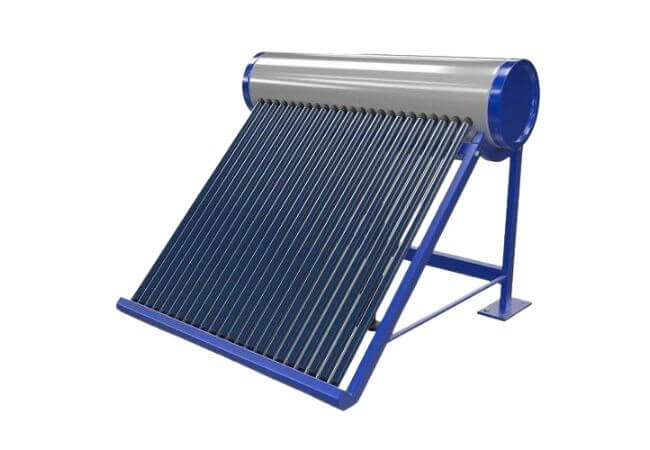
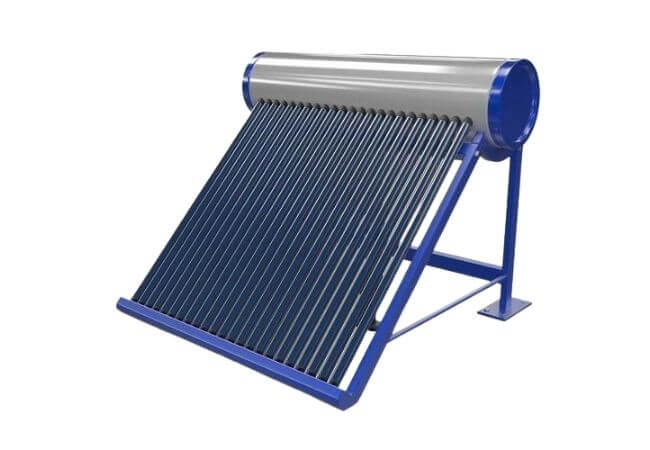
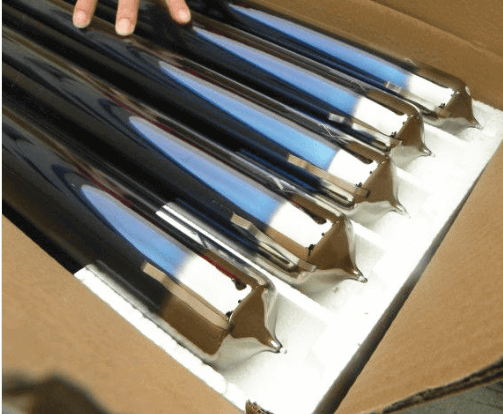
This system uses borosilicate glass vacuum tubes to capture solar energy and convert it into heat.
The vacuum layer inside each tube acts as insulation, minimizing heat loss and ensuring high thermal efficiency.
Because of this design, the system performs very well in regions with strong sunlight, making it ideal for residential homes, hotels, and small commercial applications.
How It Works
The system mainly includes:
-
Vacuum glass tubes (solar collectors)
-
Water storage tank
-
Frame or support structure
-
Pipes and basic control components
When sunlight hits the glass tubes, the inner coating absorbs heat and transfers it to the water.
The heated water naturally rises into the storage tank, while cooler water flows down into the tubes.

This natural circulation process is called the thermosiphon principle, and it eliminates the need for pumps, reducing maintenance and cost.
Advantages for Buyers and Importers
From a foreign trade perspective, this product is highly attractive:
-
Low price and high return compared to other solar systems
-
Simple structure with minimal maintenance
-
Easy installation, even in remote areas
-
Strong demand in Africa, the Middle East, Southeast Asia, and South America
-
Flexible OEM options for branding and customization
Most solar water heater manufacturers and suppliers provide customized solutions, including different tank capacities (100L–300L), tube quantities, and packaging options for bulk export.

Price Range and Quotation
The price of All Glass Tube Solar Water Heater systems depends on specifications and order volume:
-
Vacuum tubes: about $1.5–$5 per piece
-
Small systems (100L–150L): $90–$200 per set
-
Standard systems (200L–300L): $150–$600 per set
Most factories and exporters offer free quotation services, and buyers can negotiate for the best price based on MOQ, shipping terms (FOB, CIF), and customization requirements.
Manufacturers, Suppliers, and Export Opportunities
China remains the leading hub for solar water heater manufacturers, suppliers, and factories, providing large-scale production and competitive export pricing.
These exporters supply global markets with stable quality, fast delivery, and flexible cooperation models.
For importers and distributors, this product offers:
-
High demand in developing markets
-
Good profit margins for wholesalers
-
Easy transportation with knock-down packaging
-
Strong compatibility with renewable energy trends
Because of these advantages, All Glass Tube Solar Water Heaters are considered a high-potential product for long-term foreign trade business.

FAQ (Frequently Asked Questions)
1. What is the difference between all-glass tube and heat pipe solar water heaters?
All-glass tube systems use direct water heating and are more affordable, while heat pipe systems are more advanced and efficient but come at a higher price. For most markets, all-glass systems provide better cost performance.
2. How long does an all-glass tube solar water heater last?
A well-produced system from reliable manufacturers can last around 10–15 years, with vacuum tubes possibly needing replacement after several years depending on usage.
3. Can I customize the product with my own brand?
Yes, most manufacturers, suppliers, and factories offer OEM and ODM services, including custom logos, packaging, and product specifications for export orders.
4. What affects the quotation and final price?
The price depends on tank size, number of tubes, material quality, pressure type, order quantity, and shipping terms. Larger orders usually receive a better price.
5. Is this system suitable for cold climates?
Standard systems are best for warm regions. In colder climates, additional features such as antifreeze protection or alternative systems may be required.
6. How do I get the best price from suppliers?
To get the best quotation, provide detailed requirements such as capacity, quantity, destination port, and certification needs. Comparing multiple suppliers and negotiating bulk orders can significantly reduce costs.