


Renewable energy produced more than one-quarter of U.S. electricity in 2025 and was responsible for more than one-third of new installed generating capacity, according to a review of U.S. Energy Information Administration (EIA) data by the SUN DAY Campaign. SUN DAY expects solar, wind and battery energy storage systems to add 60% more electricity to the grid this year than they did in 2025.

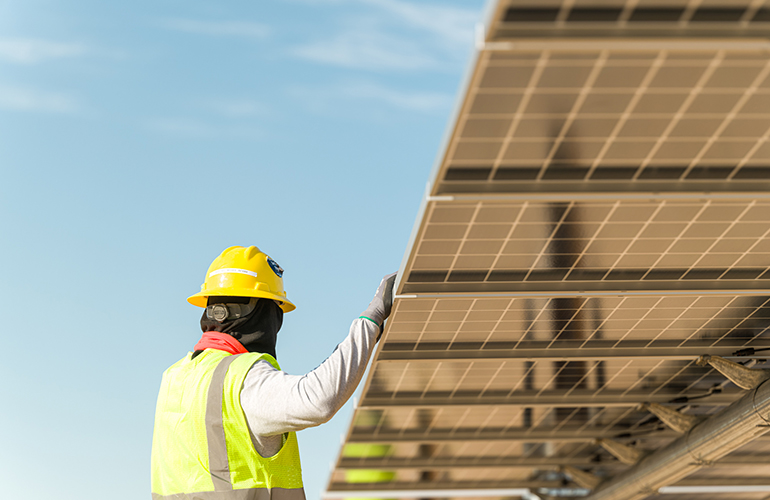
A solar installer stands next to an assembled single-axis solar tracker row. SOLV Energy
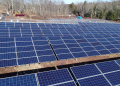
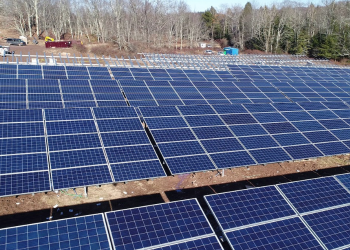
These findings come from EIA’s latest “Electric Power Monthly” reporting with data through the end of 2025. Utility-scale thermal and photovoltaic solar deployment expanded by 34.5% in 2025, with small-scale PV projects increasing by 11%. This maintains solar’s position as the fastest growing source of new electricity in the United States.
Combined, solar produced just under 9.0% of total U.S. electrical generation last year – up from 6.9% in 2024, and accounts for more than one-third of renewable energy capacity on the grid. In 2025, utility-scale solar capacity grew by 27.7 GW while small-scale solar grew by 6.27 GW . EIA estimates another 44.47 GW of large-scale solar will be built in 2026.
Wind and solar combined were almost one-fifth of total U.S. electrical generation, surpassing coal and nuclear power capacity. In 2025, the two energy sources provided 15.7% more electricity than coal and 8.7% than nuclear power.
Renewables’ are the second largest source of electricity on the U.S. grid, behind natural gas, whose electrical output dropped by 3.3% in 2025.
Utility-scale BESS grew by 58.4%, adding 15.77 GW of new capacity. EIA expects BESS capacity to grow by another 24.26 GW in 2026.
EIA is predicting that new capacity additions by solar, wind and batteries in 2026 would be 62% more than those in 2025.
To compare, natural gas capacity increased by 5.7 GW, nuclear power added 60.3 MW and coal and petroleum capacity decreased by 4.4 GW and 559.4 MW, respectively.
“Dramatic growth by solar, wind, and battery storage is the key take-away of EIA’s 2025 data,” said Ken Bossong, the SUN DAY’s executive director. “And if EIA’s projections for 2026 prove correct, to paraphrase Al Jolson, ‘You ain’t seen nothing yet.’”
News item from the SUN DAY Campaign