by Riko Seibo
Tokyo, Japan (SPX) Jan 19, 2026
Researchers at the School of Engineering at The Hong Kong University of Science and Technology have developed a robust coating layer that significantly improves the operational stability of perovskite solar cells while maintaining high efficiency. In accelerated tests simulating intense midday sunlight at 85 C, the coated cells retained more than 95 percent of their initial power conversion efficiency after over 1,100 hours of continuous operation, demonstrating strong potential for outdoor deployment in real-world conditions.
Perovskite solar cells are known for their high efficiency and relatively low manufacturing cost, but their limited long term stability has been a key obstacle to commercialization. A widely used strategy to tackle this issue is to coat a three dimensional perovskite absorber with a thin low dimensional perovskite layer that passivates surface defects and improves device voltage. However, conventional low dimensional layers are typically formed from monovalent ammonium salts that bind weakly to the perovskite lattice and tend to degrade under heat and illumination, causing rapid performance loss.
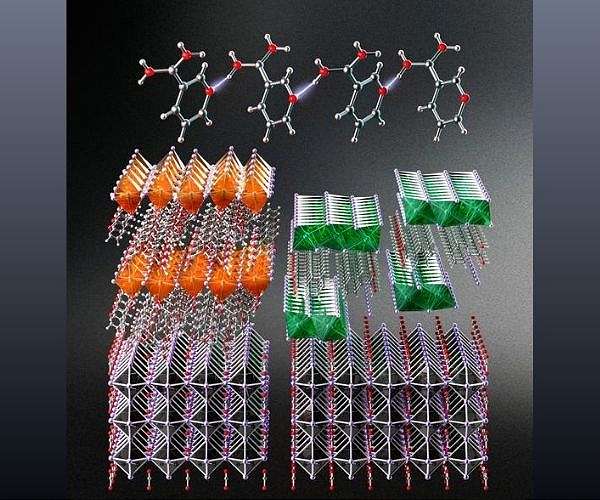
To overcome this limitation, Dr. Chang Xiao Ming, a postdoctoral fellow in the Department of Electronics and Computer Engineering at HKUST, and colleagues designed a new class of multivalent amidinium ligands that act as a molecular velcro like interface. These ligands anchor to the perovskite surface at multiple points through two nitrogen sites in their headgroup, creating a multi point grip that stabilizes the low dimensional layer under operating conditions. Their flat molecular shape and resonance stabilized charge distribution enable stronger hydrogen bonding with halide ions and higher resistance to thermal and light induced degradation.
Dr. Chang said that traditional ammonium halide molecules can diffuse into the perovskite bulk at elevated temperatures, where they either break down or react with the organic ion formamidinium, undermining the protective function of the low dimensional layer. In contrast, the multivalent amidinium ligands remain at the interface and preserve the integrity of the surface structure over time. This behavior helps slow the chemical pathways that normally drive device ageing and efficiency losses.
Co author Prof. Lin Yen Hung, an assistant professor in the Department of Electronic and Computer Engineering at HKUST, highlighted the use of operando hyperspectral imaging to monitor device behavior under realistic operating conditions. With this technique, the team mapped the perovskite layer pixel by pixel under open circuit, maximum power point, and short circuit conditions during accelerated ageing. Devices incorporating the molecular velcro interface showed almost unchanged photoluminescence patterns and spectra, indicating a stable interface and an intact perovskite absorber layer even under extended stress.
A central aspect of the work is the ability to tune the basicity of a nitrogen atom within a pyridine group in the ligand structure. The researchers found that in low dimensional perovskite structures, amidinium ligands disrupt the fully three dimensional crystal network and allow metal halide octahedra to reorganize into one dimensional chains or two dimensional sheets. By carefully adjusting ligand basicity and molecular conformation, they converted the surface perovskite from a one dimensional chain like stacking motif into a hydrogen bonded two dimensional sheet like network that forms a continuous and uniform protective coating.
Using this three dimensional to two dimensional interface engineering strategy in inverted perovskite solar cells, the team achieved a certified steady state power conversion efficiency of 25.4 percent on cells with an active area of about 1.1 square centimeters. For mini modules with an area of 6.82 square centimeters, the devices reached 24.2 percent efficiency. According to the researchers, these values place their devices among the top performing inverted perovskite solar cells reported to date for similar active areas.
To systematically assess durability, the team followed the International Summit on Organic Photovoltaic Stability (ISOS) protocol, a widely adopted standard for comparing perovskite solar cell lifetimes. Under the ISOS L 2 test, encapsulated devices operated continuously at their optimum working point under one sun equivalent illumination, corresponding to bright midday sunlight, at 85 C in air. Even under these demanding conditions, the cells incorporating the molecular velcro interface retained more than 95 percent of their initial efficiency after 1,100 hours, underscoring the robustness of the interface design.
Prof. Lin noted that, to the best of the team’s knowledge, the certified stabilized efficiency they obtained is the highest reported in a peer reviewed publication for inverted perovskite solar cells with an active area of around 1 square centimeter. The work demonstrates how fine control over molecular level interactions at the perovskite surface can translate into both record level efficiency and significantly improved device lifetime. The findings also suggest a general pathway for engineering stable three dimensional low dimensional perovskite heterostructures for future photovoltaic technologies.
The research, published in the journal Science, appears in a paper titled Multivalent ligands regulate dimensional engineering for inverted perovskite solar modules. The study involved collaboration with multiple international institutions, including King Abdullah University of Science and Technology, The Chinese University of Hong Kong, Shenzhen, Shaanxi Normal University, Korea University, the National University of Singapore, the National Technical University of Athens, and the University of Manchester. Contributors from HKUST included Prof. Lin’s research group and Dr. Fion Yeung Sze Yan, Senior Manager at the State Key Laboratory of Displays and Opto Electronics.
Research Report: Multivalent ligands regulate dimensional engineering for inverted perovskite solar modules
Related Links
Hong Kong University of Science and Technology
All About Solar Energy at SolarDaily.com